Swanee

Album: The Best of Jolson (1919)
Play Video

Songfacts®:

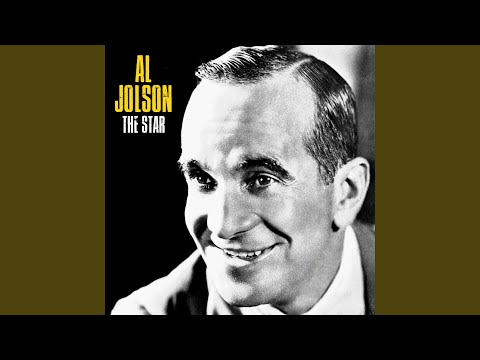
  • George Gershwin wrote the music for this song, and Irving Caesar wrote the lyrics. The first released recording was by Al Jolson, whose version was distributed by Columbia Records on February 20, 1920.

    Those who hold Dixie close to their hearts may be hard pressed to acknowledge that one of the classic odes to the Southland was written by two New Yorkers who, as Irving Caedar put it, had never been "south of 14st St." In fact, it was in New York that "Swanee" caught fire when Al Jolson made it his own and set the song on the path to becoming an international sensation.

    George Gershwin recalled that he and Caesar, who put lyrics to Gershwin's music, wrote the song in Gershwin's Washington Heights apartment in less than an hour. It was Caesar's idea to write an American one-step, a song with upbeat, almost assertive rhythm. He was taking a cue from the latest Middle Eastern song craze that had spawned hits such as "My Sahara Rose," "Afghanistan," and, especially, "Hindustan," from Harold Weeks and Oliver Wallace. When Gershwin and Caesar were wrapping up the song, Gershwin's father, Morris, took a break from the raucous card game that was going on in the background to join in with his homemade kazoo, made from a comb wrapped in tissue paper.
  • As much as "Swanee" owes to "Hindustan," it also owes to the Stephen Foster, who wrote "Swanee River" in 1851. Foster first introduced music fans to the southern river, whose name is rightfully Suwannee. Gershwin and Caesar parodied the opening melody of Foster's minstrel song that has the famous opening line, "Way down upon the Swanee 'Ribber,' far, far away." "Swanee" also incorporates the minstrel words "Dixie" and "mammy" with the line, "I'd give the world to be among the folks in D-I-X-I-E, even though my mammy's waiting for me." The last verse makes it perfectly clear that Foster's song was part of their inspiration with the lyric, "I love the old folks at home."

    Of course, once Jolson recorded "Swanee" in January 1920, as Gershwin put it, the song "penetrated the four corners of the earth." Jolson first heard it when Gershwin played it for him at a brothel the previous December. The song had been performed before. It was part of the Demi Tasse Revue, for the larger Capitol Revue, which opened the posh Capitol Theatre at Broadway and West 51st St on October 24. The song was received well, but the audience may have been more interested in the sexy young blonde singer, Mae West, who sang "Oh, What a Moanin' Man" that night.
  • Jolson included the song in the Broadway musical Sinbad in late December 1919 and then took it on the road, likely performing in blackface, across the United States and Canada. By the end of the year, the sheet music had sold over a million copies, Jolson's recording sold two million, and Gershwin had what would remain the biggest hit of his career. To many music historians, the song heralded the beginning of the Jazz Age. For Gershwin, who said the word "Swanee" fascinated him more than anything, he said, "I am happy to be told that the romance of that land [The South] is felt in it. We are not all business or romance, but a combination of the two.

Comments: 1

  • Anono from UsJolson's (I assume it's him) whistling in this song always seemed strange to me, kind of out of place. After thinking about it, was he trying to mimic a bird chirping?
see more comments

Editor's Picks

Songs Discussed in Movies

Songs Discussed in MoviesSong Writing

Bridesmaids, Reservoir Dogs, Willy Wonka - just a few of the flicks where characters discuss specific songs, sometimes as a prelude to murder.

Mick Jones of Foreigner

Mick Jones of ForeignerSongwriter Interviews

Foreigner's songwriter/guitarist tells the stories behind the songs "Juke Box Hero," "I Want To Know What Love Is," and many more.

Mark Arm of Mudhoney

Mark Arm of MudhoneySongwriter Interviews

When he was asked to write a song for the Singles soundtrack, Mark thought the Seattle grunge scene was already overblown, so that's what he wrote about.

Stand By Me: The Perfect Song-Movie Combination

Stand By Me: The Perfect Song-Movie CombinationSong Writing

In 1986, a Stephen King novella was made into a movie, with a classic song serving as title, soundtrack and tone.

Victoria Williams

Victoria WilliamsSongwriter Interviews

Despite appearances on Carson, Leno and a Pennebaker film, Williams remains a hidden treasure.

Adam Duritz of Counting Crows

Adam Duritz of Counting CrowsSongwriter Interviews

"Mr. Jones" took on new meaning when the song about a misguided view of fame made Adam famous.