See You Later Alligator

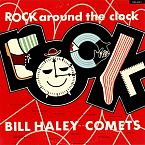
Album: Rock Around the Clock (1956)
Charted: 7 6
Play Video

Songfacts®:

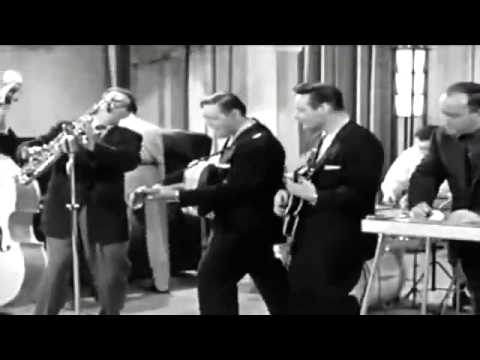
  • They don't make 'em like they used to! This classic hails from a time when rock-n-roll bands had flashy names like "Bill Haley & His Comets" and played 12-bar blues songs like they knew where they were coming from. Bill Haley & His Comets is regarded today as one of the first true rock-n-roll bands, innovators who were white musicians bringing rock to a white audience.

    "See You Later Alligator" was written by Louisiana songwriter Robert Charles Guidry, who recorded it himself in 1955 under his stage name of Bobby Charles. It was of course the Bill Haley version that took off. Guidry also wrote hits for other performers, most notably "Walking To New Orleans" for Fats Domino.
  • Haley and his producer Milt Gabler had some experience turning catchy R&B songs into mainstream hits - they had done it with "Shake, Rattle And Roll." They heard the Bobby Charles version of "See You Later Alligator," which was climbing the charts, and knew that they had to get a version recorded and released quickly before someone else did. In mid-December, knowing that operations would shut down when hey got near Christmas, the band recorded the song on a weekend, and Gabler had to break into his own office to retrieve the Charles version of the song and the lyrics he had written down. Said Gabler: "My office had a frosted glass panel so I got a hammer, smashed the pane and robbed my own office. When the staff came in on Monday morning, they thought there had been a robbery. My secretary had a long face. She said, 'Mr. Gabler, someone's broken into your office.' I said, 'Yes, I know. It was me.'"
  • Both the title phrase and the complement line "After 'while, crocodile" are examples of a common fad in the 1950s. This was a sort of rhyming jive-talk that crackled with rapid-fire phrases: "What's the deal, McNeal?" "Got no tale, Nightingale!" "What's your story, morning glory?" "It's my pleasure, treasure!" ...and so on. The Rosemarie Ostler book Dewdroppers, Waldos, and Slackers - A Decade-by-Decade Guide to the Vanishing Vocabulary of the Twentieth Century calls this style "Voutian" and credits the jazz musician Slim Gaillard with its invention.

    If you're thinking "Get on the bus, gus!", then you have a good clue, Blue! Another song to use this rhyming-jive style is "Fifty Ways To Leave Your Lover." Also see TV series such as I Love Lucy and other shows from the '50s or set in the '50s. Oh, yes, and in the film Grease, the master of ceremonies at Rydell High's National Bandstand Dance-Off Contest explains the rules in rhyming jive. You can probably think of more examples, but do not confuse this with Cockney rhyming slang, which is a completely different speech pattern altogether.

    Hipsters loved this stuff, you have enough? You get the point in this here joint? We'd better stop before we drop. Thanks for dropping by, McFly!
  • The use of the phrase 'See you later alligator' when taking one's leave stemmed from this song. However, according to Brewer's Dictionary of Modern Phrase & Fable, 'alligator' was already a term in the 1950s for a jazz or a swing fan, as someone who 'swallowed up' everything on offer.

Comments: 1

  • Barry from Sauquoit, NyOn February 24th 1956, the city police of Cleveland, Ohio were instructed to enforce a 1931 city ordinance barring people under the age of 18 from dancing in public unless accompanied by an adult...
    City officials were looking for a legal way to shut down the increasing number of rock 'n roll shows that were being held in the city ...
    At the time there were only two rock 'n roll songs on Billboard's Top 10 chart; "See You Later, Alligator" by Bill Haley & His Comets at #7 and "Why Do Fools Fall In Love" by Frankie Lymon & the Teenagers at #10...
    Ironically, the #1 record had 'Rock and Roll' in its title, but it differently wasn't a rocker; "Rock and Roll Waltz" by Kay Starr was in its third of four weeks at #1.
see more comments

Editor's Picks

Max Cavalera of Soulfly (ex-Sepultura)

Max Cavalera of Soulfly (ex-Sepultura)Songwriter Interviews

The Brazilian rocker sees pictures in his riffs. When he came up with one of his gnarliest songs, there was a riot going on.

History Of Rock

History Of RockSong Writing

An interview with Dr. John Covach, music professor at the University of Rochester whose free online courses have become wildly popular.

Martyn Ware of Heaven 17

Martyn Ware of Heaven 17Songwriter Interviews

Martyn talks about producing Tina Turner, some Heaven 17 hits, and his work with the British Electric Foundation.

Michael W. Smith

Michael W. SmithSongwriter Interviews

Smith breaks down some of his worship tracks as well as his mainstream hits, including "I Will Be Here For You" and "A Place In This World."

British Invasion

British InvasionFact or Fiction

Go beyond The Beatles to see what you know about the British Invasion.

Jethro Tull

Jethro TullFact or Fiction

Stage urinals, flute devices, and the real Aqualung in this Fact or Fiction.