John Wesley Harding

Album: John Wesley Harding (1967)
Play Video

Songfacts®:

  • At first this appears to be an outlaw ballad about John Wesley Hardin (1853-1895) a Texas sharp-shooter who it is claimed had murdered over 40 people by the time he was sent to prison in 1878. In an interview with Rolling Stone magazine in 1969, Dylan discussed how the song didn't turn out as he originally intended: "I was gonna write a ballad on - like maybe one of those old cowboy - you know, a real long ballad. But in the middle of the second verse, I got tired. I had a tune, and I didn't want to waste the tune, it was a nice little melody, so I just wrote a quick third verse, and I recorded that. I knew people were gonna listen to that song and say that they didn't understand what was going on, but they would've singled that song out later, if we hadn't called the album John Wesley Harding and placed so much importance on that, for people to start wondering about it. If that hadn't been done, that song would've come up and people would have said it was a throw-away song."
  • Dylan mistakenly added the 'G' to Hardin's name.
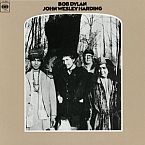
  • On the cover of John Wesley Harding, on either side of Dylan (who was wearing the same jacket he'd worn on the sleeve of Blonde On Blonde) is Luxman and Purna Das of the Bengali Bauls music collective, who were staying with Dylan's manager Albert Grossman at the time. Standing behind them is Charlie Joy, a Woodstock carpenter and stonemason. The foursome all sport a rather disheveled "common man" look and the whole arrangement was possibly a dig at the Beatles and their Sgt. Pepper cover with the Fab Four placed at the center of a group of famous personalities.
  • In Stephen King's 1989 novel, The Dark Half, the protagonist recalls having a pet raccoon named John Wesley Harding. At one point, he also sings snatches of the tune to calm himself down while hiding out in a junkyard.

Comments

Be the first to comment...

Editor's Picks

Matt Sorum

Matt SorumSongwriter Interviews

When he joined Guns N' Roses in 1990, Matt helped them craft an orchestral sound; his mezzo fortes and pianissimos are all over "November Rain."

Scott Gorham of Thin Lizzy and Black Star Riders

Scott Gorham of Thin Lizzy and Black Star RidersSongwriter Interviews

Writing with Phil Lynott, Scott saw their ill-fated frontman move to a darker place in his life and lyrics.

Annie Haslam of Renaissance

Annie Haslam of RenaissanceSongwriter Interviews

The 5-octave voice of the classical rock band Renaissance, Annie is big on creative expression. In this talk, she covers Roy Wood, the history of the band, and where all the money went in the '70s.

Arrested For Your Art - The Story Of 2 Live Crew's "Obscene" Album

Arrested For Your Art - The Story Of 2 Live Crew's "Obscene" AlbumSong Writing

In the summer of 1990, you could get arrested for selling a 2 Live Crew album or performing their songs in Southern Florida. And that's exactly what happened.

Dave Mason

Dave MasonSongwriter Interviews

Dave reveals the inspiration for "Feelin' Alright" and explains how the first song he ever wrote became the biggest hit for his band Traffic.

Protest Songs

Protest SongsMusic Quiz

How well do you know your protest songs (including the one that went to #1)?