Someone Else's Star

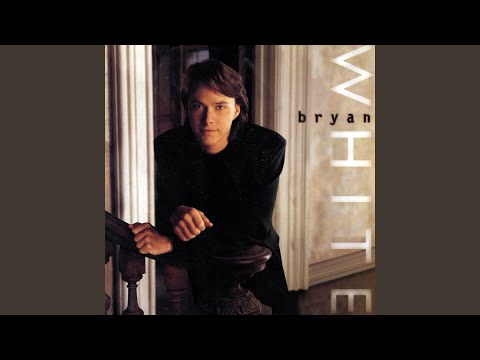
Album: Bryan White (1995)
Play Video

Songfacts®:

  • Songwriter Skip Ewing loves to study poetry in any form - classical poetry, new poetry, and just hearing the sounds of words and the way people have put things together. So when co-writer Jim Weatherly had a song idea of "wishing on my star, but this is the wrong star," little sparks began to fly inside Skip's mind. "I said, 'Ooo, I love that!'" reveals Skip. And he went straight to the piano. They didn't have the title for the song yet, but the concept began taking shape. "We sat and talked about what it would be like to realize that you're just not getting it right. What's the deal? So that's the thing. Don't look at yourself, blame it on a star. You're wishing on the wrong star. That's where that came from."
  • Skip remembers the day he went to Jim Weatherly's house and wrote this song: "Jim's house was filled with antiques. And this made me think about classical music – do not ask me why. (laughing) He had an old piano, and I was talking with him about my love for changes. I love to talk about music in a way where it's almost as though you can see and feel and smell and touch things in music, if you allow yourself to. Like, for instance, if you watch the movie Out Of Africa, there's a piece while the plane is flying over the Serengeti, where it's done… it's just brilliant, because the music is so grounded. And he took and he made the low end of that music just solid and stable and beautiful, rolling like the land over which the airplane was flying, and left all the room in the sky for the airplane. That's what that felt like when I watched that. And I just thought he was so brilliant. It's those kinds of things that I love to think about. Well, it can also be done in a very simple way. And that is what I said to Jim, 'You know what, the melodies that I would have loved to have written are things like 'Twinkle, Twinkle, Little Star.' They're so simple everybody remembers them immediately.' And melody is so powerful. And I said something to the effect, 'It's like the fiber of things that we do.' I mean, we are product, our musical thinking, is products of everything we've ever heard. Our melodic understanding, our harmonic understanding, the way we are able to put chords together, I mean, every guitar player remembers when they learned like an A Major 7 or something, and suddenly their world opened up. That kind of a thing."
  • There is a lot more to the children's song, "Twinkle, Twinkle Little Star" than you may know. For example, the actual poem, as written by Jane Taylor in 1806, is called simply "The Star," and contains 5 stanzas, not just the two that we are taught in kindergarten.

    Throughout this song the melody for "Twinkle, Twinkle Little Star" can be heard if you listen for it. Skip and Jim chose a very subtle approach to it, and it's so subtle that many people don't even realize it's there.
    "I love Bach, and I love Fugues," says Skip, "and I love all those kinds of things. So just for the fun of it, almost as a Fugue idea, I took the melody of 'Twinkle, Twinkle Little Star.' It is not played or sung in the song, but it can be played throughout the whole song. Most people don't know that. Now when I play it out, I usually just kind of show that, just as a fun musical. I love to not necessarily hide stuff in there, I love it if you can see the reflection, but also down in the well sometimes, 'Oh my gosh, look at this, down there - there's gold coins down there in the bottom of the well.'" By way of example, his sound bite can be heard in the full Skip Ewing interview.
  • Clay Aiken performed this song on the 2003 season of American Idol to a standing ovation by judges Paula, Randy, and guest judge Olivia Newton-John. Simon thought it was "sweet" but said it sounded like a repeat performance from the previous week. Skip didn't catch the performance, but is happy that the song is still so well received.
  • Due to his incredible songwriting ability and his belief that "there is music in all words, in all sounds," Maya Angelou approached Skip about writing together. And it's a very big deal. Says Skip: "She hasn't worked with anyone else, or with only a couple of people. And you can not imagine how honored I was for her to even ask, let alone for us to be sitting and working on some of her things, both coming up with new things, and also taking some of her classic ideas and taking them and working them into a song in order to honor her poetry. I mean, just the whole scope of it. It's amazing."

Comments

Be the first to comment...

Editor's Picks

Devo

DevoSongwriter Interviews

Devo founders Mark Mothersbaugh and Jerry Casale take us into their world of subversive performance art. They may be right about the De-Evoloution thing.

Jethro Tull

Jethro TullFact or Fiction

Stage urinals, flute devices, and the real Aqualung in this Fact or Fiction.

Booker T. Jones

Booker T. JonesSongwriter Interviews

The Stax legend on how he cooked up "Green Onions," the first time he and Otis Redding saw hippies, and if he'll ever play a digital organ.
Spooner Oldham

Spooner OldhamSongwriter Interviews

His keyboard work helped define the Muscle Shoals sound and make him an integral part of many Neil Young recordings. Spooner is also an accomplished songwriter, whose hits include "I'm Your Puppet" and "Cry Like A Baby."
Wherefore Art Thou Romeo Lyric

Wherefore Art Thou Romeo LyricMusic Quiz

In this quiz, spot the artist who put Romeo into a song lyric.

Julian Lennon

Julian LennonSongwriter Interviews

Julian tells the stories behind his hits "Valotte" and "Too Late for Goodbyes," and fills us in on his many non-musical pursuits. Also: what MTV meant to his career.