Old-Fashioned Garden

Album: Hitchy-Koo Of 1919 (1919)
Play Video

Songfacts®:

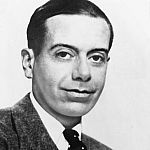
  • Although he had been writing songs since he was a boy and had published his first as early as October 1902, it was not until 1919 that Cole Porter had his first hit, "Old-Fashioned Garden." This came about when he was asked to write a song for Hitchy-Koo Of 1919 by Raymond Hitchcock and his backers for the show. The girls were wearing flower costumes that had been ordered, but never used, by Ziegfeld for his Follies.

    According to his biographer George Eells, many years later Porter said this song - which he described not entirely accurately as "one of the first songs I wrote" - was criticized in England "because I had the wrong flowers growing together. Since that time I have been extremely careful. I took a course in anatomy before I wrote the lyrics for the doctor song... for Gertrude Lawrence," adding that he had studied "all manner of insect and animal life" before he started on "Let's Do It."

    Not everyone was impressed. Musicologist Sigmund Spaeth said both this song and "Yes, We Have No Bananas" were derived from "The Quilting Party," described here as an early melody.

    Whether or not this is true, "Old-Fashioned Garden" (or "An Old-Fashioned Garden") would go on to sell over a 100,000 copies of the sheet music. It has been claimed that Cole wrote it near the Front in WWI, but this is not correct.
  • In the show, the song was sung by Lillian Kemble Cooper and ensemble. Its first performance was August 28, 1919 at Nixon's Apollo Theatre in Atlantic City, with a follow-up in Boston before transferring to the Liberty Theatre in New York City.
  • According to the British Library catalogue, the sheet music for "Old Fashioned Garden" (without the hyphen) was published initially in the score for the show (listed as Hitchy-Koo 1919. 1. Vocal selections. Vocal score) by T.B. Harms of New York and Francis, Day & Hunter of London. In 1931, an arrangement by William Stickles (Duet or two-part song) was published by Chappell-Harms of New York, and Chappell of London and Sydney. >>>
    Suggestion credit:
    Alexander Baron - London, England, for all above

Comments

Be the first to comment...

Editor's Picks

Francis Rossi of Status Quo

Francis Rossi of Status QuoSongwriter Interviews

Doubt led to drive for Francis, who still isn't sure why one of Status Quo's biggest hits is so beloved.
Joe Jackson

Joe JacksonSongwriter Interviews

Joe talks about the challenges of of making a Duke Ellington tribute album, and tells the stories behind some of his hits.
Carl Sturken

Carl SturkenSongwriter Interviews

Hitmaker Carl Sturken on writing and producing for Rihanna, 'N Sync, Christina Aguilera, Kelly Clarkson, Donny Osmond, Shakira and Karyn White.
Billy Gould of Faith No More

Billy Gould of Faith No MoreSongwriter Interviews

Faith No More's bassist, Billy Gould, chats to us about his two new experimental projects, The Talking Book and House of Hayduk, and also shares some stories from the FNM days.
The Punk Photography of Chris Stein

The Punk Photography of Chris SteinSong Writing

Chris Stein of Blondie shares photos and stories from his book about the New York City punk scene.
Pete Anderson

Pete AndersonSongwriter Interviews

Pete produced Dwight Yoakam, Michelle Shocked, Meat Puppets, and a very memorable track for Roy Orbison.