Drive-In Saturday

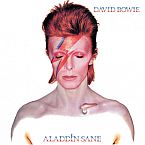
Album: Aladdin Sane (1973)
Charted: 3
Play Video

Songfacts®:

  • In this song, Bowie is imagining inhabitants in a post-apocalyptic future looking back at old video films that they have kept from the 1960s and '70s. In 1972, Bowie introduced the song at The Public Hall in Cleveland, Ohio, with the following: "It's about a future where people have forgotten how to make love, so they go back onto video-films that they have kept from this century. This is after a catastrophe of some kind, and some people are living on the streets and some people are living in domes, and they borrow from one another and try to learn how to pick up the pieces."
  • This was originally written by Bowie for Mott The Hoople as their follow-up to "All The Young Dudes." However after they rejected it, their professional relationship effectively ended and Bowie took it for himself. Bowie recalled on VH1's Storytellers that he drunkenly shaved his eyebrows when Mott the Hoople turned this song down. ("that taught them a lesson").
  • Bowie wrote this during his 1972 US tour. It was influenced by the barren landscape between Seattle and Phoenix, Arizona.
  • Bowie first performed this just hours after it was composed, in Phoenix, on November 4, 1972.
  • The one time David Batt, who later fronted the new romantic band, Japan, got his stage name David Sylvian from the song's lyric, "He's crashing out with Sylvian."
  • The lyrics name-check several cultural icons, including Mick Jagger ("When people stared in Jagger's eyes and scored"), the Swiss psychiatrist Carl Jung ("Jung the foreman prayed at work"), and the supermodel Twiggy ("She'd sigh like Twig the Wonder Kid"), who would later appear on the front cover of David Bowie's covers album, Pin Ups.

    As a way to repay this compliment, Jagger traveled to David's Earls Court Show with Bianca Jagger on May 12, 1973. Jagger was already a legend while Bowie was still coming up, and the gesture was compared to a "passing of the scepter" by tour manager Anthony Zanetta.
  • Ian Hunter of Mott the Hopple recalled in his book Diary of a Rock and Roll Star his reaction when Bowie first played him the song. "It's Dylan-ish and it's got a hell of chord run down," he wrote. "Innocence, cruelty, the nearness yet the distance, all the qualities of the star he is."

Comments: 2

  • Paul from Rothesay, Nb, CanadaOn the "Storytellers" version of this song, Bowie quips that he was so miffed at Mott the Hoople's rejection, that he shaved off his eye-brows. I would have loved to have heard Ian Hunter's take on this, but...
  • Mark from London, EnglandThis single was also a track on the Aladdin Sane album.
see more comments

Editor's Picks

Corey Hart

Corey HartSongwriter Interviews

The Canadian superstar talks about his sudden rise to fame, and tells the stories behind his hits "Sunglasses At Night," "Boy In The Box" and "Never Surrender."

Creedence Clearwater Revival

Creedence Clearwater RevivalFact or Fiction

Is "Have You Ever Seen the Rain" about Vietnam? Was John Fogerty really born on a Bayou? It's the CCR edition of Fact or Fiction.

Susanna Hoffs - "Eternal Flame"

Susanna Hoffs - "Eternal Flame"They're Playing My Song

The Prince-penned "Manic Monday" was the first song The Bangles heard coming from a car radio, but "Eternal Flame" is closest to Susanna's heart, perhaps because she sang it in "various states of undress."

Gene Simmons of Kiss

Gene Simmons of KissSongwriter Interviews

The Kiss rocker covers a lot of ground in this interview, including why there are no Kiss collaborations, and why the Rock Hall has "become a sham."

Joe Jackson

Joe JacksonSongwriter Interviews

Joe talks about the challenges of of making a Duke Ellington tribute album, and tells the stories behind some of his hits.

George Clinton

George ClintonSongwriter Interviews

When you free your mind, your ass may follow, but you have to make sure someone else doesn't program it while it's wide open.