Take Me Back To Dear Old Blighty

Album: Take Me Back To Dear Old Blighty (1916)
Play Video

Songfacts®:

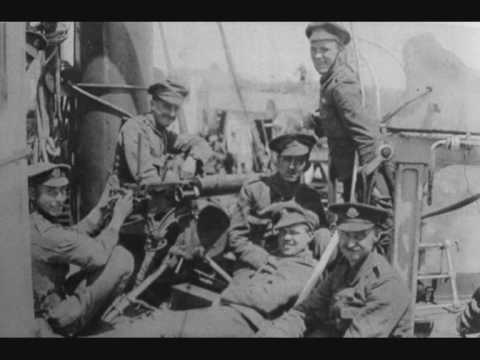
  • The title of this popular song found its way into the Oxford Dictionary Of Modern Quotations. It was written by Fred Godfrey (1880-1953). According to his grandson, Barry Norris of New Brunswick, Canada, he had the distinction of composing two of the Twentieth Century's most famous wartime singalong songs; the other was "Bless 'Em All."
  • Godfrey was inspired to write the song by a show at the Oxford Music Hall. He rattled it off in four hours at the Hampstead home of Dorothy Ward, the wife of the music hall star Shaun Glenville.
  • Blighty is a corruption of a Hindustani word from the days of the Raj, meaning Britain. The song was the biggest hit of the early part of Godfrey's career. A report in the London Times of January 4, 1917 said it was the most popular war-time pantomime song of that winter, and was even sung at the London Opera House by the music hall star Ella Retford with audience participation. The sheet music was published initially by The Star Music Publishing Company Limited and then jointly by Star and B. Feldman & Co - both of London " it retailed for 6d and credited the song thus: "Written and Composed by A.J. Mills, Fred Godfrey AND Bennett Scott."
  • According to a personal communication from Barry Norris: "It's impossible to know who was responsible for what in the writing of most of these songs... Dorothy Ward claimed Godfrey wrote the song by himself... but Godfrey recollected that it had been a collaborative effort with Mills and Scott. At the same time... Mills and Scott owned Star Music Publishing Co. and possibly had their names added to the composing credits of many songs as a quid pro quo for publication." [The same thing happened with "Maybellene," although its composer, Chuck Berry, didn't find out until after the event!]
  • Dorothy Ward almost certainly recorded "Blighty" first, but the date she did so is unknown; Florrie Forde recorded her version on October 16, 1916. It was in fact recorded no less than seven times in 1916, including by an Irish regimental band, and remained popular all through the 20s and 30s, unsurprisingly finding its way into several films including the 2006 release Flyboys, about American volunteer pilots in World War I. >>
    Suggestion credit:
    Alexander Baron - London, England, for all above

Comments: 2

  • Viv from Melbourne, AustraliaHi Amanda, I am trying to find some info about a song by A J Mills called Let Me Kiss Those Tears Away. I have a sheet music cover which I'll post here soon, the sheet music cover is of my Grandmother Kitty Clinton, she was in London and came to Australia under vaudeville contract in 1916. The song doesn't come up in any listing under A JMills name so far, so thought seeing your posting I would ask you - i hope you can help, With thanks Viv
  • Amanda from London, United KingdomMy Great Grandfather was A J Mills co writer listed above. I have been trying to find any photgrapghs of him (also wrote with Scott Bennett & Fred Godrey. He was a co-owner of Star Music Publishing Oxford St London. Any information would be appreciated.
see more comments

Editor's Picks

Let Me Be Your Teddy Bear: Teddy Bears and Teddy Boys in Songs

Let Me Be Your Teddy Bear: Teddy Bears and Teddy Boys in SongsSong Writing

Elvis, Little Richard and Cheryl Cole have all sung about Teddy Bears, but there is also a terrifying Teddy song from 1932 and a touching trucker Teddy tune from 1976.

Michael Schenker

Michael SchenkerSongwriter Interviews

The Scorpions and UFO guitarist is also a very prolific songwriter - he explains how he writes with his various groups, and why he was so keen to get out of Germany and into England.

Edwin McCain

Edwin McCainSongwriter Interviews

"I'll Be" was what Edwin called his "Hail Mary" song. He says it proves "intention of the songwriter is 180 degrees from potential interpretation by an audience."

Wang Chung Pick The Top Songs Of The '80s

Wang Chung Pick The Top Songs Of The '80sSongwriter Interviews

'80s music ambassadors Wang Chung pick their top tracks of the decade, explaining what makes each one so special.

Stephen Christian of Anberlin

Stephen Christian of AnberlinSongwriter Interviews

The lead singer/lyricist for Anberlin breaks down "Impossible" and covers some tracks from their 2012 album Vital.

Philip Cody

Philip CodySongwriter Interviews

A talented lyricist, Philip helped revive Neil Sedaka's career with the words to "Laughter In The Rain" and "Bad Blood."