Hungarian Rhapsody No. 2

Album: Who Framed Roger Rabbit? (1851)
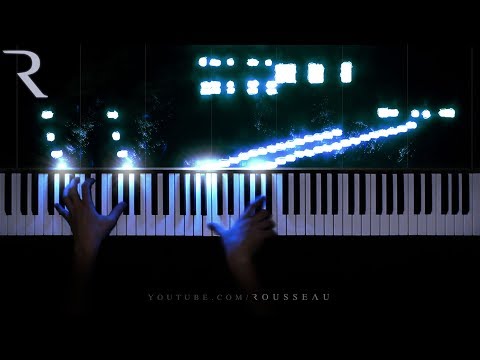
Play Video

Songfacts®:

  • You whippersnappers may think celebrities are a phenomena of the modern age but Hungarian composer and pianist Franz Liszt (1811-1886) was just as famous throughout Europe as Lady Gaga and her ilk are today. Liszt displayed incredible talent at a young age, easily sight-reading multiple staves at once. After moving to Vienna to study under Salieri (Mozart's supposed rival), Liszt made his first public performance at the age of 9. It was such a success that Beethoven, who knew his father, rushed up on stage and kissed him.

    Liszt left Vienna in 1823 to travel. In Paris, he attended a concert by the virtuoso violinist Paganini and became motivated to become the greatest pianist of his time. He often took to seclusion in his room, and was heard practicing for over 10 hours a day.

    The flamboyant pianist would begin a concert by tossing his long blonde hair and throw his green gloves to the floor. He then would proceed with hair flopping over his eyes, thumping his piano to pieces. Women worshipped him, fought over him and collapsed in orgasmic swoons while he played - "Lisztomania" they called it.
  • Despite being the most famous performer of his day, Liszt was not so known for his composing. However the Hungarian was pretty prolific, producing 400 original compositions and 900 transcriptions for piano in his lifetime. Hungarian Rhapsody No. 2, is the second and by far the most famous in a set of 19 Hungarian Rhapsodies by the piano maestro. Composed in 1847, the year he retired from the concert platform, the rhapsody was first published as a piano solo in 1851. Its immediate success and popularity on the concert stage soon led to an orchestrated version. In addition to the orchestral version, the composer arranged a piano duet version in 1874.
  • By the end of the 19th century, the difficult technical challenges of the piano solo version led to the rhapsody's acceptance as the "unofficial standard" by which every notable pianist would prove himself, and it became an expected staple of virtually every performance of the greatest pianists of the era.
  • Fans of mid 20th century cartoons will be familiar with this piece as it was constantly cropping up in animations during that period. The first such appearance was as part of a piano solo by Mickey Mouse in 1929's The Opry House and it's best known use is arguably in Friz Freleng's Rhapsody in Rivets where the construction of a skyscraper is synchronized to the rhapsody. Many of you will also recognise the work from Daffy Duck And Donald Duck's dueling pianos at the Ink And Paint Club in the 1988 movie Who Framed Roger Rabbit?.
  • The rhapsody pops up several times in Marx Brothers films. In A Day at the Races, Chico plays it as an introduction to his main number on the piano with an orchestral accompaniment with Harpo conducting comically. Chico also plays it in A Night at Casablanca this time with a smaller jazz orchestra, and later on, Harpo plays the rhapsody as his harp solo.

Comments

Be the first to comment...

Editor's Picks

Jim McCarty of The Yardbirds

Jim McCarty of The YardbirdsSongwriter Interviews

The Yardbirds drummer explains how they created their sound and talks about working with their famous guitarists.

Dave Alvin - "4th Of July"

Dave Alvin - "4th Of July"They're Playing My Song

When Dave recorded the first version of the song with his group the Blasters, producer Nick Lowe gave him some life-changing advice.

Steven Tyler of Aerosmith

Steven Tyler of AerosmithSongwriter Interviews

Tyler talks about his true love: songwriting. How he identifies the beauty in a melody and turns sorrow into art.

Chris Tomlin

Chris TomlinSongwriter Interviews

The king of Christian worship music explains talks about writing songs for troubled times.

Rosanne Cash

Rosanne CashSongwriter Interviews

Rosanne talks about the journey that inspired her songs on her album The River & the Thread, including a stop at the Tallahatchie Bridge.

Cy Curnin of The Fixx

Cy Curnin of The FixxSongwriter Interviews

The man who brought us "Red Skies" and "Saved By Zero" is now an organic farmer in France.