The Man I Love

Album: A Nostalgic Collection (1924)
Play Video

Songfacts®:

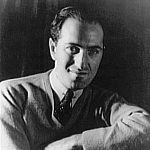
  • With music by George Gershwin and lyrics by his brother, Ira, this song was originally published as "The Girl I Love" in 1924. The first recordings of the song were in 1928.

    "The Man I Love" was a song without an audience. It was not that George Gershwin's music or his brother Ira's lyrics were not good enough. They were – and still are – but the song simply did not fit in any of the musicals of the era. It was originally intended to be part of the Gershwins' 1924 musical, Lady, Be Good, with the title, "The Girl I Love." When Adele Astaire, who helped make her younger brother, Fred, more famous than she would ever be, sang the song at the musical's off-Broadway opening in Philadelphia, it was given a nice round of applause. Ira recalled that she sang it "charmingly." Anyone who has ever heard Billie Holiday's version would hardly call it a charming song, and therein lay the problem. This song of simple yearning did not belong in a musical, or at least not a musical of the 1920s.

    The Gershwins tried to fit the song in somewhere else after it was dropped from Lady, Be Good. With the new title, "The Man I Love," it appeared in satirical anti-war show, Strike Up the Band, in 1927 and then again in Flo Ziegfeld's Rosalie in 1928, but he deleted the number from the show in rehearsal. There was one person who did like the song, though. Lady Edwina Mountbatten, wife of the great-grandson of Queen Victoria and member of England's high society heard the song when George played it a party. It was not the least bit unusual for George to commandeer a piano at party during the Roaring Twenties and play his catalog of songs. He was not shy about his work or his talent. Lady Mountbatten took a copy of the music back to England and requested that her favorite dance orchestras play it. "The Man I Love" caught fire in London and Paris.

    Gershwin's publisher, Max Dreyfus, could hardly let this opportunity to pass by, but he first negotiated a deal with Ira and George. He would push the song as a stand-alone single, but they needed to help offset the costs by cutting their royalties from three cents to two cents per copy. Six months later, "The Man I Love" sold 100,000 copies. The epitome of the torch singers, Helen Morgan, who typically performed while draped over the top of piano, gave the song its first true voice when she gave her interpretation of it. After not being able to find a home, "The Man I Love" was recorded by five different artists in 1928. The most interesting rendition of that year might just belong to Nat Shilkret, recording for Victor Records as The Troubadours, who turned the torch song into a fox trot.
  • In this song, the singer is waiting for her Prince Charming to come along and make her dreams come true. Depending on your perspective, it's either a delightful throwback to a simpler time, or an outdated stereotype of a helpless woman waiting for a man to save her. This latter view was common at the time the song was written (women were given the right to vote in America just four years earlier), although in its original form, it was transposed, with the guy waiting for the girl to come along.

    The women who performed the song in the '50s and '60s likely weren't thinking of it as a setback to the feminist movement, but in later generations, some felt the song should be mothballed along with the happy housewife archetype. For young jazz singers, it can be particularly troublesome because the audiences are often older and less progressive. "The whole song is about how someday a man will come along and he'll be big and strong, and until I find this man, I'm just going to sit around and feel sorry for myself," the singer Kate Davis explained. "It's a beautiful song melodically and harmonically. It's gorgeous, and it's a piece of history. But looking at it now as a progressive, empowered woman, it's like, You've got to be kidding me."
  • Ella Fitzgerald, Billie Holiday, Lena Horne, Sarah Vaughan, Peggy Lee, Julie London, Cher and Diana Ross are among the singers to record "The Man I Love." The song never charted in America, but in the UK, a version by Kate Bush and Larry Adler went to #27 in 1994.
  • Gershwin biographer Howard Pollack reports that one day the great English composer, John Ireland, while sipping on a whiskey listened to "The Man I Love" and told a friend, "That, my boy, is a masterpiece…Perfect, my boy, perfect. This is the music of America."
  • Along with another Gershwin classic, "Rhapsody in Blue," "The Man I Love" entered the public domain in 2020, as that marked 95 years since the song was published.

Comments: 1

  • Mike from CaliforniaCheck out Sophie Tucker’s 1928 recording! Awesome. Also, a Pina Bausch sign-language-choreographed version of it to Sophie's recording. (app wont let me send the links)
see more comments

Editor's Picks

Dean Friedman - "Ariel"

Dean Friedman - "Ariel"They're Playing My Song

Dean's saga began with "Ariel," a song about falling in love with a Jewish girl from New Jersey.

Al Jourgensen of Ministry

Al Jourgensen of MinistrySongwriter Interviews

In the name of song explanation, Al talks about scoring heroin for William Burroughs, and that's not even the most shocking story in this one.

Lou Gramm - "Waiting For A Girl Like You"

Lou Gramm - "Waiting For A Girl Like You"They're Playing My Song

Gramm co-wrote this gorgeous ballad and delivered an inspired vocal, but the song was the beginning of the end of his time with Foreigner.

Gavin Rossdale On Lyric Inspirations and Bush's Album The Kingdom

Gavin Rossdale On Lyric Inspirations and Bush's Album The KingdomSongwriter Interviews

The Bush frontman on where he finds inspiration for lyrics, if his "machine head" is a guitar tuner, and the stories behind songs from the album The Kingdom.

Lajon Witherspoon of Sevendust

Lajon Witherspoon of SevendustSongwriter Interviews

The Sevendust frontman talks about the group's songwriting process, and how trips to the Murder Bar helped forge their latest album.

The Fratellis

The FratellisSongwriter Interviews

Jon Fratelli talks about the band's third album, and the five-year break leading up to it.