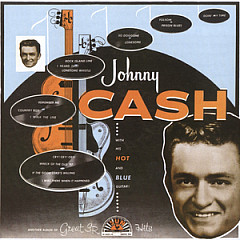
I See A Darkness

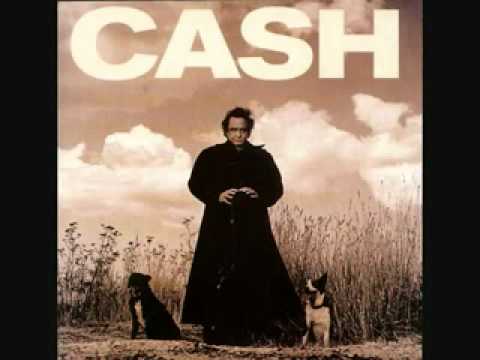
Album: American III: Solitary Man (2000)
Play Video

Songfacts®:

  • This was written by the American singer-songwriter Will Oldham. He recorded it for the title track of his 1999 sixth album, the first on which he used his 'Bonnie Prince Billy' moniker. Oldham provided background vocals for Cash's Rick Rubin produced version, which can be found on American III: Solitary Man.
  • Oldham recalled Cash covering his song to Mojo October 2013: "I actually heard about my song being on the album from a friend of mine who plays guitar with me," he said; "He'd talked to Rick Rubin who said, 'Oh yeah, Johnny Cash just recorded I see a darkness.' A couple of weeks later I met Rick and we arranged I could meet Johnny Cash. And when I did, Johnny said, 'I want to redo my vocals on that song, Why don't we work on it together? That was really exciting, and we did it that same day, worked together on 'I See a Darkness.'"

    "It was a situation we were both very comfortable with, which is working on music," Oldham continued. "We only spoke when we had something to say that the other person wanted to hear, so it was one of the few times when I actually felt I was in the correct company. And that's not trying to give myself excessive grace. He would ask the questions about the song; a couple of grammatical questions he wanted to clear up."
  • Cash's health prior to the recording of American III: Solitary Man had been poor and he'd even been hospitalized for pneumonia. The album contained the Man in Black's response to his illness. Mojo asked Oldham if he felt spooky that someone who was seriously ill was singing about darkness? He replied: "No, it didn't, because the song is about seeing darkness and asking for friendship and support... it seemed good he was singing the song...at that time (it seemed like) an essential statement."
  • Johnny Cash's rendition of "I See a Darkness" has a haunting and introspective quality characteristic of his later work. The lyrics convey a sense of darkness, despair, and mortality. They touch on themes of isolation and inner turmoil, making it a fitting choice for Cash during the later years of his life when he was grappling with health issues and reflecting on his own mortality.
  • Rick Rubin produced Johnny Cash's rendition of "I See a Darkness." Rubin was a longtime collaborator, producing many of Cash's most acclaimed albums, including American Recordings, American II: Unchained, and American III: Solitary Man. Rubin's minimalist production style was used to great effect on Cash's later albums.

    "Each time, I would invite the writer down," Rubin told Mojo magazine. "While we were doing 'The Mercy Seat,' Nick Cave was going to be in Los Angeles, too, so he came. He recommended that I listen to Bonnie Prince Billy. He actually suggested a different song, but 'I See A Darkness' was the one that spoke to me. The reason any song got selected for Johnny was always the lyrics. We never took into account the music, only the words. It was the only consideration."

Comments

Be the first to comment...

Editor's Picks

Timothy B. Schmit of the Eagles

Timothy B. Schmit of the EaglesSongwriter Interviews

Did this Eagle come up with the term "Parrothead"? And what is it like playing "Hotel California" for the gazillionth time?

Matt Sorum

Matt SorumSongwriter Interviews

When he joined Guns N' Roses in 1990, Matt helped them craft an orchestral sound; his mezzo fortes and pianissimos are all over "November Rain."
How The Beatles Crafted Killer Choruses

How The Beatles Crafted Killer ChorusesSong Writing

The author of Help! 100 Songwriting, Recording And Career Tips Used By The Beatles, explains how the group crafted their choruses so effectively.
Narada Michael Walden - "Freeway of Love"

Narada Michael Walden - "Freeway of Love"They're Playing My Song

As a songwriter and producer, Narada had hits with Aretha Franklin, Whitney Houston, Mariah Carey and Starship. But what song does he feel had the greatest impact on his career?
Julian Lennon

Julian LennonSongwriter Interviews

Julian tells the stories behind his hits "Valotte" and "Too Late for Goodbyes," and fills us in on his many non-musical pursuits. Also: what MTV meant to his career.
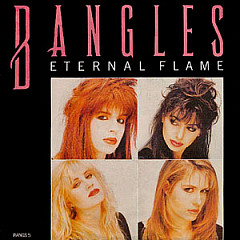
Susanna Hoffs - "Eternal Flame"

Susanna Hoffs - "Eternal Flame"They're Playing My Song

The Prince-penned "Manic Monday" was the first song The Bangles heard coming from a car radio, but "Eternal Flame" is closest to Susanna's heart, perhaps because she sang it in "various states of undress."