Orville's Song

Album: Chegger's Choice (1982)
Charted: 4
Play Video

Songfacts®:

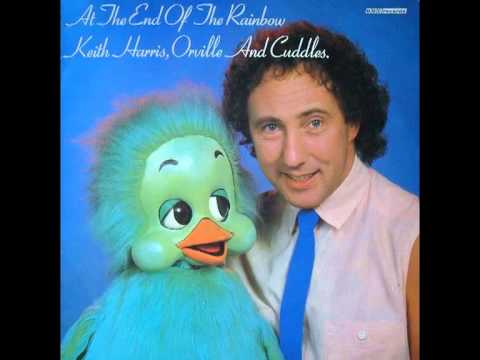
  • Orville is a fairly unusual given name, but not as unusual as an overweight singing duck. The creation of British ventriloquist Keith Harris fronted a BBC TV show from 1982-90, and it was only to be expected that someone as charismatic as Orville would have his own theme song. "Orville's Song (I Wish I Could Fly)" or "I Wish I Could Fly" or simply "Orville's Song" is credited by the sheet music as published by BBC Enterprises, Sub-published by EMI, copyright BBC, 1982. It was composed by Bobby Crush, and reached number 4 in the UK Singles Chart in January 1983.

    Many years later, the performer (the one without beak and wings), and the composer, explained the genesis of the song in a TV interview.

    Harris said he thought he was the only ventriloquist who'd had a Top 10 hit. Pianist Crush who shot to fame aged 18 when he won the TV talent show Opportunity Knocks, said he was doing the summer season with Harris in Scarborough at the Opera House in 1982, when Harris came to him and said "Why don't you have a crack at... writing something for Orville?"

    Crush said he couldn't recall at that distance if the music or the words had come first, but he thought it all came together at the same time, and that the middle eight was "a bit sort of pass the sick bucket."
  • The single was credited as by Keith Harris and Orville; arranged and conducted by Chris Walker, it was produced by Bob Barrett, and backed by "I Didn't."
  • If a singing duck wasn't bad enough, Germany's top ventriloquist, Klibe, dueted the song with his prop Caroline The Cow - Klibe und Caroline. And entirely different lyrics. In German the new title roughly translated was "Where Do Babies Come From?" Crush added that without even knowing it he'd written a sex education song.

    But even worse was to come, on October 1, 1992, Orville and his straight man produced a rave version, and this landed Orville in hot water. It should be remembered that Britain was the country that took umbrage at Chuck Berry's ding-a-ling, so it should come as no surprise that someone in its green and at times not so pleasant land should interpret a duck lamenting its inability to fly in the literal sense as a desire to do so metaphorically. After performing at a rave concert, Harris found himself accused of promoting substance abuse.
  • In a 2007 celebrity interview with Ruby Speechley, Harris related his version of the story in more depth. He said Crush put together the song from all the bits in his act, about Orville being an orphan and not being able to fly, then he, Harris, coughed up £3,500 to hire Abbey Road saying "if it's good enough for the Beatles, it's good enough for the Duck!"

    But the Crush song was meant to be the B-side, "we spent all afternoon doing that with a kids' choir. We had ten minutes left so we got the other track down; we did it once off, which was Orville's song."

    Unfortunately, that was the easy part, he continued. "I took it round all the record companies and at EMI I saw a big record producer. I said I've got this green singing duck, and he said: 'Leave it in the bin on the way out son. We're pop stars here we don't have green ducks.' So it went in the bottom drawer for three years." This means it was actually written around 1980, not 1982 as Crush said, but aside from the royalties it brought him, this is probably one he would rather forget.

    Harris continued, "The great thing was that when it did come out it was a hit. I was on Top Of The Pops, and the EMI record producer was there with Abba who were at number sixteen in the charts and I was at #4. I said to him, do you remember me? [Keith mimics the producer's mumbled reply]. It didn't get to number one but it sold 400,000 copies and won us a gold disc." >>
    Suggestion credit:
    Alexander Baron - London, England, for all above

Comments

Be the first to comment...

Editor's Picks

Jethro Tull

Jethro TullFact or Fiction

Stage urinals, flute devices, and the real Aqualung in this Fact or Fiction.

Jesus Christ Superstar: Ted Neeley Tells the Inside Story

Jesus Christ Superstar: Ted Neeley Tells the Inside StorySong Writing

The in-depth discussion about the making of Jesus Christ Superstar with Ted Neeley, who played Jesus in the 1973 film.

Ramones

RamonesFact or Fiction

A band so baffling, even their names were contrived. Check your score in the Ramones version of Fact or Fiction.

Divided Souls: Musical Alter Egos

Divided Souls: Musical Alter EgosSong Writing

Long before Eminem, Justin Bieber and Nicki Minaj created alternate personas, David Bowie, Bono, Joni Mitchell and even Hank Williams took on characters.

How "A Rolling Stone Gathers No Moss" Became Rock's Top Proverb

How "A Rolling Stone Gathers No Moss" Became Rock's Top ProverbSong Writing

How a country weeper and a blues number made "rolling stone" the most popular phrase in rock.

Jay, Peaches, Spinderella and other Darrining Victims

Jay, Peaches, Spinderella and other Darrining VictimsSong Writing

Just like Darrin was replaced on Bewitched, groups have swapped out original members, hoping we wouldn't notice.