Tears

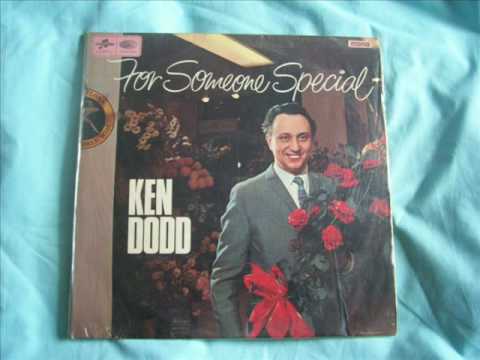
Album: The Best of Ken Dodd (1965)
Charted: 1
Play Video

Songfacts®:

  • This frequently misnamed sentimental 1930s ballad was a massive hit for Ken Dodd in 1965. The zany stand-up comedian came from a musical family, but although a multi-instrumentalist himself, he never played professionally. He did though have a fine singing voice, and by the time he recorded "Tears" he had ten singles under his belt. In September of that year he told Melody Maker he came to record it after receiving a phone call from Jimmy Phillips of the Keith Prowse publishing house who said he'd dreamed about this old song that he'd managed to dig out.
  • "Tears" was written by lyricist Frank Capano and composer Billy Uhr. Capano was a particularly prolific writer who sold his first song at the age of eleven, although one on-line database - that will remain nameless - said:
    If anything has contributed to the deterioration of Capano's reputation, it has been the sloppy publishing credits that sometimes seem to be the norm in the recording industry. Songs that were written by teams of three and sometimes even four songwriters have wound up being credited solely to Morty Berk, leaving Capano and co-writing brethren out in the cold. In other instances he has been credited—but only sort of, since his name has appeared as "Campo", "Capana" and "Cabana", among other variations.

    The above may be true, but the same article misnames the song "Tears (For Souvenirs)" as indeed does its publisher, Shapiro, Bernstein. Its title has also been rendered "Tears For Souvenirs" (without the brackets). In Capano's New York Times obituary of February 12, 1956, it is called "Tear" (probably a simple typo), but even Dodd's biographer Stephen Griffin calls it "Tears Of Happiness", as do many music publications.
    According to Griffin, Dodd's recording of the song not only stayed in the charts for six months but was the #34 song of the top one hundred singles of all time - although he does not say how, when or who compiled this chart, though four decades on it was still one of the top twenty UK singles of all time. Released on Columbia and backed by "You And I", it earned Dodd a gold disk. It was also responsible for his momentarily eclipsing his fellow Liverpudlians, The Beatles, who were then at the height of their powers.
  • The sheet music for the Dodd recording was published by Keith Prowse of London at 2s6d; originally it was copyrighted 1930 by Frank Capano & Co. Inc, but at some point the rights were transferred to Shapiro, Bernstein.
    What appears to be the earliest version was arranged by Eugene Platzman, with a ukulele arrangement by May Singhi Breen ("The Ukulele Lady"). Originally it contained a recitation which was merged with the chorus, but the Dodd recording omits this.
  • An early recording was made by Gene and Glenn; it was also recorded by teen idol Bobby Vinton in the US in 1966, while instrumental versions have been recorded by Stephanne Grappelli, among others. In 1967, another instrumental version was published, in The Ken Dodd Selection, arranged for Military Band by Edrich Siebert. >>>
    Suggestion credit:
    Alexander Baron - London, England, for all above
  • This was the biggest hit in UK in 1965, selling 1,521,000 copies. There was a certain irony that the best selling record of the year was not by The Beatles but still by a Liverpudlian.
  • Ken Dodd recalled in 1000 UK #1 Hits by Jon Kutner and Spencer Leigh that despite the song's popularity, there were some who disliked it: "It had been a waltz and we thought we'd have a hit if we did it four beats to the bar. The disc-jockeys hated it. They couldn't find words that were bad enough to say about it, but it didn't matter. The public was ready for a tuneful, singalong song and you can't keep a good song down. You can be the squarest of squares, but if you make a good record, you can still get there."

Comments: 1

  • Stan Pope from Maine, U.s.a.Awesome comedian. This man had me enthralled at his comedy.
see more comments

Editor's Picks

David Sancious

David SanciousSongwriter Interviews

Keyboard great David Sancious talks about his work with Sting, Seal, Springsteen, Clapton and Aretha, and explains what quantum physics has to do with making music.

Adele

AdeleFact or Fiction

Despite her reticent personality, Adele's life and music are filled with intrigue. See if you can spot the true tales.
Wang Chung Pick The Top Songs Of The '80s

Wang Chung Pick The Top Songs Of The '80sSongwriter Interviews

'80s music ambassadors Wang Chung pick their top tracks of the decade, explaining what makes each one so special.
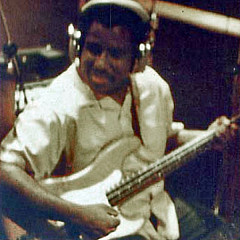
Bass Player Scott Edwards

Bass Player Scott EdwardsSong Writing

Scott was Stevie Wonder's bass player before becoming a top session player. Hits he played on include "I Will Survive," "Being With You" and "Sara Smile."
How "A Rolling Stone Gathers No Moss" Became Rock's Top Proverb

How "A Rolling Stone Gathers No Moss" Became Rock's Top ProverbSong Writing

How a country weeper and a blues number made "rolling stone" the most popular phrase in rock.
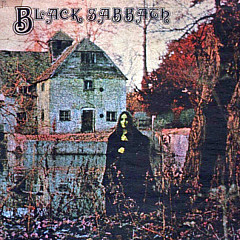
Five Rockers Who Rolled With The Devil

Five Rockers Who Rolled With The DevilSong Writing

Just how much did these monsters of rock dabble in the occult?