Never Never
by Korn

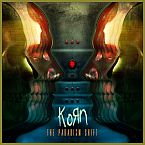
Album: The Paradigm Shift (2013)
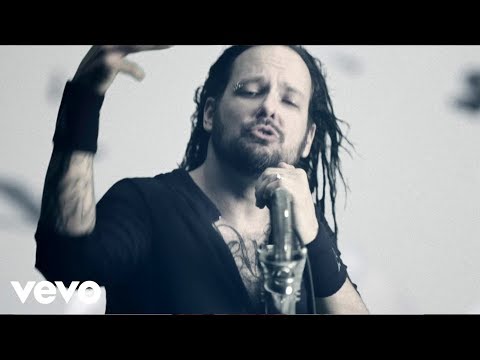
Play Video

Songfacts®:

  • This was released as the first single from The Paradigm Shift, Korn's first album to feature original guitarist Brian "Head" Welch since 2003's Take a Look in the Mirror. Guitarist James "Munky" Shaffer explained that the album's title has special significance for the band members. "It's a term encompassing different perspectives," he said. "You can view a piece of art from one angle and it takes on a certain image. If you look from another angle, it's a completely different image. We liken that to Korn in 2013. With Head back in the fold, all of the elements fans have loved since day one are there, but we're interpreting them from a new perspective. It's a bigger, brighter and bolder Korn."
  • Singer Jonathan Davis explained the song's meaning to The Pulse of Radio. "It's about relationships," he said. "It's about anything. It seems like you try and try to make things work and you repeatedly fail at it. It's just like, throw your hands up in the air and give up, and it's that kind of vibe. I was feeling that towards life, basically."
  • Jonathan Davis expanded on the story of the song: "It was an amazing night when we finished that song," he said. "It's a relationship song. You go through that s--t and you get hurt so bad. Then you think, 'It's not worth it anymore. I'm not going to fu--ing love again.' You experience so many pressures to be a good dad, a good husband, a good lover, or whatever. Being in a relationship is a lot of work."
  • The melodic, commercial style of this song met with some mixed reactions from Korn fans, which singer Jonathan Davis told Metal Hammer magazine was his intention. He explained, "We put this out first cause I knew it was going to piss off a lot of people. And um, so I did it. That song ain't for dudes, it's for the ladies."
  • The song was initially in danger of being left off The Paradigm Shift tracklisting. "When I heard it we were like, 'Oh, that's pretty cool, but I don't know if it's something we're going for on this thing," Brian Welch recalled to Billboard magazine. "Even (Don Gilmore, producer) was like, 'Yeah, I don't know if it's gonna be a contender, but let's see."

    "Then, as we were packing up and getting ready to leave," he continued, "Ray (Luzier) was like, 'Shouldn't we lay drums on that one song Jonathan did, just in case?' and the producer's like, 'I don't think we need to, but if you want to just to have it, we could.' So they threw the drums down and Jonathan and Don Gilmore went to work on the vocals and, boom, when the vocals were there it was like, 'Oh, wow, this could be a really cool song,' and now it's the first single."

Comments: 1

  • Jack from European UnionNever Never is one of the best songs from the album.
    We all say that after we break up with someone: I'll never be with someone. It is of no use. Obviously, we're all hypocrites because we'll still search for love :-(
see more comments

Editor's Picks

Divided Souls: Musical Alter Egos

Divided Souls: Musical Alter EgosSong Writing

Long before Eminem, Justin Bieber and Nicki Minaj created alternate personas, David Bowie, Bono, Joni Mitchell and even Hank Williams took on characters.

Harry Shearer

Harry ShearerSongwriter Interviews

Harry is Derek Smalls in Spinal Tap, Mark Shubb in The Folksmen, and Mr. Burns on The Simpsons.

Soul Train Stories with Stephen McMillian

Soul Train Stories with Stephen McMillianSong Writing

A Soul Train dancer takes us through a day on the show, and explains what you had to do to get camera time.

Brian Kehew: The Man Behind The Remasters

Brian Kehew: The Man Behind The RemastersSong Writing

Brian has unearthed outtakes by Fleetwood Mac, Aretha Franklin, Elvis Costello and hundreds of other artists for reissues. Here's how he does it.

John Parr

John ParrSongwriter Interviews

John tells the "St. Elmo's Fire (Man In Motion)" story and explains why he disappeared for so long.

Justin Hayward of The Moody Blues

Justin Hayward of The Moody BluesSongwriter Interviews

Justin wrote the classic "Nights In White Satin," but his fondest musical memories are from a different decade.