
911

Album: Chromatica (2020)
Charted: 101
Play Video

Songfacts®:

  • Lady Gaga references her addictive and self-destructive behavior issues during this robotic house number.

    My biggest enemy is me ever since day one
    Pop a 911, then pop another one


    Gaga told Apple Music's Zane Lowe this song is about the antipsychotic medication she takes, which acts as an emergency reset for her. "It's because I can't always control things that my brain does," she explained. "I know that. And I have to take medication to stop the process that occurs."
  • Gaga takes a prescription drug called Olanzapine. The Mother Monster has battled mental issues since a traumatic teenage experience of being sexually assaulted by a music producer 20 years her senior. She details the mental problems that led to her taking antipsychotic medication on the song's first verse.

    Turnin' up emotional faders
    Keep repeating self-hating phrases
    I have heard enough of these voices
    Almost like I have no choice
    This is biological stasis
    My mood's shifting to manic places


    Olanzapine, sold under the trade name Zyprexa among others, is primarily used to treat schizophrenia and bipolar disorder.
  • Gaga wrote the song with:

    Her regular collaborator BloodPop, who served as Chromatica's principal producer.

    French DJ Madeon, who also worked with Gaga on her Artpop album.

    Songwriter Justin Tranter, whose other credits include Justin Bieber's "Sorry," Hailee Steinfeld's "Love Myself" and Selena Gomez's "Good For You."
  • 911 is the national emergency dial number in the United States. Other artists who have used it as a metaphor include Jordin Sparks and Tyler, the Creator.
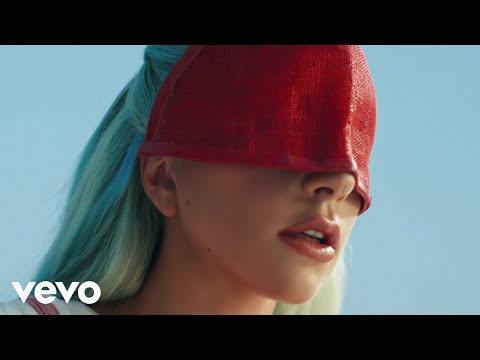
  • The video originated from director Tarsem Singh sharing a "25 year-old-idea" with Gaga, as her life story had spoken to him in a big way. The highly symbolic clip shows the singer imagining herself in a desert world. The scenes are revealed to be a hallucination and the visual ends with Gaga in the real world being treated by paramedics after being hurt in a car-bicycle accident. According to the songstress, the video concerns her "experience with mental health and the way reality and dreams can interconnect."
  • Throughout the video, Singh visually references The Color of Pomegranates, a Soviet art film about the life of a poet. Gaga explained on Instagram that the visual is "the poetry of pain."
  • Tarsem Singh's other video credits include R.E.M's "Losing My Religion" and En Vogue's "Hold On." He made his movie directorial debut in 2000 with the Jennifer Lopez film The Cell.
  • Singh told Entertainment Weekly he came up with the dream-like concept for the video in the early '90s and considered the concept for Massive Attack's 1998 single "Angel," but their schedules never worked.

    "I wanted to do it in Namibia in the sand dunes, but I'd already done The Cell [in sand], so the idea kind of went away," he said. "Then, I got '911.'"

Comments

Be the first to comment...

Editor's Picks

Max Cavalera of Soulfly (ex-Sepultura)

Max Cavalera of Soulfly (ex-Sepultura)Songwriter Interviews

The Brazilian rocker sees pictures in his riffs. When he came up with one of his gnarliest songs, there was a riot going on.

History Of Rock

History Of RockSong Writing

An interview with Dr. John Covach, music professor at the University of Rochester whose free online courses have become wildly popular.

Martyn Ware of Heaven 17

Martyn Ware of Heaven 17Songwriter Interviews

Martyn talks about producing Tina Turner, some Heaven 17 hits, and his work with the British Electric Foundation.

Michael W. Smith

Michael W. SmithSongwriter Interviews

Smith breaks down some of his worship tracks as well as his mainstream hits, including "I Will Be Here For You" and "A Place In This World."

British Invasion

British InvasionFact or Fiction

Go beyond The Beatles to see what you know about the British Invasion.

Jethro Tull

Jethro TullFact or Fiction

Stage urinals, flute devices, and the real Aqualung in this Fact or Fiction.