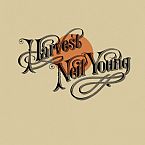
Words (Between the Lines of Age)

Album: Harvest (1972)
Play Video

Songfacts®:

  • This song was written by Neil Young and appears as the final track on Harvest, his fourth solo album. It features his signature lyrics-from-the-heart, soulful melodies, and poetic countryside metaphors. Look for the unusual time signature of 11/8 on the interludes, alternating with the standard 4/4 for lyrics and chorus.
  • While "Words" itself didn't see single release, the album Harvest charted #1 on the Billboard 200 and also on the Australian Kent Music Report Albums Chart. By the way, the hit "Heart Of Gold" from this album is Young's only #1 hit.
  • Personnel for "Words": Neil Young on lead guitar and vocals, Ben Keith on pedal steel guitar, Jack Nitzsche on piano, Tim Drummond on bass, Kenny Buttery on drums, and Stephen Stills and Graham Nash on backing vocals. Nitzsche, Keith, Drummond, and Buttrey are also collectively known as "The Stray Gators," primarily the supporting band for Neil Young but also appearing in places like Jewel's Pieces of You.
  • Part of the Harvest album was mixed at Neil Young's personal ranch home. He had his engineer rig speakers right and left to the house and the barn, respectively. Then Young, Crosby, and Nash would sit outside between the house and barn and listen to the playback. When asked how it was going, Neil Young might respond "More barn!"
  • The somewhat impenetrable lyrics of this song might be one of the examples comedian Dana Carvey has in mind when he does his parody "Every Neil Young Song You've Ever Heard," as part of his stand-up routine. Strumming an acoustic guitar, Carvey does an impression of Young's voice while singing lyrics like "secret whores with ancient vices; Lucky has the lowest prices." The parody, like all of Carvey's routines, is assumed to be done in the most affectionate spirit imaginable.
  • A 16-and-a-half minute version of the song is included on the Journey Through The Past album that followed up Harvest. The album was made as a soundtrack for a critically panned film Young made, also named Journey Through The Past. This longer version of the song has no substantive difference from the Harvest version. It just incorporates a longer instrumental jam.

Comments: 2

  • Bernard Douglas Cook from Foley, Al, Usa@R from Hawaii: are you serious, you think Neil & the rest of his band/entourage were all shooting smack? Do you mean his what, bass player, who od'd, was your g.f.'s brother & your gf also od'd? I'd like to hear read some further verification to believe that!
  • R from HawaiiI was actually present at the ranch during this period on and off. His equipment manager/roadie was the older brother of a girlfriend . Individual success was happening. Its was a party for something. And everybody was strung out. Bad. The brother died, of a year later. She od’d about the same time. He is not making tea with that water. Many people arent familiar with the old fashion way of shooting smack. He survived . Sone didnt. Very very sad time for ne.
see more comments

Editor's Picks

Jon Anderson of Yes

Jon Anderson of YesSongwriter Interviews

From the lake in "Roundabout" to Sister Bluebird in "Starship Trooper," Jon Anderson talks about how nature and spirituality play into his lyrics for Yes.
Kerry Livgren of Kansas

Kerry Livgren of KansasSongwriter Interviews

In this talk from the '80s, the Kansas frontman talks turning to God and writing "Dust In The Wind."

Gavin Rossdale of Bush

Gavin Rossdale of BushSongwriter Interviews

On the "schizoid element" of his lyrics, and a famous line from "Everything Zen."

Steven Tyler of Aerosmith

Steven Tyler of AerosmithSongwriter Interviews

Tyler talks about his true love: songwriting. How he identifies the beauty in a melody and turns sorrow into art.
Ian Anderson of Jethro Tull

Ian Anderson of Jethro TullSongwriter Interviews

The flautist frontman talks about touring with Led Zeppelin, his contribution to "Hotel California", and how he may have done the first MTV Unplugged.
Charles Fox

Charles FoxSongwriter Interviews

After studying in Paris with a famous composition teacher, Charles became the most successful writer of TV theme songs.