
World Weary

Album: Revues (1928)
Play Video

Songfacts®:

  • Noël Coward wrote this song for one of his revues, but it is largely autobiographical, or at least based on his state of mind at the time. Although he had been a child actor, Coward, who was born in 1899, was not propelled to stardom until 1924 when his play The Vortex scored on both sides of the Atlantic. But less than three years later, This Was A Man which was banned in England bombed in the United States, opening at the Klaw Theatre in New York City on November 23, 1926, and closing before Christmas, running for a disappointing 31 performances. At this point, years of near constant hard work caught up with him; he wrote in his autobiography "I felt suddenly sick of the theatre and everything to do with it, sick of cities and high buildings and people and screaming traffic."

    These sentiments are reflected in the lyrics with references to buildings obscuring the sky and longing to get away from it all.

    He decided to take a well earned break, and set sail for Hong Kong on Christmas Day, but stopped off in Honolulu where he was accommodated by the Dillingham family while he recuperated from exhaustion and an illness which was misdiagnosed as a recurrence of childhood tuberculosis. He spent weeks just lying and dozing in the sun; his jaunty love song "A Room With A View" came out of this sojourn, but when he returned, refreshed, he produced This Year Of Grace!.

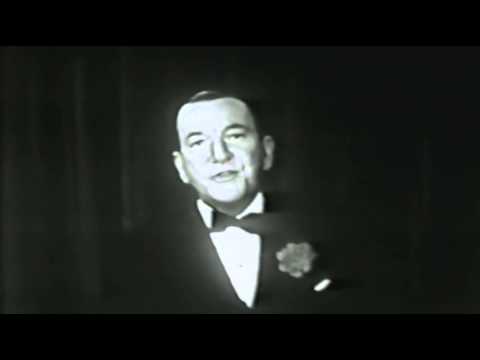
    First presented by Charles B. Cochran at the Palace Theatre, Manchester on February 28, 1928 as Charles B. Cochran's 1928 Revue; it was transferred to the London Pavilion on March 22 as This Year Of Grace! and ran for 316 performances. Coward himself said it was "the best of all my revues." When it opened at the Selwyn Theatre, New York on November 7, 1928, he played the lead with Beatrice Lillie, and "World Weary" went into the show. Lillie sang the song as an office boy munching on an apple, but as usual, Coward was the best interpreter of his own songs. The 1955 CBS special Together With Music features an alluring performance in which he sings the song in a mixture of upper class English and American jazz/blues accents.
  • Originally "World Weary" included the lines
    "My loving friends will not be there,
    I'm so sick of their
    God-damned faces..."
    This had to be altered to read "...darn-fool faces..." a change he was not happy with, complaining "This compromise, while soothing outraged public opinion, weakened the song considerably." The televised version is though surely superior, generating sympathy for the oppressed performer rather than showing one who is simply full of contempt. >>>
    Suggestion credit:
    Alexander Baron - London, England, for above 2

Comments

Be the first to comment...

Editor's Picks

Rupert Hine

Rupert HineSongwriter Interviews

Producer Rupert Hine talks about crafting hits for Tina Turner, Howard Jones and The Fixx.

Barney Hoskyns Explores The Forgotten History Of Woodstock, New York

Barney Hoskyns Explores The Forgotten History Of Woodstock, New YorkSong Writing

Our chat with Barney Hoskyns, who covers the wild years of Woodstock - the town, not the festival - in his book Small Town Talk.

Janis Ian: Married in London, but not in New York

Janis Ian: Married in London, but not in New YorkSong Writing

Can you be married in one country but not another? Only if you're part of a gay couple. One of the first famous singers to come out as a lesbian, Janis wrote a song about it.

Soul Train Stories with Stephen McMillian

Soul Train Stories with Stephen McMillianSong Writing

A Soul Train dancer takes us through a day on the show, and explains what you had to do to get camera time.

Concert Disasters

Concert DisastersFact or Fiction

Ozzy biting a dove? Alice Cooper causing mayhem with a chicken? Creed so bad they were sued? See if you can spot the real concert mishaps.

Early Days of MTV

Early Days of MTVFact or Fiction

If you can recall the days when MTV played videos, you know that there are lots of stories to tell. See if you can spot the real ones.