I Know What I Know

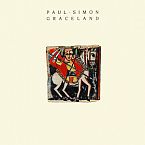
Album: Graceland (1986)
Play Video

Songfacts®:

  • When Paul Simon heard a bootleg tape of South African music, he loved the sound and decided that he wanted to record some of those songs. A prudent man would find some American musicians, play them the tape, and have them duplicate the sound, but Paul Simon has never been prudent when it comes to musical integrity. He wanted to record with the same musicians he heard on the tape, even though South Africa was brimming with racial tension and under a United Nations cultural boycott designed to keep musicians like Simon out. With help from his record company, Simon set up recording sessions in South Africa with some of the bands he heard on the tape, and he recorded with them when he got there in the summer of 1985.

    "I Know What I Know" was based on a song by the group General M.D. Shirinda and the Gaza Sisters. They brought their families along, so the sessions had a party atmosphere despite Simon's bulldog work ethic. Engineers rolled tape and Paul had the group record various parts over and over. He returned to America with reels of 2-inch tape that producer Roy Halee edited into this track.
  • The credit on this song reads: "Words by Paul Simon, Music by Paul Simon and General M.D. Shirinda." Simon explained in the Under African Skies documentary: "With those groups that I know, I had a clear idea of what I really liked and what I wanted to record. Those songs that they are listed as co-writing is because they are based on tracks I had heard - I could point to their record and say, 'can you play this, but change it a little here?' Whatever writing was shared we shared the credit and shared the royalties."
  • The female backing vocals by the Gaza Sisters get your attention of this song. They're singing in the Shangaan language, and they come in at unexpected places, which is what Simon had in mind. One of their singers, Sonti Mndebele, explained: "It's different because it's like you're singing out of tune sometimes, but that is how it should sound."
  • Instead of writing political lyrics to reflect the South African experience, Paul Simon instead focused on writing words that would sync to the tracks and tell a clever story in the process. This song is a send-up of vapid celebrity culture - especially those glitzy but emotionally bankrupt parties where posturing is the norm.

    Simon says it took him an extraordinarily long time to write the lyrics for the songs he recorded in South Africa; it was a challenge finding words to compliment the complex, layered tracks. Lyrics like "don't I know you from the cinematographer's party" were written not just to tell a story, but to carefully scan with the rhythms.

Comments

Be the first to comment...

Editor's Picks

Dave Mason

Dave MasonSongwriter Interviews

Dave reveals the inspiration for "Feelin' Alright" and explains how the first song he ever wrote became the biggest hit for his band Traffic.

Why Does Everybody Hate Nu-Metal? Your Metal Questions Answered

Why Does Everybody Hate Nu-Metal? Your Metal Questions AnsweredSong Writing

10 Questions for the author of Precious Metal: Decibel Presents the Stories Behind 25 Extreme Metal Masterpieces

Crystal Waters

Crystal WatersSongwriter Interviews

Waters tells the "Gypsy Woman" story, shares some of her songwriting insights, and explains how Dennis Rodman ended up on one of her songs.

Lou Gramm - "Waiting For A Girl Like You"

Lou Gramm - "Waiting For A Girl Like You"They're Playing My Song

Gramm co-wrote this gorgeous ballad and delivered an inspired vocal, but the song was the beginning of the end of his time with Foreigner.

Meshell Ndegeocello

Meshell NdegeocelloSongwriter Interviews

Meshell Ndegeocello talks about recording "Wild Night" with John Mellencamp, and explains why she shied away from the spotlight.

The Police

The PoliceFact or Fiction

Do their first three albums have French titles? Is "De Do Do Do, De Da Da Da" really meaningless? See if you can tell in this Fact or Fiction.