A Satisfied Mind

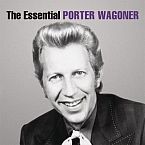
Album: The Essential Porter Wagoner (1955)
Play Video

Songfacts®:

  • This track was originally written by Red Hayes and Jack Rhodes. Hayes explained the origin of the song in an interview: "The song came from my mother. Everything in the song are things I heard her say over the years. I put a lot of thought into the song before I came up with the title. One day my father-in-law asked me who I thought the richest man in the world was, and I mentioned some names. He said, 'You're wrong, it is the man with a satisfied mind.'" He added: "It has been done a lot in churches. I came out of the Opry one night and a church service was going on nearby. The first thing I hear was the congregation singing 'Satisfied Mind.' I got down on my knees."
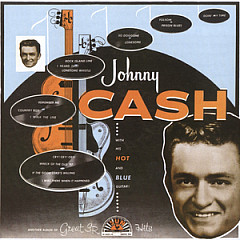
  • Wagoner's version was a #1 Country hit in 1955, but many other artists have covered the song, including Jeff Buckley on his 1998 album Sketches (for My Sweetheart the Drunk). Johnny Cash recorded a version that was released in 2004 on the Kill Bill: Volume 2 soundtrack, and which later appeared on his posthumous 2010 album American VI: Ain't No Grave. Cash told Mojo magazine's Sylvie Simmons why he decided to cover this song: "It was recorded by a friend of mine named Porter Wagoner. I always liked the song. When I started touring in the '50s, that was one of the songs I'd sing. I had to sing somebody's songs since I didn't have enough of mine to do the show. And I liked that song song very much. I sang that song for Rick (Rubin - Cash's producer) and he loved it, and I kept working on it until I got a performance I felt was the best I could do."
  • In 1955, Colin Escott wrote about the origins of this song in the archival booklet for the Bear Family compilation Dim Lights, Thick Smoke and Hillbilly Music. He claimed a radically different and strange origin for the song. "In one [story of the song's genesis], Red Hayes had an encounter with a UFO. A quasi-magnetic force pulled his arm against the extraterrestrial object, inflicting a burn, and, after the burn healed, Red realized that the aliens had given him a song by way of compensation."
  • Bob Dylan recorded this song twice, first in 1967 on a version that wasn't released until 2014 on The Bootleg Series Vol. 11: The Basement Tapes Complete, and again for his 1980 semi-gospel album Saved.

Comments: 2

  • Jennifur Sun from RamonaLove the song and the lyrics, especially about money not buying back your youth when you are old or a friend when you are lonely.
  • Barry from Sauquoit, NyOn October 9th 1955, a weeklong tour of the Louisiana Hayride, headlined by Porter Wagoner, played its first date at the Cherry Springs Dance Hall in Cherryspring, Texas...
    At the time his "Satisfied Mind" was at #5 on Billboard's C&W Best Seller in Stores chart; and at #3 on both Billboards’ C&W Most Played in Jukeboxes chart and Most Played by Jockeys chart...
    Two of the other acts to accompanied Mr. Wagoner on the tour were Elvis Presley and Johnny Cash, and Elvis' "I Forgot to Remember to Forget" was at #11 on Billboard's C&W Most Played by Jockeys chart...
    And on the Billboard's C&W Territorial Hits chart for Memphis, Tennessee; Johnny Cash's "Cry Cry Cry" was at #4.
see more comments

Editor's Picks

Prince

PrinceFact or Fiction

Prince is shrouded in mystery, making him an excellent candidate for Fact or Fiction. Is he really a Scientologist? Does he own an exotic animal?

Matt Sorum

Matt SorumSongwriter Interviews

When he joined Guns N' Roses in 1990, Matt helped them craft an orchestral sound; his mezzo fortes and pianissimos are all over "November Rain."

Modern A Cappella with Peder Karlsson of The Real Group

Modern A Cappella with Peder Karlsson of The Real GroupSong Writing

The leader of the Modern A Cappella movement talks about the genre.

Experience Nirvana with Sub Pop Founder Bruce Pavitt

Experience Nirvana with Sub Pop Founder Bruce PavittSong Writing

The man who ran Nirvana's first label gets beyond the sensationalism (drugs, Courtney) to discuss their musical and cultural triumphs in the years before Nevermind.

80s Video Director Jay Dubin

80s Video Director Jay DubinSong Writing

Billy Joel and Hall & Oates hated making videos, so they chose a director with similar contempt for the medium. That was Jay Dubin, and he has a lot to say on the subject.

Justin Hayward of The Moody Blues

Justin Hayward of The Moody BluesSongwriter Interviews

Justin wrote the classic "Nights In White Satin," but his fondest musical memories are from a different decade.