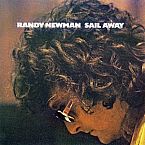
Sail Away

Album: Sail Away (1972)
Play Video

Songfacts®:

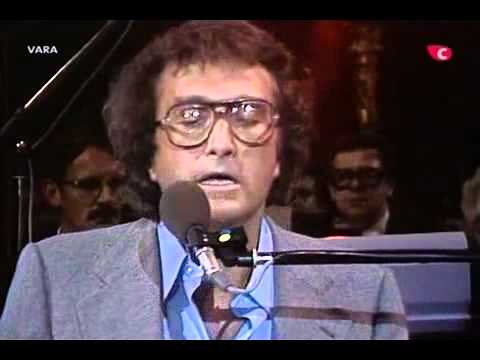
  • This thoughtful, austere piano ballad about the slave trade finds Newman's slaver protagonist attempting to convince his African listeners to climb aboard his ship and "sail away" with him to the promised land of America. Newman explained to NPR in a May 8, 2013 interview: "I wrote about slave trade from the view of the recruiter from the slave trade. He is talking, you know, come to America and then talks about using that and I didn't another way to do it. I mean, you could say the slave trade is bad, horrendous or a great crime of the nation, but I chose to do differently."
  • Among the artists that have covered the tune are Bobby Darin, who recorded it on his last album before he died in 1972 (Motown label's Bobby Darin) and Linda Ronstadt for her 1973 set Don't Cry Now. Etta James also released it in 1973 on her self-titled album.
  • It's not glaringly obvious what this song is about, as there's no direct mention of slavery. Newman never went for the obvious though, preserving nuance at the risk of misinterpretation. The biggest hint to the song's meaning is the line "We will cross the mighty ocean into Charleston Bay" - Charleston Bay, South Carolina is where much of the slave trade took place.

    One person who didn't get it, according to Newman, was Bobby Darin, who sang it in a more jovial manner.
  • The song is listed at #264 on Rolling Stone's 500 Greatest Songs. They said: "As usual for Newman, it combines lush melody with painfully funny satire."
  • Newman talked about this song in a 2017 interview with Rolling Stone: "There was a producer, the husband of Leslie Caron. He wanted to make a movie where he would give ten minutes to these artists - people like Van Morrison, Jimi Hendrix, me – to do anything we wanted. It never got made. But I had this idea of a slave ship and a sea shanty - this guy standing in a clearing, singing to a crowd of natives. These people in my songs don't know they're bad. They think they're fine. I didn't just want to say, 'Slavery is awful.' It's too easy. I wasn't doing Roots."
  • The Rolling Stones released a much more popular song dealing with the slave trade in 1971: "Brown Sugar." That one was never seen as a commentary on the subject.

Comments: 1

  • Bobo2432 from UsaBobby Darin got it. I've listened to it carefully. BD embodies the guile of the slaver. Nuance. I can't believe that Randy Newman and his intellect doesn't get that. I think Newman does get that. I would say the reporter's take on Darin and Newman's feeling is wrong....
see more comments

Editor's Picks

Dino Cazares of Fear Factory

Dino Cazares of Fear FactorySongwriter Interviews

The guitarist/songwriter explains how he came up with his signature sound, and deconstructs some classic Fear Factory songs.

Jeff Trott

Jeff TrottSongwriter Interviews

Sheryl Crow's longtime songwriting partner/guitarist Jeff Trott reveals the stories behind many of the singer's hits, and what its like to be a producer for Leighton Meester and Max Gomez.

Famous Singers' First Films

Famous Singers' First FilmsSong Writing

A look at the good (Diana Ross, Eminem), the bad (Madonna, Bob Dylan) and the peculiar (David Bowie, Michael Jackson) film debuts of superstar singers.

Ramones

RamonesFact or Fiction

A band so baffling, even their names were contrived. Check your score in the Ramones version of Fact or Fiction.

90s Music Quiz 1

90s Music Quiz 1Music Quiz

First question: Michael Jordan and Magic Johnson appeared in videos for what artist?

Al Jourgensen of Ministry

Al Jourgensen of MinistrySongwriter Interviews

In the name of song explanation, Al talks about scoring heroin for William Burroughs, and that's not even the most shocking story in this one.