This song is about a boy who wants to bury his father at sea over the objections of two priests. It's a satire of rituals - the priests think the man should be buried according to their practices.
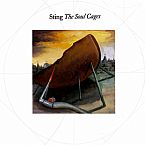
Sting's father died shortly before he wrote this song, and The Soul Cages album was a result of his grief. Sting wrote in Lyrics By Sting: "We'd had a difficult relationship, and his death hit me harder than I'd imagined possible. I felt emotionally and creatively paralyzed, isolated, and unable to mourn. I just felt numb and empty, as if the joy had been leached out of my life."
He added: "I became obsessed with my hometown [Wallsend, England] and its history, images of boats and the sea, and my childhood in the shadow of the shipyards."
The music is based on a Cello suite from Bach.
Sting used the river to represent continuity. Civilizations and structures can come to an end, but rivers are always there. He explained in an acceptance speech when he was honored by his hometown of Newcastle:
"I was born with in sight of that river [The River Tyne]. It runs through my veins, as surely as it runs through the landscape of my dreams. It is a constant recurring theme in many of my songs: 'All this time the river flowed endlessly to the sea.' I wrote that song about the time of the death of my father, gaining some solace in the idea that one human life may come to an end, but the river carries on, just as those of us who are left must carry on."
Most of the images, including the priests, shire horses and ferry, are based on things Sting encountered when he was growing up.
Sting became interested in the burial at sea theme after reading about cultures that bury their dead in boats, which are supposed to take them to the afterlife.
Melanie Griffith is in the video along with Sting's wife, Trudie Styler. They play French maids. Griffith starred with Sting in the 1988 movie Stormy Monday.
The clip was directed by Alex Proyas and filled with lots of crazy characters on board a mock ocean liner. At the end, Sting goes overboard.
Sting used this to open most of the shows on his Soul Cages tour.
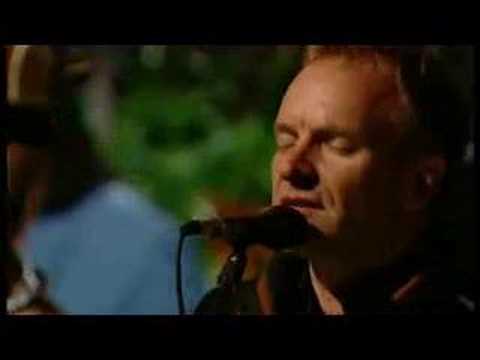
Sting used this as the title to his 2001 concert album. The show was recorded in Italy on Sept 11, the day of the terrorist attacks on America. The planned webcast was pulled after one song, but the concert continued with a somber tone.
Sting wrote this in Normandy while staying in the room novelist Marcel Proust used to occupy. He told The Independent: "OK, I'm in Proust's room, Remembrance of Things Past and all that, right, sat down and looked at the sea. Wrote a few images down, a bit of free association, and then after a while you get some idea of a structure. Songwriting has always been a miraculous process which is incredibly satisfying, and I don't necessarily understand how it's done. And, for me, it happens with less and less frequency, actually. Which is scary, I suppose."
Along with "Island of Souls" and "When We Dance," this was one of three previously released songs that Sting included in his 2014 musical The Last Ship, which was inspired by his childhood growing up in a shipbuilding community. Sting, who wrote all the music for the play, joined the cast of the Broadway production a few months after it opened.