Sleeping Satellite

Album: Great Expectations (1992)
Charted: 1 32
Play Video

Songfacts®:

  • This evocative song sounds like it could be about a broken relationship, but its meaning is much more literal. The "sleeping satellite" is the Moon, and the song is about how humans stopped going there in 1972 after the novelty wore off. Archer sings:

    Did we fly to the Moon too soon?
    Did we squander the chance
    In the rush of the race


    Once the "space race" was won by the United States, which landed a man on the moon in 1969 on the Apollo 11 mission, interest in lunar exploration waned - for many it was more about competition than discovery. Archer asks:

    Have we lost what it takes to advance?
    Have we peaked too soon?
    If the world is so green
    then why does it scream under a blue moon?


    This brings up the question of how we treat the planet we live on. Global warming wasn't much of a concern in 1992, but environmentalists warned that we would face consequences if we kept polluting the planet. Also, any thoughts of colonizing the Moon were long forgotten, leaving us all stuck on Earth but at the same time, willing to destroy it. Few were thinking about these things at the time, which is one reason the meaning of the song remained latent, but decades later the message proved prescient, as there were still no more manned moon landings and the threat of climate change proved very real.
  • Some of the references in the lyrics:

    "The Eagle's flight" - The Eagle was the name of the lunar module carried on Apollo 11 that touched down on the Moon.

    "Are the Seas still dry?" - The Sea of Tranquillity is where The Eagle landed.
  • Archer is an English singer of West Indian descent. She wrote "Sleeping Satellite" in 1988 with John Beck (who also co-wrote "Put Your Records On" by Corinne Bailey Rae) and John Hughes, whom she met while working at Flexible Response Studios in Bradford, England. They became members of her band and her writing partners - every song on her first album is a collaboration amongst the trio. At first, they called themselves The Archers, but they got a better response from record labels when presented as a solo act.

    EMI signed her in 1990, but it took about a year to record the album - the first producer didn't work out. Another year went by with the label sending Archer on the road to get in sync with her 6-piece band. During this time, EMI developed a marketing plan for Archer, sending her on industry showcases and buying radio ads to promote "Sleeping Satellite," her first single. The plan worked: When the song was released, it went to #1 in the UK and Archer earned lots of positive press. She was not keen on celebrity though, and recoiled from the media blitz surrounding her, admitting in interviews that she wanted it to stop.

    Archer didn't release more material until 1994, when she put out an EP called Shipbuilding with no original songs, just four Elvis Costello covers and a few live or alternate versions of songs from her first album. Her next album, Bloom (1996), was filled with original songs but failed to chart. She and EMI parted ways and Archer took a few years off from music. She appears from time to time with new material, but keeps a low profile.
  • In America, this song managed just a lowly chart placement of #32, but the song had a long life, playing as a recurrent for years on many radio stations after it was released.
  • Thanks to this song, Archer won Best British Newcomer at the BRIT awards in 1993.
  • The album title, Great Expectations, was Archer's idea. It comes from the book by Charles Dickens about a boy who comes into money and lets it go to his head. It's a reminder to Archer to stay grounded.
  • Archer is in the contacts list for someone at the European Space Agency (ESA). From time to time, she sings "Sleeping Satellite" to astronauts on missions for the agency.
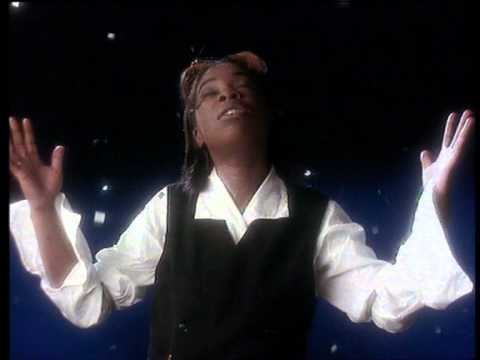
  • Two different music videos were made for the song: a European version and a US version. The European music video was directed by Zanna, who has also worked with Kim Wilde, Crowded House and Simply Red.

Comments: 7

  • Elinor from DevonPeople were worried about global warming in 1992! And long before! Have you not heard Big Yellow Taxi by Joni Mitchell? That came out decades before Sleeping Satellite!
  • Ian from EuWow could be an sad anthem for the post-truth era.
  • Rich from Rhode Island UsaLove this song and whole "Great expectations" Album
  • Tezzerii from EnglandIt wasn't just a loss of interest in the space program. Lots of people were protesting the amount of money spent on space exploration, while people were starving in many parts of the world. Public opinion turned against the space program. Politicians cut NASA's funding to appease the voters. That's why it died.
  • Dave Walker from Philadelphia, PaI play it as part of my Walk-In Music list at our local Planetarium.
  • Simon from MaputoWho was the bass player? Can't find it listed anywhere, but the bass really drives the song!
  • Daztoot45 from North Wales United KingdomI've always said that the song was about the Apollo moon landings. I knew it!
see more comments

Editor's Picks

Who Did It First?

Who Did It First?Music Quiz

Do you know who recorded the original versions of these ten hit songs?

George Harrison

George HarrisonFact or Fiction

Did Eric Clapton really steal George's wife? What's the George Harrison-Monty Python connection? Set the record straight with our Fact or Fiction quiz.

Randy Houser

Randy HouserSongwriter Interviews

The "How Country Feels" singer talks Skynyrd and songwriting.

Album Cover Inspirations

Album Cover InspirationsSong Writing

Some album art was at least "inspired" by others. A look at some very similar covers.

Songs Discussed in Movies

Songs Discussed in MoviesSong Writing

Bridesmaids, Reservoir Dogs, Willy Wonka - just a few of the flicks where characters discuss specific songs, sometimes as a prelude to murder.

Michael Schenker

Michael SchenkerSongwriter Interviews

The Scorpions and UFO guitarist is also a very prolific songwriter - he explains how he writes with his various groups, and why he was so keen to get out of Germany and into England.