Burke and Hare

Album: Burke & Hare (1972)
Play Video

Songfacts®:

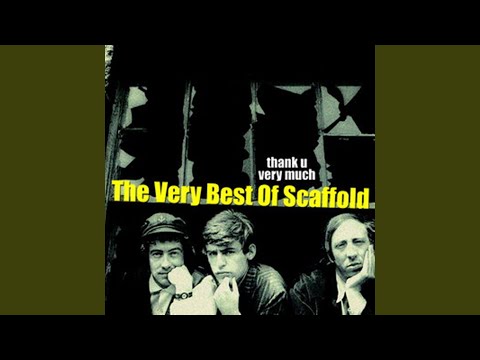
  • Running to 2 minutes, 43 seconds, "Burke And Hare" or "Burke & Hare" is a novelty song with lyrics by Norman Newell and music composed and conducted by Roger Webb. Newell (1919-2004) was a record producer who also co-wrote many songs.

    "Burke And Hare" was recorded by The Scaffold, and was used at the beginning of the 1972 Kenneth Shipman production Burke & Hare which was also known as Horrors Of Burke And Hare. This commercial film is a surprisingly accurate portrayal of the lives of two of history's most notorious villains.

    William Burke and William Hare were Irishmen who had immigrated to Edinburgh where Hare's wife ran a lodging house; in their short but deadly career, they murdered 16 people and sold their bodies to the anatomist Dr Robert Knox. The training of doctors and medical research necessitates a supply of cadavers, gruesome though this may sound, and in the early 19th Century there were formidable obstacles to their legal procurement. This led to bodysnatching, the stealing of recently deceased people from their graves. The men who did this were known variously as bodysnatchers or resurrectionists.

    Burke and Hare did not rob graves; according to Hare's account - which there is no reason to doubt - the first body they sold was of an army pensioner who had died from natural causes. He owed the Hares money at the time, so this was probably a fair trade. They took his body to Dr Knox, who gave them £7. 10 shillings, a considerable sum in 1827. It remains to be seen what exactly transpired between the eminently respectable anatomist and these two rogues, but he made it clear to them that he would pay well for bodies in good condition. This led to the pair murdering people who were not likely to be missed, including a number of prostitutes. Although Burke swore that Knox knew nothing of this, it is inconceivable that he could not have suspected.

    Even before the advent of modern policing, serial murders committed in a geographically small area were bound to come to light. When they were finally arrested, the Crown felt that in spite of the enormity of the men's crimes the evidence against them was not overwhelming, so the Lord Advocate, Sir William Rae, did a deal with the Devil and offered Hare immunity from prosecution if he would testify against his partner-in-crime, a deal he could surely not refuse. Burke was convicted on January 28, 1829, and hanged the following March; his body was publicly dissected at the Edinburgh Medical College, while his skeleton, death mask and tanned skin were retained for the institution's museum as grisly trophies.

    Hare was released in February 1829, but public outrage made him flee the city. Where he went remains a mystery, although according to one account he was blinded and ended up begging on the streets of London. The Edinburgh public had no doubt of the complicity of Dr Knox, as evinced by the rhyme:

    Doon the close and up the stair
    Butt and ben wi Burke and Hare
    Burke's the butcher, Hare's the thief
    And Knox the boy that buys the beef!


    At one point his house was stormed by an angry mob. In 1831, he resigned, and departed for London in 1842 where eventually he secured a post as a pathologist. He died in 1862. >>
    Suggestion credit:
    Alexander Baron - London, England

Comments

Be the first to comment...

Editor's Picks

Mike Scott of The Waterboys

Mike Scott of The WaterboysSongwriter Interviews

The stories behind "Whole Of The Moon" and "Red Army Blues," and why rock music has "outlived its era of innovation."

Edwin McCain

Edwin McCainSongwriter Interviews

"I'll Be" was what Edwin called his "Hail Mary" song. He says it proves "intention of the songwriter is 180 degrees from potential interpretation by an audience."

Philip Cody

Philip CodySongwriter Interviews

A talented lyricist, Philip helped revive Neil Sedaka's career with the words to "Laughter In The Rain" and "Bad Blood."

Harold Brown of War

Harold Brown of WarSongwriter Interviews

A founding member of the band War, Harold gives a first-person account of one of the most important periods in music history.

Graham Bonnet (Alcatrazz, Rainbow)

Graham Bonnet (Alcatrazz, Rainbow)Songwriter Interviews

Yngwie Malmsteen and Steve Vai were two of Graham's co-writers for some '80s rock classics.

Tony Joe White

Tony Joe WhiteSongwriter Interviews

The writer of "Rainy Night in Georgia" and "Polk Salad Annie" explains how he cooks up his Louisiana swamp rock.