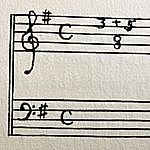

John Henry

Album: various (1890)
Play Video

Songfacts®:

  • This folk song tells the story of John Henry, an enormous man who worked on the Big Bend Tunnel near Talcott, West Virginia. The tunnel was carved through the Big Bend Mountain so the railroad could go through it instead of around it. Work began on the mile-and-a-quarter tunnel in 1870, and the project was completed three years later. It was grueling work, requiring men to pound away at the rock with hammers so they could insert dynamite.

    John Henry, as portrayed in this song, was determined to prove that he could do a better job than a new piece of technology: a steam drill. A contest was staged pitting him against the machine; he won, but died from the exertion.

    There may or may not have been a real John Henry, but his legend lives on in this song, which has taken on many forms over the years. The tunnel is real, and a statue depicting John Henry stands on the site. His ghost is rumored to haunt the tunnel.
  • Much of the John Henry story can be traced to the author Guy Johnson, who published a book called John Henry: Tracking Down a Negro Legend in 1929. Johnson obtained lyrics to the song that he estimated were written down in 1900. This early version was called "John Henry, Steel Driving Man" and contained 12 stanzas. Variations of the song have appeared with construction crews and chain gangs as the settings.
  • Artists to record this song include Peter Seeger, Pink Anderson, Chet Atkins, Paul Robeson, Harry Belafonte and Bruce Springsteen.
  • Folk historian Dan Whitener, who recorded the song in 2015 with his band Gangstagrass, explained in a Songfacts interview: "In the early versions, John Henry is black. He's a worker, and he may not necessarily have agency over whether or not he competes in this race. The history of labor in this country, you go back to miners and railyard workers, and the amazingly deep history of injustice, it's embedded in a lot of our folk music, but you hear different versions of the song and you might not necessarily get all those details.

    You think about who John Henry was, and the struggles he had to contend with and the symbolism. What does it mean that this guy is racing against the steam drill? What does it mean that he wins and he dies? What does it mean for his life?

    On face value, it's a cool thing, like, man, that guy's so strong, and you can read sort of an allegory about the Industrial Revolution:

    This thing is coming to automate all our jobs away. But don't worry, this guy will take care of it, he'll work until he dies!

    Wait a minute, what? What's the good thing about that?
  • Bruce Springsteen recorded "John Henry" on his 2006 album We Shall Overcome: The Seeger Sessions. The record won the award for Best Traditional Folk Album at the 2007 Grammy Awards.

Comments: 2

  • Sharon Monahan from Lutz FlLarry Penn also recorded it on “A Ride on The West Bound” c2002
  • Joseph Gilbert from Ojai, California, Usa, EarthWoody Guthrie also recorded a version of “John Henry”.
see more comments

Editor's Picks

Rick Springfield

Rick SpringfieldSongwriter Interviews

Rick has a surprising dark side, a strong feminine side and, in a certain TV show, a naked backside. But he still hasn't found Jessie's Girl.

Colbie Caillat

Colbie CaillatSongwriter Interviews

Since emerging from MySpace with her hit "Bubbly," Colbie has become a top songwriter, even crafting a hit with Taylor Swift.
Jim McCarty of The Yardbirds

Jim McCarty of The YardbirdsSongwriter Interviews

The Yardbirds drummer explains how they created their sound and talks about working with their famous guitarists.

Todd Rundgren

Todd RundgrenSongwriter Interviews

Todd Rundgren explains why he avoids "Hello It's Me," and what it was like producing Meat Loaf's Bat Out of Hell album.
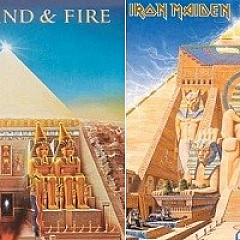
Album Cover Inspirations

Album Cover InspirationsSong Writing

Some album art was at least "inspired" by others. A look at some very similar covers.
Adam Young of Owl City

Adam Young of Owl CitySongwriter Interviews

Is Owl City on a quest for another hit like "Fireflies?" Adam answers that question and explains the influences behind many others.