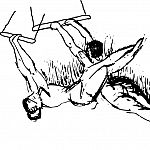

The Daring Young Man On The Flying Trapeze

Album: Circus Classics (1867)
Play Video

Songfacts®:

  • According to The Tin Pan Alley Song Encyclopedia, the 1868 song "The Daring Young Man On The Flying Trapeze" is "arguably the most famous circus song in American popular music"; the lyrics are generally credited to the English music hall performer George Leybourne, and the music to Alfred Lee, but "the authorship is suspect, a very similar ditty having been sung in London music halls by comic singer Joe Saunders earlier in the 1860s."

    Oops! If author Thomas Hischak had done a bit more research he would have realized that George Leybourne was the stage name of Joe Saunders (1842-84). The music was actually composed by Gaston Lyle; Alfred Lee was the arranger, and the song was first published in 1867.
  • The daring young man in question was Jules Léotard, the famous French trapeze artist. Léotard made his music hall debut in 1861 in London's West End; it was he who invented the leotard, the one-piece garment to allow the unrestricted movement which was so vital in his death-defying act, and which would later become standard wear for ballet dancers.

    Léotard was paid £180 a week for his act, the equivalent of £5,000 today, but died aged only 28, from an infectious disease rather than from a fall. Thomas Hischak says the song was first heard in American Vaudeville in the 1870s, where it was popularized by Johnny Allen.
  • The 1933 Rudy Vallee recording as "The Man On The Flying Trapeze" was a bestseller; this was arranged by May Singhi Breen, who also arranged "Tears," which thirty and more years later would become a massive hit for Ken Dodd. The composer of this version is credited as Walter O'Keefe on the sheet music, which was published by Robbins Music Corps. It was sung in the 1941 film Under Fiesta Stars, by Gene Autry; the song and subject have also inspired a number of films. >>>
    Suggestion credit:
    Alexander Baron - London, England, for all above
  • This features prominently in the 1934 romantic comedy It Happened One Night, where it's sung by passengers on a bus - including stars Clark Gable and Claudette Colbert.
  • This was used on a 1978 episode of The Muppet Show when Miss Piggy sings it during Kermit the Frog's ill-fated trapeze act.

Comments: 1

  • David T. from Northern CaliforniaAnother version which I'm surprised has not been mentioned here, given how both at the same time popular and obscure the song is as far as how often it is sung or mentioned in today's society, and given that any fans of the song would likely be visiting this page, is the version by Spike Jones. It's whacky with the arrangement, but shows a deep understanding of both the original lyrics and arrangement, and the seriousness and the silliness of love, while also paying a serious homage to the original.
see more comments

Editor's Picks

Dexys (Kevin Rowland and Jim Paterson)

Dexys (Kevin Rowland and Jim Paterson)Songwriter Interviews

"Come On Eileen" was a colossal '80s hit, but the band - far more appreciated in their native UK than stateside - released just three albums before their split. Now, Dexys is back.

Colin Hay

Colin HaySongwriter Interviews

Established as a redoubtable singer-songwriter, the Men At Work frontman explains how religion, sobriety and Jack Nicholson play into his songwriting.

Kristian Bush of Sugarland

Kristian Bush of SugarlandSongwriter Interviews

Kristian talks songwriting technique, like how the chorus should redefine the story, and how to write a song backwards.

Dick Wagner (Alice Cooper/Lou Reed)

Dick Wagner (Alice Cooper/Lou Reed)Songwriter Interviews

The co-writer/guitarist on many Alice Cooper hits, Dick was also Lou Reed's axeman on the Rock n' Roll Animal album.
Song Titles That Inspired Movies

Song Titles That Inspired MoviesSong Writing

Famous songs that lent their titles - and in some cases storylines - to movies.

Thomas Dolby

Thomas DolbySongwriter Interviews

He wrote "She Blinded Me With Science" so he could direct a video about a home for deranged scientists.