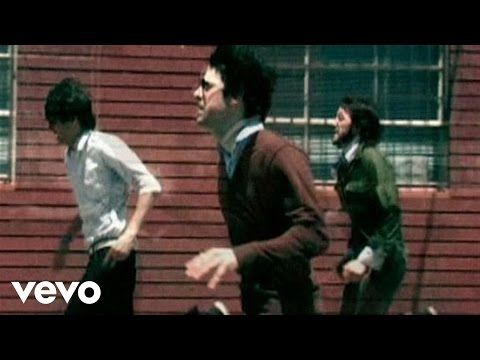
Nobody Move, Nobody Get Hurt

Album: With Love and Squalor (2005)
Charted: 21
Play Video

Songfacts®:

  • The With Love and Squalor album is fairly thematic, according to lead singer Keith Murray. "The general running themes are alcohol and sexual terror, in which the actual only decision made is to be totally indecisive at all times." And on that note, he explains that this song, released on their next album, is about a relationship on which he was teetering, and the inability to acknowledge that it even existed, much less move it forward. "It was very clear that something should have happened about three months prior, and just kept lingering because I would never possibly make a move on anything. And just getting the merits of being totally passive and indecisive because as long as there was no actual action taken, it was still very safe, and there was no threat that it could blow up in my face. Which, in fact, it did, because of that indecision and inaction."
  • This was the first We Are Scientists song to make the charts. It first came to attention when the band played it on The Late Show With Dave Letterman in December 2005, and was later featured on an episode of CSI New York. Appearing on Letterman was the band's first time on television, to Keith Murray's recollection.

    He says that although the general impression was of "a deer in the headlights," they didn't actually feel terribly nervous. "I think we just didn't really know how to navigate it," he explains, "and how do I play it – not in the musical sense, but in the experiential sense. I think we were just like, 'Uh, well, okay, I guess we play a song now? Look at camera? Don't look at camera? I'm gonna look at the floor' kind of thing."

    They were invited back to The Late Show in July 2008. "The second time was much, much, much more comfortable," Keith says, "because we had spent four years playing on TV with somewhat ludicrous frequency. So, yeah, the second time was, I would say, delightful. The first time was almost paralytic."

    Keith describes his Late Show experience as a positive one. "They've been doing it for so long, and being a major network New York City TV show, it's incredibly unionized. So everything is very rigid, there are very specific time slots in which you will load in and set up, and do a certain number of rehearsals first for sound, then for camera. And then you do those rehearsals at about, I don't know, one or two in the afternoon. I think they shoot the show at 5 or something. You are kept sort of locked away in your dressing room away from the other guests, actually. And then they give you a five-minute warning, you come downstairs, the first time you've been in the studio. You're connected to the show by a TV in your dressing room that you essentially watch late night TV at five in the afternoon. And then you go down and play. But actually everybody at Letterman is super, super nice. And their booking agent actually sent us a personal letter afterward thanking us for being there and stuff like that, which most of the shows don't do. They actually are pretty nice. Judging from their recent bookings, I think they're at least musically trying to lean toward a younger, cooler crowd these days. I don't think we met their booking agent, but it seems like they've got a pretty young, cool crew working on it these days." (read the full interview with Keith Murray)

Comments

Be the first to comment...

Editor's Picks

Donny Osmond

Donny OsmondSongwriter Interviews

Donny Osmond talks about his biggest hits, his Vegas show, and the fan who taught him to take "Puppy Love" seriously.

Todd Rundgren

Todd RundgrenSongwriter Interviews

Todd Rundgren explains why he avoids "Hello It's Me," and what it was like producing Meat Loaf's Bat Out of Hell album.

Jeff Trott

Jeff TrottSongwriter Interviews

Sheryl Crow's longtime songwriting partner/guitarist Jeff Trott reveals the stories behind many of the singer's hits, and what its like to be a producer for Leighton Meester and Max Gomez.

Scott Stapp

Scott StappSongwriter Interviews

The Creed lead singer reveals the "ego and self-fulfillment" he now sees in one of the band's biggest hits.

Waiting For The Break of Day: Three Classic Songs About All-Nighters

Waiting For The Break of Day: Three Classic Songs About All-NightersSong Writing

These Three famous songs actually describe how they were written - late into the evening.

Lace the Music: How LSD Changed Popular Music

Lace the Music: How LSD Changed Popular MusicSong Writing

Starting in Virginia City, Nevada and rippling out to the Haight-Ashbury, LSD reshaped popular music.