Lindbergh

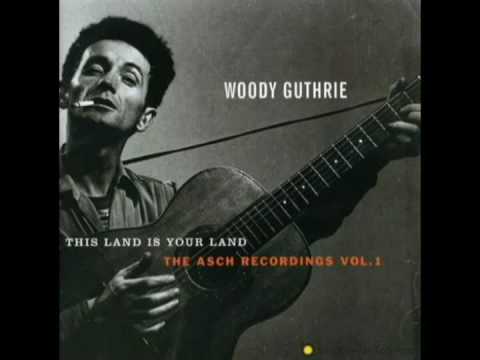
Album: Asch Recordings, Vol. 1-4 (1944)
Play Video

Songfacts®:

  • This song is an attack on Charles Lindbergh (1902-1974), who rose to fame after making the first non-stop flight from New York to Paris. He suffered personal tragedy when his baby son was kidnapped and murdered, a story that made worldwide headlines; German immigrant Bruno Hauptmann was tried, convicted and executed for the crime.

    It was though, the Second World War that led to attacks on Lindbergh's character. On September 3, 1939, Britain declared war on Nazi Germany after Hitler ignored an ultimatum to withdraw his troops from Poland, which he had invaded two days previously. From the beginning there were those who wanted the United States to stay out of the war in line with the Monroe Doctrine, but a precedent had already been set by US intervention in the Great War, albeit late in the day. Lindbergh was one of those who opposed intervention at any cost, and in a powerful speech made at Des Moines, Iowa on September 11, 1941, he attacked those forces that were slowly but surely dragging the United States towards the conflict.

    This speech was roundly condemned as anti-Semitic. In it he said: "The Roosevelt Administration is the third powerful group which has been carrying this country toward war," adding, "They have used the war to justify the restriction of Congressional power and the assumption of dictatorial procedures on the part of the President and his appointees."

    Regarding the charge of anti-Semitism, Lindbergh identified three powerful groups who in his opinion were behind the drive to intervention, and voiced this opinion thus: "If any of these groups, the British, the Jewish or the Administration stops agitating for war, I believe there will be little danger of our involvement."

    This statement is perfectly reasonable; Jewish groups worldwide had instituted a boycott of Nazi Germany, an action that was understandable in view of the persecution of German Jews, and the actions of the British Government were hardly a secret.

    Guthrie's take on Lindbergh though was not just that he was not simply an isolationist but a Nazi fellow traveler or even a paid agent of Hitler: "They say 'America First' but they mean 'America next!'"

    Although Guthrie was no Communist, he was certainly a fellow traveler, and had for years performed at Communist sponsored concerts and attended their rallies. And the Communists had been resolutely opposed to US intervention up until Hitler double-crossed Stalin and foolishly opened up a war on two fronts - an act which was to lead to his undoing.

    These sentiments were shared by Communists in Britain even after the declaration of war. Douglas Hyde had been news editor of the Communist Daily Worker newspaper; after converting to Catholicism he wrote in his book, I Believed, "It was not our war. It was a war between rival imperialisms with several millions of workers in uniform as the unwilling pawns", adding We had more to gain by defeat than victory." When a heckler at a meeting in Southall asked if "our boys are dying for democracy," he replied they were dying for profits, and was immediately arrested.

    Communist fellow traveler or not, Guthrie was at heart a loyal American, and joined the US Merchant Marine; Lindbergh was no less loyal, and after the Japanese attack on Pearl Harbor he joined the war in the Pacific flying some 50 combat missions, which refutes Guthrie's couplet:

    Hitler said to Lindy: "Stall 'em all you can,
    Gonna bomb Pearl Harbor with the help of old Japan"


    This song was not released at the time but has been issued on CD along with many of Guthrie's early works. >>>
    Suggestion credit:
    Alexander Baron - London, England

Comments: 4

  • AnonymousWho wrote this lopsided piece? Lindbergh was clearly an antisemite and a Nazi sympathizer.
  • Horsehockey from Butte, MtThere is ample historical documentation that Lindbergh was both an anti-Semite and a Nazi sympathizer. In October 1938, he accepted a medal from Herman Goering, and continued to oppose American involvement in the war even after Kristallnacht and while Germans were bombing London.
  • Jim Mccord from MarylandI'm impressed with the fairness of your review of Guthrie vs. Lindbergh.
  • Amelia from NevadaUnwarranted? Even his f--king wikipedia page notes that he was a white supremacist who openly supported the Nazi's anti-semitism. He even mentions the "Jewish Question" in his diary entry about Kristallnacht and also stated he preferred a 'racially pure' Europe over a democratic one. This 'analysis' is at best uninformed and stupid.
see more comments

Editor's Picks

Ron and Russell Mael of Sparks

Ron and Russell Mael of SparksSongwriter Interviews

The men of Sparks on their album Hippopotamus, and how Morrissey handled it when they suggested he lighten up.

Donnie Iris (Ah! Leah!, The Rapper)

Donnie Iris (Ah! Leah!, The Rapper)Songwriter Interviews

Before "Rap" was a form of music, it was something guys did to pick up girls in nightclubs. Donnie talks about "The Rapper" and reveals the identity of Leah.

Macabre Mother Goose: The Dark Side of Children's Songs

Macabre Mother Goose: The Dark Side of Children's SongsSong Writing

"London Bridge," "Ring Around the Rosie" and "It's Raining, It's Pouring" are just a few examples of shockingly morbid children's songs.

Tom Waits Lyrics Quiz

Tom Waits Lyrics QuizMusic Quiz

Pool balls, magpies and thorns without roses - how well do you know your Tom Waits lyrics?

Charles Fox

Charles FoxSongwriter Interviews

After studying in Paris with a famous composition teacher, Charles became the most successful writer of TV theme songs.

Philip Cody

Philip CodySongwriter Interviews

A talented lyricist, Philip helped revive Neil Sedaka's career with the words to "Laughter In The Rain" and "Bad Blood."