
In the late ’70s, Bowie needed a change. To help beat an addiction to cocaine, he moved with Iggy Pop from Los Angeles to Berlin, where he recorded what’s now known as his Berlin Trilogy—the albums Low, “Heroes”, and Lodger, all in collaboration with Brian Eno and producer Tony Visconti. They’re remembered as some of his best work.
The only album in the trilogy recorded entirely in Berlin
Despite being named for the German city, the term “Berlin Trilogy” refers more to Bowie’s creative period than the city. In fact, “Heroes” was the only album of the three which was recorded entirely in the city, with recording taking place at Hansa Studio 2, just 500 yards from the Berlin Wall.
Hansa Studio 2 was a former Gestappo ballroom
Before it was a recording studio, Hansa Studio in West Berlin was Meistersaal concert hall, which first opened in 1912 and was used as a ballroom by the Gestapo during World War II. Due to its proximity to the wall, it was often referred to as “Hansa by the Wall.” “Heroes” was the first major album recorded there.
The cover is a reference to a painting
The photo of Bowie used for the cover was inspired by the painting Roquairol by German Expressionist artist Erich Heckel, similar to Iggy Pop’s cover for The Idiot. The cover was revisited for Bowie’s 2013 album The Next Day, which obscured Bowie with a white box and the album’s title, intended to capture a feeling of isolation.
Most of the album was improvised
The only song on “Heroes” written before Bowie went into the studio was “Sons of the Silent Age.” Everything else was improvised. The songs’ backing tracks were recorded before Bowie wrote any lyrics, which was typical of his process, and many of the lyrics were improvised in front of the microphone.
The title is stylized in quotation marks
Like the title track, “Heroes” is stylized in quotation marks, which was a very deliberate choice. They’re meant to “indicate a dimension of irony about the word ‘heroes’ or about the whole concept of heroism,” according to Bowie himself. He also noted he chose “the only narrative song” for the title.
More Facts
-
Photo by Rob Verhorst/Redferns -
Photo by Will Palmer/Sports Press Photo/Getty Images -
(Photo by Paul Natkin/Getty Images) -
(Photo by David A. Smith/Getty Images) -
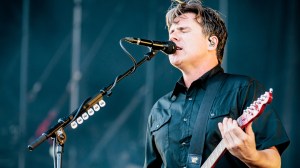
Photo by Sergione Infuso/Corbis via Getty Images -
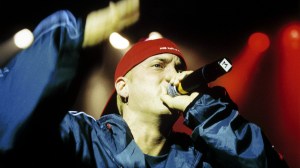
Photo by Sal Idriss/Redferns -
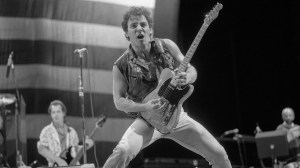
With a huge American flag behind him, Bruce Springsteen opens his sold-out concert with the hit "Born in the U.S.A." for 50,000 fans at the Oakland Coliseum on Oakland, Calif., on Sept. 18, 1985. (Photo by Steve Ringman/San Francisco Chronicle via Getty Images) -
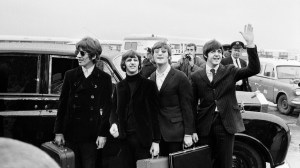
Photo by Daily Mirror/Daily Mirror/Mirrorpix via Getty Images