
Joy Division released “Love Will Tear Us Apart” only weeks after the death of its enigmatic singer, Ian Curtis. But it remains the band’s defining anthem, adding to the lore of Curtis and the larger musical influence of Joy Division.
The post-punk touchstone follows a disintegrating relationship and echoes Curtis’s tragic life. It also changed the future of rock music.
Behind the Lyrics
Curtis writes about his failing marriage to Deborah Curtis, whom he married in 1975. However, the lyrics show a bitterness many in a broken relationship can relate to.
He describes banal routines and how they dull one’s spirit. Curtis, touring with Joy Division, was both physically and emotionally detached from his wife. They were drifting apart, and distance wasn’t helping.
When routine bites hard and ambitions are low,
And resentment rides high, but emotions won’t grow.
And we’re changing our ways, taking different roads.
Love becomes a cudgel. Now it’s missing, creating an emotional abyss between them. Still, the heart’s impulses can work in both directions—as either a connection or a revolt. (The “again” here is doing a lot of work.)
Then love, love will tear us apart again.
Love, love will tear us apart again.
Intimacy is gone. Perhaps he’s trying to rekindle romance, yet it’s awkward. But the familiarity of a long history together and a young daughter won’t be enough to save the marriage, or Curtis.
Why is the bedroom so cold? You’ve turned away on your side,
Is my timing that flawed? Our respect runs so dry.
Yet there’s still this appeal that we’ve kept through our lives.
Disorder
His life was spiraling out of control. The pressure of Joy Division’s rising fame, his epilepsy, a guilt-ridden affair, and his crumbling marriage felt insurmountable.
In 1980, Curtis took his own life on the eve of the band’s first North American tour. And though his lyrics are often abstractly observational, it’s not hard, in hindsight, to draw straight lines to his own experience.
You cry out in your sleep, all my failings exposed,
There’s a taste in my mouth as desperation takes hold.
Just that something so good, just can’t function no more.
Curtis’s bandmates, Bernard Sumner, Peter Hook, and Stephen Morris, regrouped and carried on as New Order. Together, they continued to transition rock music from post-punk to new wave and synth-pop.
Photo by Rob Verhorst/Redferns
More Features
-

Photo by Gilbert Flores/Variety via Getty Images -

Photo by Erika Goldring/WireImage -

Photo by Joseph Okpako/WireImage -

Photo by Francesco Prandoni/Getty Images -
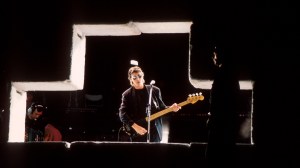
Roger Waters, formerly of Pink Floyd, performs on stage at the Wall concert, Berlin, Germany, 21st July 1990. (Photo by Michael Putland/Getty Images) -

Photo by Matt Winkelmeyer/WireImage -
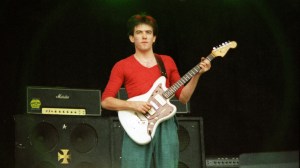
READING, UNITED KINGDOM – AUGUST 24: Robert Smith of English rock band The Cure performs on stage at The Reading Festival on August 24th, 1979 in Reading, Berkshire, England. He is playing a Fender Jazzmaster guitar. (Photo by Pete Still/Redferns) -

Photo by Sacha Lecca/Rolling Stone via Getty Images