
Together, folk duo Simon & Garfunkel made some incredible music, but perhaps none of their songs is as beloved as “Bridge Over Troubled Water,” the track that defined their career.
The piano accompaniment was inspired by both gospel and classical music. The melody was borrowed from J. S. Bach’s “O Sacred Head Now Wounded,” while gospel group Swan Silvertones’ recording of 19th-century spiritual “Oh Mary Don’t You Weep” inspired the lyrics.
Paul Simon explained these influences, as well as his writing process, in a 1970 interview on The Dick Cavett Show, guitar in hand. Although he had the beginning of the song down, he got “stuck.”
Paul Simon Once Demonstrated How the Magic of “Bridge Over Troubled Water” Came Together
“Everywhere I went led me where I didn’t want to be,” he explained while using his guitar to demonstrate how the song came together.
Eventually, after listening to the Swan Silvertones, their influence started to seep in, especially the improvised lyric “I’ll be your bridge over deep water if you trust in my name.”
“I guess I stole it,” Simon said. “That’s how songs happen. They piece themselves together.”
When Simon first took “Bridge over Troubled Water” to Garfunkel and producer Roy Halee, it was only two verses long. Garfunkel and Halee suggested Simon write another, leading to the song’s big ending.
“Bridge over Troubled Water” is also notable for being one of the few songs by the duo that features Garfunkel singing solo. That was something he was initially reluctant to do.
“He didn’t want to sing it,” Simon said in a Rolling Stone interview in 1973. “He couldn’t hear it for himself, he felt I should have done it. And many times I’m sorry I didn’t do it.”
Simon’s interview with Cavett also hinted at growing tension between Simon and Garfunkel, which eventually led to their split. Bridge Over Troubled Water ended up being their final album, even though it spawned their biggest hit. Not only did Simon consider “Bridge over Troubled Water” to be his greatest song, but it also topped the charts, spending a total of six weeks at No. 1. It also won five Grammy Awards, including Record of the Year and Song of the Year in 1971.
More Facts
-
Photo by Jim Steinfeldt/Michael Ochs Archives/Getty Images -
Photo by Rob Verhorst/Redferns -
Photo by Will Palmer/Sports Press Photo/Getty Images -
(Photo by Paul Natkin/Getty Images) -

David Bowie, Singer, Sonwriter, Actor, UK- on stage at Deutschlandhalle, Berlin (Photo by ARTCO-Berlin/ullstein bild via Getty Images) -

(Photo by David A. Smith/Getty Images) -
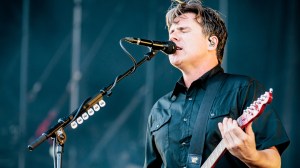
Photo by Sergione Infuso/Corbis via Getty Images -
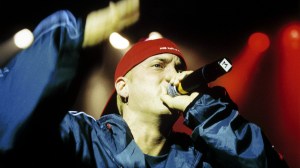
Photo by Sal Idriss/Redferns