
Country music is a staple of American culture and has been among the leading genres for decades. In some ways, country music started as an alternative to the popular music of the 1940s and 1950s. The genre grew and soon became popular music, and left room for some groups to create alternative country. Some would say that alternative country took country music back to its roots with lyrics inspired by folk music. Alternative country became the raw and pure alternative to the polished and pop-oriented country music that was on the radio. From the 1960s to the 2000s, there have been multiple resurgences of alternative country. Here are 4 defining alternative country bands.
The Flying Burrito Brothers
An early example of alternative country is The Flying Burrito Brothers. The band went through multiple lineup changes, and mostly centered around Gram Parsons and Chris Hillman. Both were members of The Byrds during the band’s phase that leaned into country music. Parsons was fired by Hillman, along with Roger McGuinn, but the two reconciled their differences and created a new group. Their debut album, The Guilded Palace Of Sin, in 1969. The album wasn’t a commercial success, peaking at No. 164 on the Billboard 200.
Their second album, Burrito Deluxe, contained the track “Wild Horses.” The song was written by Mick Jagger and Keith Richards of The Rolling Stones. It was released a year before The Rolling Stones version of the track. Gram Parsons embarked on a solo career, leaving the group following the second album’s release. An early member of The Flying Burrito Brothers was multi-instrumentalist Bernie Leadon. Leadon went on to co-found The Eagles shortly after the release of The Flying Burrito Brothers’ third album.
Uncle Tupelo
Reining from Belleville, IL, a Southern Illinois town outside of St. Louis, you can’t mention alternative country without Uncle Tupelo. Jay Farrar, Jeff Tweedy, and Mike Heidorn were young aspiring musicians in the mid to late 1980s. They blended elements of country and folk, with punk rock influences, and created a unique and iconic alternative country sound. At a time when grunge was starting to dominate in the early 1990s, Uncle Tupelo offered an alternative to the alternative. Their 1989 debut, No Depression, is highly regarded by alt-country fans. So much so, that it became the name of the alternative country magazine No Depression. Uncle Tupelo credits The Flying Burrito Brothers as an influence, frequently covering “Sin City” in their early days.
After four albums over a short seven-year run, Uncle Tupelo split up in 1994. Jay Farrar created Son Volt along with drummer Mike Heidorn, and Jeff Tweedy created Wilco. Both bands carried over their alternative country sound, and their debut albums rivaled each other. Son Volt’s Trace, technically, sold more than Wilco’s A.M., though Jeff Tweedy and Wilco still embarked on a decorated career in the following years. Both Son Volt and Wilco tour to this day.
Whiskeytown
Formed in 1994, Whiskeytown launched the career of singer/songwriter Ryan Adams. Previously, Adams was in a punk rock band called The Patty Duke Syndrome. Trying something different, Ryan Adams formed Whiskeytown in Raleigh, North Carolina. Adams was heavily inspired by Gram Parsons. Their debut album, Faithless Street, was released in 1995. It was heavily praised by the alt-country publication, No Depression. The release set them up for a bidding war among major labels. Their major label debut, Strangers Almanac, was released in 1997. Following its release, multiple lineup changes occurred throughout the group. By the end of their next tour, most of the group was either fired or quit.
During a merger between Polygram Records and Universal, the band lost its record deal. The band’s third and final studio album, Pneumonia, was released on May 22, 2001. Following the loss of their record deal and with only three remaining members, Whiskeytown broke up. Soon after, Ryan Adams embarked on a successful solo career.
More Features
-

Photo by Han Myung-Gu/WireImage -
Photo by Jeff Kravitz/FilmMagic, Inc -
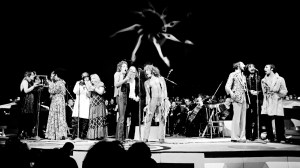
Photo by Gijsbert Hanekroot/Redferns -
Photo by Michael Putland/Getty Images -

Photo by Patrick T. Fallon / AFP via Getty Images -

Photo by Josh Brasted/FilmMagic -

Photo by Astrida Valigorsky/Getty Images -
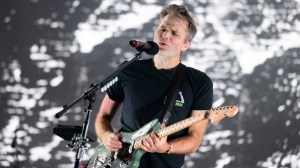
Photo by Dana Jacobs/FilmMagic