
In 1966, The Beatles‘ Revolver found the band experimenting and distancing themselves from their early sound. The band started to dive into psychedelic themes, but McCartney actually moved in a different direction. It was wildly creative at the time to add a brass section to a rock track. McCartney lifted this idea from Motown Records of the 1960s, and paired it with influences from his own upbringing. Notably, his father was the leader of a big band. Paul’s first instrument was a trumpet, and one of the first songs he learned was “When The Saints Go Marching In.”
McCartney penned The Beatles track “Got To Get You Into My Life.” Initially, the song was about marijuana. The band had just experienced marijuana for the first time, introduced by Bob Dylan. McCartney thought it was great and wrote a song about it. Horns and brass would be frequently included on Beatles tracks from that point on. Around the same time, a young Walter Parazaider heard this Beatles track and had a vision. He would form a rock band around brass and woodwinds.
The Rock Band Chicago Is Formed
Inspired by The Beatles track, Parazaider set out to form a brass and woodwind-driven rock band. A early formation included future Chicago guitarist Terry Kath and drummer Danny Seraphine. They called themselves The Big Things, and eventually included Lee Loughnane on trumpet and James Pankow on trombone. Following this, Robert Lamm joined on keyboards, and Peter Cetera on bass guitar. Parazaider himself primarily played saxophone, but also contributed flute and other woodwinds to the band. His role was to play on top of the brass arrangements written by James Pankow.
Formed on the campus of DePaul University in Chicago, the band played gigs all around the city. Eventually, they changed their name to Chicago Transit Authority. The real Chicago Transit Authority wouldn’t allow this, so the band shortened their name to Chicago following their debut record. The 1972 hit “Saturday In The Park” was written about the Lincoln Park neighborhood where the band formed. Chicago soon became an innovative force in rock music throughout the 1970s, blending elements of jazz, rock, blues, and soul.
In the 1980s, Chicago transformed into a ballad-centric band, leaving behind their signature sound. Eventually, with multiple lineup changes, Chicago returned to their brass and woodwind roots. Walter Parazaider remained with the band until 2017 when he left due to a heart condition. On June 17, 2026, Parazaider passed away at age 81.
Photo by Chris Walter/WireImage
More Features
-

Photo by Han Myung-Gu/WireImage -
Photo by Jeff Kravitz/FilmMagic, Inc -
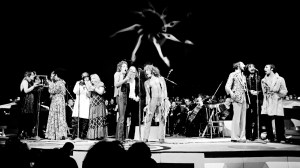
Photo by Gijsbert Hanekroot/Redferns -
Photo by Michael Putland/Getty Images -

Photo by Patrick T. Fallon / AFP via Getty Images -

Photo by Josh Brasted/FilmMagic -
Photo by Astrida Valigorsky/Getty Images -

Photo by Dana Jacobs/FilmMagic