
“Loser” is Beck’s defining song. But it took an unusual path from its infancy to becoming a generational anthem. Some of music’s classic songs happen by accident, chance, luck. Things, especially in the music business, aren’t always planned. In fact, often, the music business ignores a great work until it gains momentum on its own.
Amid a series of improbable events that led to the creation and release of “Loser”, you might be surprised to learn about the long and slacker-less journey of Beck’s eternal hit.
A Folk Musician Starts Rapping to Keep the Audience From Leaving
In 1991, Beck performed at Jabberjaw in Los Angeles. During his solo acoustic sets, the indifferent crowd walked outside to smoke. So to keep their attention, he began rapping. His future producer, Tom Rothrock, happened to be in the audience one night and approached Beck about his rapping. Rothrock introduced the now-MC to Carl Stephenson, who made beats for Geto Boys. Soon, Beck was in Stephenson’s apartment, jamming to beats that evolved into “Loser”.
Delta Blues and a Lesson in Simplicity
Hip-hop was one part of the track’s foundation. Beck had envisioned blending Delta blues and hip-hop. So in Stephenson’s apartment, he cycled through various slide guitar riffs before landing on the rudimentary and now iconic one in “Loser”. It’s a lesson in simplicity and how one doesn’t need to be a virtuoso to write something great. Think of this blues riff as Beck’s “Smoke On The Water”. But played over hip-hop.
His Loser Band, Spanish, and Waiting for the Right Time
At the time, Beck played in a band with his friends called Loser. He thought this track could be their theme song. But he wanted the hook to be in Spanish. “Soy un perdedor,” he sings in the chorus. This translates to “I’m a loser.” However, its path to becoming a hit wasn’t obvious. He sat on the recording for nearly a year. Then, a record label offered to re-record “Loser” with updated (and professional) production. Beck said no. So the song sat for a few more years. Eventually, Rothrock launched an indie label called Bong Load Records. He released “Loser” in its original form, and it became a smash.
Photo by Martyn Goodacre/Getty Images
More Facts
-
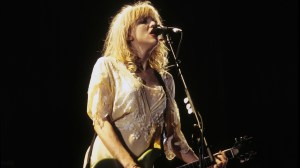
Photo by Jim Steinfeldt/Michael Ochs Archives/Getty Images -
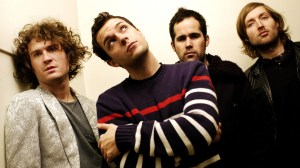
Photo by Rob Verhorst/Redferns -
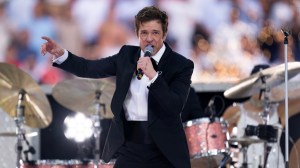
Photo by Will Palmer/Sports Press Photo/Getty Images -
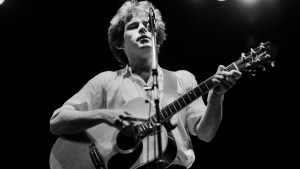
(Photo by Paul Natkin/Getty Images) -
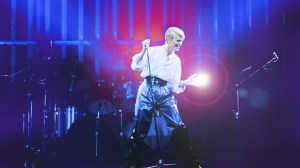
David Bowie, Singer, Sonwriter, Actor, UK- on stage at Deutschlandhalle, Berlin (Photo by ARTCO-Berlin/ullstein bild via Getty Images) -

(Photo by David A. Smith/Getty Images) -

Photo by Sergione Infuso/Corbis via Getty Images -
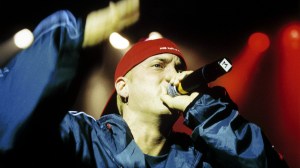
Photo by Sal Idriss/Redferns