
Sound engineering became much more experimental in the 1960s. By the 1970s, much more was obtainable, and studio tricks in general were mastered. Tape loops, echo effects, and the use of synthesizers made their way onto many tracks during the decade. What the 1960s set forth, the 1970s capitalized on. Here are 3 hits from the 1970s that used studio tricks to create iconic sounds.
“Fly Like An Eagle” by Steve Miller Band
The space race of the 1960s led to a space race within music recording in the 1970s. Space sounds were heavily incorporated throughout 1970s rock music. The iconic “Space Intro” of the Fly Like an Eagle album was done using a Roland SH-1000 synthesizer. Studio engineers ran the synthesizer through an Echoplex unit. This added tape echo and delay to the synth, creating a fluttering and soaring sound, leading straight into “Fly Like An Eagle.” The Steve Miller Band continued using similar tricks on the follow-up album, Book of Dreams.
“Money” by Pink Floyd
Featured on the iconic and innovative album Dark Side of the Moon, the intro on “Money” is one of the most recognizable in rock history. The track opens with sounds of cash registers, bells, and drawers slamming. Literally, the listener can hear the physical exchange of money. The group used a 7-beat tape loop to create these sounds, and they were physically recorded. This is an extension of musique concrète, a recording technique that dates back to the 1940s. It involved recording raw sounds and incorporating them into a music composition.
Songfacts: Money | Pink Floyd
This song is about the bad things money can bring. Ironically, it made Pink Floyd lots of cash, as the Dark Side Of The Moon album sold over 34 million copies.

“I’m Not In Love” by 10cc
Once again, tape loops were used to create another iconic effect. On this soft rock track, a choir effect was achieved using tape loops. 10cc recorded around 16 takes of the same “ahh” sound for each note of the chromatic scale. This built up a choir sound, a combination of 48 voices. The length of the loop stretched 12 feet, feeding into a stereo recorder in the studio. On the other end, through a roller attached to the top of a microphone stand, they created tension for the tape. With this, the loop stretched long enough for the duration of the track. Ultimately, it created a dream-like, choir effect that sounds ahead of its time.
More Lists
-
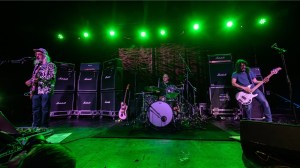
Photo by Stuart Westwood/SOPA Images/LightRocket via Getty Images -
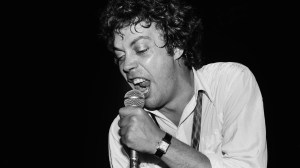
British actor and singer Tim Curry performing live, Canada, 1979. (Photo by Peter Noble/Redferns) -
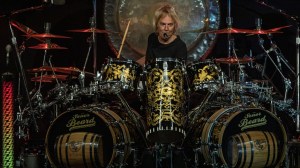
Photo by Daniel Knighton/Getty Images -
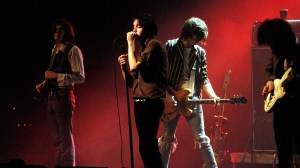
Photo by Myrna Suarez/Getty Images -
Photo by Victor Fraile/Getty Images -
Photo by Terry Wyatt/Getty Images for Spotify -
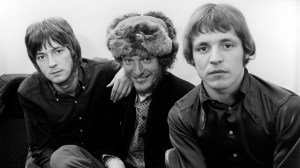
From left, Eric Clapton, Ginger Baker (1939-2019) and Jack Bruce (1943-2014) of British rock group Cream posed in their dressing room at Associated Rediffusion's Wembley Television Studios in north west London on 4th November 1966. Cream are booked to perform the songs 'Wrapping Paper' and 'N.S.U' on the music television show Ready Steady Go! at the studios. (Photo by Ivan Keeman/Redferns) -
Photo by Jeff Kravitz/FilmMagic