
The Civil Rights Movement of the 1960s spawned a plethora of songs inspired by the movement. Though songs like “Blackbird” by The Beatles touched on what was going on in the South, it was the soul artists of the time that truly captured the essence. Through personal experience put into song, these artists inspired others to continue fighting for their rights. Here are 3 memorable soul songs that were inspired by the Civil Rights Movement.
“A Change Is Gonna Come” by Sam Cooke
Initially inspired by Bob Dylan’s “Blowin’ In The Wind,” Sam Cooke wrote about his own experiences with segregation. In 1963, Sam Cooke and his entourage were turned away from a whites-only Holiday Inn in Louisiana. Sam was furious, and they made a scene leaving the Holiday Inn. When they arrived at another motel, the police were waiting to arrest Cooke and his crew. In response, Cooke wanted to vent his own struggles with segregation. He wanted to let the world know that “A Change Is Gonna Come.”
Sam Cooke felt guilty for not yet penning a song such as Bob Dylan’s “Blowin’ In The Wind,” and felt inspired by Dr. Martin Luther King Jr’s I Have A Dream speech. Cooke sought to capture his personal struggles with segregation within a song. During a sit-in with students at North Carolina College at Durham, Cooke wrote a rough draft of the song. “A Change Is Gonna Come” was released in late 1964 and became a massive hit within the Civil Rights Movement. It is now preserved in the Library of Congress for historical significance.
“Respect” by Aretha Franklin
Released in April 1967, “Respect” became an anthem for the Civil Rights Movement. Crowds of protesters often chanted the R-E-S-P-E-C-T section of the song, and it was used to demand exactly that during the movement. Franklin transformed the song’s original message about a relationship into a powerful demand for equality during the late 1960s. Written by Otis Redding, Franklin flipped the perspective of the song. Additionally, this made the song a powerful step forward for feminism, leading into the 1970s.
The song peaked at No. 9 on the Billboard Hot 100 and hit No. 1 on the Top Selling R&B Singles chart in 1967. This was her first of what would become 20 No. 1 hits on the R&B chart. Aretha Franklin was a close ally of Dr. Martin Luther King Jr. She performed at many of his rallies in 1968. Due to Franklin’s close ties with King, Jesse Jackson, and Angela Davis, she was closely monitored by the FBI for many years.
Songfacts: Respect | Aretha Franklin
After Redding heard Aretha’s rendition for the first time, he told Jerry Wexler: “This girl has taken that song from me. Ain’t no longer my song. From now on, it belongs to her.”

“Freedom Highway” by The Staple Singers
Supporting the Selma to Montgomery marches for voting rights in 1965, The Staple Singers penned this Civil Rights anthem. The group themselves were among the protestors who marched from Selma to Montgomery. “Freedom Highway” references Civil Rights Movement events, and also mentions the murder of Emmitt Till. The Staple Singers were an R&B group from Chicago, Emmitt Till’s home city. The anthem was released on the 1965 album The Staple Swingers. The album also featured other protest tracks, such as a cover of the gospel song “We Shall Overcome.” The Staple Singers sang at rallies and marched with Dr. Martin Luther King Jr. Roebuck “Pops” Staples once told King that “if you can preach it, we can sing it.”
Mavis Staples led a successful solo career after The Staple Singers and continues to perform to this day. She reprised the song for her 2008 album Live: Hope at the Hideout, which was released on the same day as President Barack Obama’s inauguration. In August 2024, Staples performed the song on The Late Show with Stephen Colbert, alongside Jeff Tweedy of the Chicago band Wilco.
More Lists
-

Photo by Daniel Knighton/Getty Images -

Photo by Myrna Suarez/Getty Images -

Photo by Victor Fraile/Getty Images -

Photo by Terry Wyatt/Getty Images for Spotify -
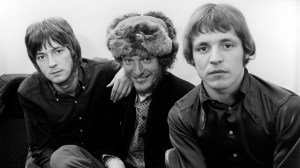
From left, Eric Clapton, Ginger Baker (1939-2019) and Jack Bruce (1943-2014) of British rock group Cream posed in their dressing room at Associated Rediffusion's Wembley Television Studios in north west London on 4th November 1966. Cream are booked to perform the songs 'Wrapping Paper' and 'N.S.U' on the music television show Ready Steady Go! at the studios. (Photo by Ivan Keeman/Redferns) -

Photo by Jeff Kravitz/FilmMagic -

Photo by Astrida Valigorsky/Getty Images -

Photo by Frazer Harrison/Getty Images for Coachella