
Perhaps no decade in music is remembered as fondly as the ’80s. It was the decade that brought everything from technical innovations to MTV. And it gave us musicians who are still beloved today and whose influence has continued in the decades since. Mainstream pop superstars like Michael Jackson, Madonna, and Prince dominated the charts.
But the ’80s didn’t just give us huge pop stars. As musicians drew from their influences, particularly from the ’70s, and experimented with new sounds, entirely new subgenres were born. The most notable of which practically defined the decade. And while not all of them have had staying power and survived into the ’90s and beyond, they’re what helped make the ’80s such a beloved decade.
New Wave
New wave merged punk ethos with softer sounds and began in the late ’70s. The term “new wave” was initially used to describe punk. For a brief period of time, “new wave” and “punk” were interchangeable. But it has since evolved to describe the synth-heavy sound that dominated the ‘80s. In the US, the genre was led by bands like the B-52s, Blondie, and the Cars. It was also led by more avant-garde acts like Devo and Talking Heads. In the UK, the most notable bands included Depeche Mode and New Order. The New Romantic movement dominated, spearheaded by Duran Duran, Culture Club, and Spandau Ballet.
Post-Punk
There can be considerable overlap between post-punk and new wave—both genres evolved from punk and combined its ethics with different sounds. Their artists are often lumped in together, and some musicians blurred the lines between them. The Cure, for example, began their career with the more guitar-driven rock sound of post-punk, then gradually drifted closer to new wave. Other notable early post-punk bands include Siouxsie and the Banshees and Joy Division. In the early 2000s, bands like the Strokes and Yeah Yeah Yeahs revisited the sound of post-punk in a movement known as post-punk revival.
Glam Metal
Glam metal, sometimes also called hair metal, merged heavy metal with ’70s glam rock—musically, the genre was known for pop hooks and guitar riffs and solos with lyrics about partying and love, while aesthetically, bands were known for androgynous “glam” stylistic choices like tight-fitting clothes and makeup. Bands like Poison, Cinderella, and Bon Jovi dominated the charts and defined the genre, and as the decade neared its end, glam metal was the most commercially successful genre in the world.
(Photo by Rob Verhorst/Redferns)
More Lists
-
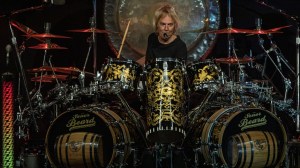
Photo by Daniel Knighton/Getty Images -

Photo by Myrna Suarez/Getty Images -

Photo by Victor Fraile/Getty Images -

Photo by Terry Wyatt/Getty Images for Spotify -
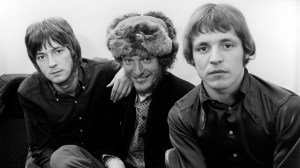
From left, Eric Clapton, Ginger Baker (1939-2019) and Jack Bruce (1943-2014) of British rock group Cream posed in their dressing room at Associated Rediffusion's Wembley Television Studios in north west London on 4th November 1966. Cream are booked to perform the songs 'Wrapping Paper' and 'N.S.U' on the music television show Ready Steady Go! at the studios. (Photo by Ivan Keeman/Redferns) -

Photo by Jeff Kravitz/FilmMagic -

Photo by Astrida Valigorsky/Getty Images -

Photo by Frazer Harrison/Getty Images for Coachella