
At-home recording has become normal in the 21st century. It would be no surprise to hear that a hit record was recorded at home or in a basement. But in the 1970s, this was quite a feat and practically unheard of. Especially for an unknown rock band to generate their own hit record from a basement. Guitarist Tom Scholz of Boston was way ahead of his time in this aspect. Upon signing with Epic Records, Scholz refused to re-record his demos in a proper studio setting. Instead, Scholz stayed behind in Massachusetts to finish the album at his own pace, in his own space. Here’s the story of how Boston recorded their iconic debut self-titled album in a basement.
How Boston Came To Be
Tom Scholz’s musical journey began in the late 1960s. The first song Scholz wrote was an instrumental called “Foreplay.” Scholz had taken organ lessons growing up and fused the church organ sounds with progressive rock on this instrumental. This was while Scholz was attending the Massachusetts Institute of Technology (MIT). There he met future Boston bandmates Barry Goudreau and Jim Masdea. They formed a group called Freehold in 1969, adding vocalist Brad Delp to the group in 1970. Tom Scholz got an engineering job working for Polaroid. He then used the money he earned to build a recording studio in his basement in Watertown, MA. Initially using a 12-track recorder, eventually Scholz upgraded to a 24-track.
Eventually, Freehold parted ways. Despite this, Scholz began tracking demos in his home. He recruited Brad Delp and Jim Masdea for the tracks, and these demos were the skeleton of what would become Boston’s self-titled debut album. In 1974, early demos were tracked for songs such as “More Than A Feeling,” “Peace Of Mind,” “Something About You,” “Hitch A Ride,” and “Don’t Be Afraid.” Tom Scholz played all the instruments except the drums, and Brad Delp provided vocals. In 1975, the group took the demos door-to-door, shopping their sound around.
They caught the attention of promoters Paul Ahern and Charlie McKenzie, who helped the band secure a deal with Epic Records. Before the deal was finalized, the group had to perform live for the label. The band recruited former Freehold member Barry Goudreau to share guitar duties. Fran Sheehan was added on bass guitar, and Jim Masdea was replaced by Sib Hashian on drums. The label was impressed by what they heard, and they agreed to release 10 albums in a span of six years.
Recording the Debut Album at Home
Epic Records wanted Boston to re-record the tracks in a proper studio setting. Tom Scholz refused, insisting he finish the album at his home recording studio. A compromise was reached to satisfy the label. The band, excluding Scholz, would be sent to Los Angeles, while Scholz remained in Watertown, MA. Scholz recorded the majority of the instruments on the album. However, Sib Hashian provided the drums on all tracks except “Rock & Roll Band,” which featured original drummer Jim Masdea. Brad Delp’s vocals were recorded in Los Angeles, after Tom sent them what he had finished in Massachusetts.
Strategically, Scholz used his engineering abilities to create an iconic guitar tone on the album. He used a 1968 Les Paul Deluxe, with a DiMarzio Super Distortion pickup, plugged into a 100-watt Marshall Super Lead amplifier. He accomplished heavy distortion at manageable low volumes using a custom-built, heat-sink-based “power soak.” Scholz created pitch-shifting and double effects using a fixed-position wah pedal as a mid-range equalizer and an Eventide-910 Harmonizer. Additionally, a custom-built, tape-based echo unit with an expression pedal was used for delay feedback and sustain extension.
Boston’s Self-Titled Album Was Released in 1976 and Exceeded Expectations
The album peaked at No. 3 on the Billboard 200. It sold over 17 million copies and was the fastest-selling debut album at the time of release. Honestly, not bad for an album mostly recorded in a basement.
“More Than A Feeling” peaked at No. 5 on the Billboard Hot 100. Fans were blown away by the space sounds used on the record that matched the visual of the album’s cover art. “Foreplay/Long Time” became a staple of rock radio, merging the instrumental organ on “Foreplay” into the iconic guitar tones heard on “Long Time.” Tom Scholz’s recording innovations paid off as he created some of the most impressive sounds of late 1970s rock music.
Songfacts: More Than a Feeling | Boston
Tom Scholz took a leave of absence from his job at Polaroid to complete the album, but went back to work after it was released – disco was big, so he wasn’t sure his rock record would find an audience. He got very excited when co-workers would summon him to let him know “More Than A Feeling” was playing on the radio. After that happened a few times, he was confident enough to quit his day job.

Boston’s Follow-Up Albums and Legacy
Though the band broke its contract and didn’t end up recording 10 albums over a span of six years, they did follow up on the first album’s success. In 1978, Boston’s Don’t Look Back hit No. 1 on the Billboard 200, and the album’s title track peaked at No. 4 on the Hot 100. The follow-up album sold over one million copies within the first ten days of release. Scholz once again recorded the majority of the album in his basement studio. Recorded over six years, Boston released their third studio album, Third Stage, in 1986. The third album was No. 1 on the Billboard 200 for four weeks and earned Boston their first No. 1 hit with “Amanda.”
Boston and Tom Scholz continue to tour to this day, despite singer Brad Delp’s suicide in 2007. Delp’s vocals put him among the greatest in rock history, with his McCartney-like approach on the heavy, distorted guitar tone of the late 1970s. Tom Scholz and Brad Delp’s contributions to rock music will last forever, as the music of Boston is forever immortalized in rock history.
More Features
-
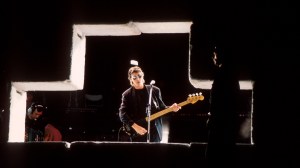
Roger Waters, formerly of Pink Floyd, performs on stage at the Wall concert, Berlin, Germany, 21st July 1990. (Photo by Michael Putland/Getty Images) -
Photo by Matt Winkelmeyer/WireImage -
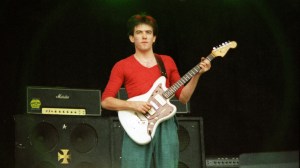
READING, UNITED KINGDOM – AUGUST 24: Robert Smith of English rock band The Cure performs on stage at The Reading Festival on August 24th, 1979 in Reading, Berkshire, England. He is playing a Fender Jazzmaster guitar. (Photo by Pete Still/Redferns) -
Photo by Sacha Lecca/Rolling Stone via Getty Images -
Photo by Richard Creamer/Michael Ochs Archives/Getty Images -
Photo by Mauricio Santana/Getty Images -
Photo by Leon Bennett/Getty Images -
Photo by Gie Knaeps/Getty Images