
Thom Yorke has arranged Radiohead’s 2003 album Hail To The Thief for a modern production of Shakespeare’s Hamlet. After debuting in Manchester, England, in April, the play will premiere in London at the Barbican Theatre on October 31 and run through January 23.
The album marked a transitional period for Radiohead and rests atop several thresholds. First, they were fulfilling their contract with EMI. Next, they’d self-release In Rainbows, allowing fans to pay what they wanted as the music industry navigated how fans absorbed culture.
Hail To The Thief also features more guitars than the post-rock and electronic stylings of Kid A and Amnesiac. It closed one chapter and began another. The album is a lengthy 14 tracks and 56 minutes, so consider these highlights a preview of Radiohead seemingly shedding ideas like old skins as they moved forward.
“2 + 2 + 5”
Thom Yorke is prescient. Revisit 1997 and his anxieties about technology, governments, and the world on OK Computer, for example. He wasn’t finished. Radiohead opens Hail To The Thief with a borrowed pronouncement from George Orwell’s Nineteen Eighty-Four. Decades later, Yorke’s (and Orwell’s) worries have come true as parts of the West backslide into authoritarianism and citizens trade objective reality for shared and comforting narratives. The good news: Radiohead returned with loud guitars, and the dystopia gets a banging soundtrack. Crank this one.
“Sail To The Moon”
Radiohead began perfecting lullabies on The Bends. While the early ones featured acoustic guitars and echoes of Jeff Buckley, eventually, the lullabies became glitchy, celestial, and occasionally disorienting. Here, Yorke writes for his infant son Noah. “Maybe you’ll be president, but know right from wrong / Or in the flood, you’ll build an ark and sail us to the moon,” he sings, referencing the biblical Noah. Still, the flood metaphor fits with a father juggling anxiety and optimism in a chaotic world.
“There, There”
The first single from Hail To The Thief features an acoustic drum groove. A return to form of sorts. Meanwhile, Jonny Greenwood plays a chord arpeggio inspired by John McGeoch’s work with Siouxsie And The Banshees. Returning to the layered percussion, the rhythm recalls the experimentalism of Can, though there are hints of Radiohead’s early alt-rock period. Since the band worked quickly, they avoided overcooking the tracks, and “There, There” benefits from being left alone in its raw state.
Photo by Theo Wargo/WireImage
More Lists
-
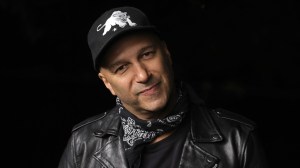
Photo by Kevin Winter/Getty Images -
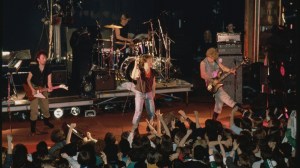
Photo by Lynn Goldsmith/Corbis/VCG via Getty Images -

Photo by Jeff Kravitz/FilmMagic -
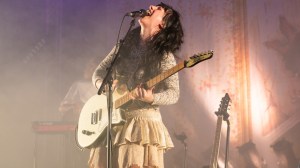
Photo by James Klug/Getty Images -

Photo by Santiago Felipe/GC Images -
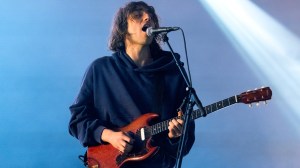
Photo by Matthew Baker/Getty Images -
Photo by Paul Bergen/Redferns -
Photo by Alexander Cropper/Redferns