
Ozzy Osbourne had an astonishing career. And it’s a career that most would have guessed was over following his departure from Black Sabbath in 1979. But somehow, he overcame an epic addiction, and the Prince of Darkness—miraculously—not only survived life after Black Sabbath, but he went on to redefine heavy metal. In the process, Osbourne launched the careers of the iconic guitar heroes below.
Randy Rhoads
When Osbourne hired a young virtuoso named Randy Rhoads to be his new guitar player, the singer likely didn’t envision how the pair would change rock history. Rhoads created a new style by blending the glam rock of Mick Ronson with the gymnastic shredding of Eddie Van Halen, interspersed with classical scales. He became a touchstone for neoclassical shredders in the 1980s, and songs like “Crazy Train” and “Mr. Crowley” remain heavy metal standards. However, after releasing two groundbreaking studio albums with Osbourne, Rhoads died in a plane crash. He was only 25, but he remains one of the most influential guitarists in history.
Jake E. Lee
Osbourne’s career is defined by survival. First, leaving Black Sabbath, and here, the tragic death of Randy Rhoads—one of the world’s most beloved guitar heroes. Jake E. Lee arrived, and though he had giant shoes to fill, he helped guide Osbourne through his post-Rhoads chapter. Lee’s greatest work is “Bark At The Moon”, the title track to Osbourne’s third solo album. But the guitarist’s time in the band was short-lived, and after two studio LPs, he was fired. Lee is often overlooked as a link between Randy Rhoads and Zakk Wylde. But his contributions were crucial to Osbourne’s continued rise as a solo artist.
Zakk Wylde
The first album to feature Zakk Wylde is called No Rest For The Wicked. And on the opening track, “Miracle Man”, Wylde burns the kind of riff that left most guitarists’ jaws on the floor. Sure, there were echoes of Randy Rhoads and Tony Iommi, but this was different. Wylde quickly established his own sound with screaming harmonics, shredding blues, Southern rock, and occasionally, country music. Then came No More Tears, which was a colossal album. The title track is such a banger that it makes Wylde’s last name feel tame by comparison. He’s the ideal bookend to Osbourne’s most consequential post-Black Sabbath guitarists.
Photo by Chris Walter/WireImage
More Lists
-

Photo by Stuart Westwood/SOPA Images/LightRocket via Getty Images -
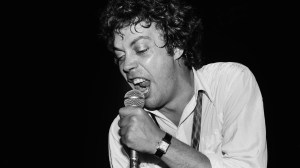
British actor and singer Tim Curry performing live, Canada, 1979. (Photo by Peter Noble/Redferns) -
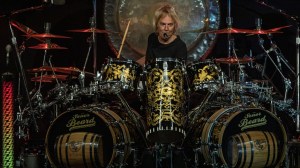
Photo by Daniel Knighton/Getty Images -
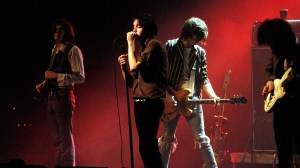
Photo by Myrna Suarez/Getty Images -

Photo by Victor Fraile/Getty Images -

Photo by Terry Wyatt/Getty Images for Spotify -
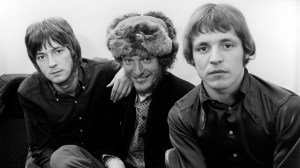
From left, Eric Clapton, Ginger Baker (1939-2019) and Jack Bruce (1943-2014) of British rock group Cream posed in their dressing room at Associated Rediffusion's Wembley Television Studios in north west London on 4th November 1966. Cream are booked to perform the songs 'Wrapping Paper' and 'N.S.U' on the music television show Ready Steady Go! at the studios. (Photo by Ivan Keeman/Redferns) -
Photo by Jeff Kravitz/FilmMagic