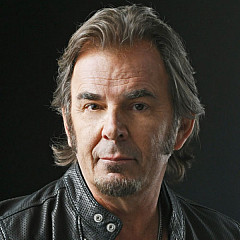
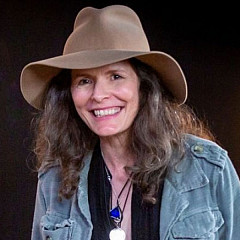
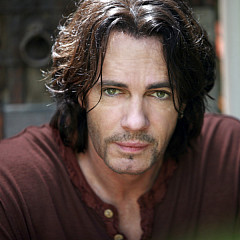
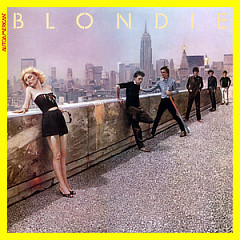
If you turned on rock radio in the early '80s, it didn't take long to recognize 38 Special. They came out of Jacksonville, Florida, with deep Southern rock roots, but they found their own lane, pairing those guitars with big melodies and some of the most enduring hooks of the era.
Songs like "Hold On Loosely" and "Caught Up In You" helped make 38 Special a radio staple and gave the band a sound that was unmistakably their own. Don Barnes has been at the center of that story from the beginning. As a founding member, singer, guitarist, and songwriter, his voice is behind many of the songs that define the band.
Now, more than 50 years into their career, 38 Special have released Milestone, their first new studio album in more than two decades. Rather than simply looking back, the record finds Barnes and the band writing new songs, reconnecting with longtime collaborator Jim Peterik, and working with writers like Randy Bachman and Pat Monahan.
We talked with Don about making Milestone, finding something new to say after five decades of songwriting, the stories behind some of 38 Special's biggest songs, and how the band found that sweet spot between Southern rock muscle and pop melody.
Songs like "Hold On Loosely" and "Caught Up In You" helped make 38 Special a radio staple and gave the band a sound that was unmistakably their own. Don Barnes has been at the center of that story from the beginning. As a founding member, singer, guitarist, and songwriter, his voice is behind many of the songs that define the band.
Now, more than 50 years into their career, 38 Special have released Milestone, their first new studio album in more than two decades. Rather than simply looking back, the record finds Barnes and the band writing new songs, reconnecting with longtime collaborator Jim Peterik, and working with writers like Randy Bachman and Pat Monahan.
We talked with Don about making Milestone, finding something new to say after five decades of songwriting, the stories behind some of 38 Special's biggest songs, and how the band found that sweet spot between Southern rock muscle and pop melody.
Stephanie R. Myers (Songfacts): Congratulations on 50 years of 38 Special.
Don Barnes: Five decades of this madness. Can you believe it?
Songfacts: It's incredible. We were thinking about this 20-year gap between studio albums before Milestone, and wondering what finally made you and the band say, "We have another record in us."
Barnes: It's because live music has gone through the roof. Everybody's out there touring. We do 100 cities a year, and you get a little disenchanted with streaming and the record companies - they're kind of nonexistent anymore.
We have 16 people and their families relying on me, so we go out there and play all these shows every year, and we have to get all these guys on a payroll and everything. And when you do an album, when you commit to that, you're carving out a lot of time. It takes months of preparation. It's like making a movie. You're doing editing and mixing and overdubbing and all that. So, it does take a lot of time. It's a lot of effort. Going out and doing shows that are already practiced and rehearsed is a lot easier.
So you start looking at it and thinking, nobody's really beating the door down for a new 38 Special record. That's happened with a lot of groups from the '80s on. It wasn't anything like a conscious decision that we'll never record again.
Year in and year out, we were living our life, having a great time, rolling down the road, playing live shows. Then my agent said, "What are you going to do for your 50th anniversary?" I said, "Well, I bought this whole new stage set with towers and moving lights and everything."
And he goes, "Well, you're going to have to have some new music, too."
So I thought, you know what? I've got a lot of pieces of songs and ideas. I thought, you've got to have a purpose for something, something that calls you to duty. So that's what I did.
We would do it in phases. This is not like we used to do albums. In the old days, we'd go and stay in a hotel around the corner, and every day we'd go to the studio like school and be there eight, 10 hours, then go back to the hotel. This was during the touring.
We had to jump off the road and go in the studio and cut, like, three basic tracks for songs - drums, bass, and guitar - then go back out and do 10 more cities, then come back to the studio and do three more basic tracks. It was all those phases like that, which was kind of a daunting task.
You'd get back in the studio and it's like, "What were we doing? Where are we?" So we had to do it all in phases and keep it fresh. But after all these years, we all still like each other. We get along, we're all friends, and there is mutual respect and everything. So it's always a good way to work things.
Songfacts: I love the songs on this album. I think about songs like "So Much So Right" being about that almost obsessive rush at the beginning of a new relationship. You've written songs about love for more than 50 years at this point. How do you find a way into that subject - kind of relationship-oriented perspectives - where you don't rewrite the same thing?
Barnes: It was always looking from a different point of view, a different perspective. The song "If I'd Been The One" - the one with the horses and the fire in the video - was about a different perspective of a woman I was dating in Texas.
You have a long-distance romance, and we were both absolutely crazy about each other. But you don't want to get mixed up with a traveling musician. She called me and said that she wanted my blessing because she was going to get married. That was one of those things where it's like, "Oh, wow, I can't believe that you're doing this."
You know, what if I'd have put you in my place? What if I'd have said that to you? So it's a different turnaround, and I wrote the song like, "What if I'd been the one to say goodbye? Could you smile when you want to cry?" That kind of thing. So it was a different perspective.
It's always been point of view. That's how songwriting should be. You can say, "Oh, baby, I love you, I miss you," all day long, but if you've got something that came from a true experience, other people relate to that truth. They think, "God, I feel just like that guy talking about it."
So that's the magic in songwriting, that you make that connection. If something comes from your heart, if it's got real truth, you hope someone puts it in their heart and keeps it. So it's truth.
Songfacts: I'd also heard you say in an interview prior that one of the keys to your songwriting is, "Keep it simple, keep it honest, keep the truth in it." How do you keep accessing that level of truth?
Barnes: You learn through the period of time. When we first started, we'd get everything but the kitchen sink in there. Then you start realizing that it was too much information. The common listener doesn't have the time or the attention span to digest all that - all these different guitars and all these lyrics.
So you start pulling back and you start realizing less is more. We learned that a long time ago: less is more.
If you can say something in just a small little sentence, like a short story... I learned that from John Bettis, one of the co-writers of "Like No Other Night." He was a great, historical, iconic songwriter out in LA. If you know how to consolidate and edit down, isolate the essence of the idea in a short form, that teaches you about keeping it simple like that.
It's also artists in general, like painters. There are guys who would spend two years on painting a scene, painting every leaf on the tree. It's so intricate and complicated. Then there are artists who just use one broad brushstroke that says so much more.
So the beauty sometimes is in the simplicity of it. Less is more. It's kind of a good rule to follow. It's like, "Well, do we really need that in there? It's just going to clutter it up. Okay, let's keep it out." So it's kind of like only putting the essence of what should be in there, layering tracks and lyrics as well.
Jim Peterik of The Ides Of March ("Vehicle") and Survivor ("Eye Of The Tiger") co-wrote some of 38 Special's hits including "Hold On Loosely" and "Caught Up In You."
Songfacts: In terms of songwriting, I also think about how Jim Peterik became such an important part of the band's songwriting story. What do you think Jim understood about you and the band that made that partnership work so well?Barnes: He saw that I was addicted to radio when I was a young kid. I just loved all those great choruses that lifted up a lot of people. Southern rock bands are kind of blues-oriented. Everything's linear and it's more blues, minor key, and that kind of thing. But I always liked great songs that just fell out of the sky.
Back in the late '60s, I thought, "I want to learn to do that. How do they make these songs?" We just toured with Kansas, and I told them, "I used to drive a truck, and my radio alarm clock went off one morning, and 'Carry On Wayward Son' was on." How'd they do that? That song just fell out of the sky.
It was inspiration like that. You want to be able to make songs that lift people up. We call it muscle and melody. You've got a good muscular guitar and knowing the path of songwriting.
Well, I should back up a little bit and tell you that Jacksonville, Florida, is where we came from. There were a lot of groups down there: Lynyrd Skynyrd, the Allman Brothers, Molly Hatchet, Blackfoot. Tom Petty was down the road, the Outlaws were right down the road.
Jacksonville is a port town. It's shipping, a lot of ports and shipyards and rivers coming in. There are five naval bases there - Navy town, big Navy town. All of us as young kids, we would play all the cover songs of the day in sailors' clubs.
We would entertain these sailors who were on leave. We were underage, playing Santana and Young Rascals songs and Three Dog Night and all the hits of the day, radio songs. We'd watch them - sailors on leave, drinking and fighting and stuff.
But we were young guys, 15 years old, making 100 bucks a week. It was pretty good money. Duane Allman, everybody did that, all the way down the line.
We didn't realize at a young age that we were absorbing all the craft of songwriting. You start seeing the pattern: how it went, what the pre-chorus and the bridge and the outro and all this. You start seeing that it is a craft and there is a pattern to songs, and the chorus - the cherry on top - is this great sing-along chorus that lifts up out of the song.
You do that for a few years and start absorbing all the fundamentals of songwriting. Then you get a little cocky and think, "Well, I can write my own songs now." Well, that's when you go starve for the next 10 years. So it's not something I recommend.
But anyway, that's how we all got our start. So I guess we all owe our careers to the Navy, right?
Songfacts: So with the new record, you have Jim back in the picture, and then you are writing with Pat Monahan and Randy Bachman. Was there anything those guys did in a writing session that surprised you or sent a song somewhere you didn't expect?
Barnes: Oh, yeah. Well, Jim, I was a good student. Jim had a #1 song when he was 17 years old when I first met him. I didn't know he was in the Ides of March. I was in high school, and the song "Vehicle" - you've heard that song, the horn song - was #1 when he was 17.
I said, "Dude, when I was 17 years old, I was putting bulk oil in an old Ford Fairlane." But this guy was genius at that age.
So anyway, I went to school on him. I learned how he did it. Just a side note, the first day we met, we'd already done two or three albums. We're sitting at his kitchen table, and songwriters have these little notebooks and lines of songs, just anything from the lexicon. Then you've got a book of titles. When you're trying to craft something from nothing, you sit around and open the notebooks and you're strumming. You might have an idea and a good title or something. He said, "So, how are you guys doing?" I said, "I've been going through a relationship that was kind of going south, a little sour there." I looked down at the notebook and said, "What do you think about this title? 'Hold On Loosely.'"
And he said, "Oh, yeah, but don't let go."
That was the first thing that popped out of his mouth, and it was a perfect couplet. We had a great bookend and a good piece of advice. We were off to the races then. So I started learning, OK, you just make things that match and make little bookends and all that stuff. It really helped along the way.
Years later, Jim wrote a book about songwriting. It's called Songwriting For Dummies. He wanted me to include a little quote in there in his book. I quoted what he told me a long time ago. At the very beginning, I asked him, "How is it that you just find these choruses that lift up?" He said, "You've got to listen to that little radio in your head."
He said, "When you are in twilight, right before you fall asleep, you can make it go anywhere - any of your thoughts, any of your singing that song in your brain. It's like, I could take a left turn, I could do this right." I learned how to do that, to listen to that little radio in your head. It's always helped me all through all these years.
So when I brought him all these groups of songs I'd already had - some of them were two-thirds written or whatever - I had him help me finish out the puzzle. Of course, we did co-write some other ones, but he said, "You wrote all this stuff. You've gotten really good." I said, "Man, I went to school on you. I was a good student all those years." So, yeah, we've been great friends all those years.
But now I co-wrote with Randy Bachman from Bachman-Turner Overdrive and The Guess Who. That was one song. It was called "Long Long Train." I found myself in Nashville one day, and I had a publisher. She said, "Randy Bachman's in town. Would you like to spend the day with him?" I said, "Absolutely." I was a big fan of the Guess Who back in high school. "American Woman" and "These Eyes" - we played them all in these little dance bands and things.
He's a great guy. He likes to talk a lot. We sat down, and I think he was going through a little epiphany in life, a little enlightenment, and he wanted to have a few things to say. It was kind of about society, but we'd never really done a social song, any kind of social commentary. Of course, you want to keep that a little vague. You don't want to make it too on the nose, because then you've got a protest song and nobody wants that. So we ended up saying a few things about what we're leaving to the children in the world, that kind of thing. It worked out great, and the song came out excellent - great haunting chords and all that.
Pat Monahan was another one. I'd always loved Train, and I'd heard that he and Joe Bonamassa had done a version of "Hold On Loosely" for YouTube, just a little video. They did a pretty good job. Someone directed me to it, and they captured the spirit of it.
While we were recording this album, I thought, you know what? I'm going to reach out to his manager and see if he'd like to come sing a duet with me or something. His manager got back and said he absolutely would love to do it. He'd been a lifelong fan, and we made a quick friendship there.
He came in and brought all that soulful stuff. He just crushed it. We did a duet together called "Slightly Controversial." It's the second song on the album. He brought all those ad-libs and all that. He's just a great guy.
I said, "Man, between the two of us, we could probably scare up a pretty good song if you want to do some songwriting." He said, "Absolutely, let's do it."
So that really opens up another door. Your connections are always trying to open doors. Hopefully we'll be doing something in the future.
Songfacts: Rewinding a little bit, I think about "Caught Up In You" and how it's often described as having an unusually joyful quality for a rock hit. What do you remember about writing that song? Was there a moment when the chorus suddenly clicked into place for you?
Barnes: Yeah, there was. You have to have your antenna out all the time. Songwriters have to really listen to anything that might work - a line or a title or anything.
It's a funny story because we had been on the road for nine months. We were promoting the previous album. So after the nine-month tour, everybody was just ragged out and tired. Everybody took their little week vacation.
But the thing about this business is, you have to be five steps ahead of yourself. You've got deadlines. You've got record companies waiting for a release date and all that. We were contractually obligated to have an album out six months from then, on a deadline, and none of us had an idea or one note that was going on this album.
It's kind of like a book. You write a book, and the first page says, "I woke up this morning..." We had no idea at all.
Anyway, I was in that relationship, and it had soured and finished, but I was dating this woman. Just off the top of my head, I said, "You know, I just can't seem to get any work done. I seem like I'm just so caught up in you all the time."
That was like a little light bulb that went on. I thought, that's a pretty good title. It's a positive thing. It's a good perspective. It has happiness and joy to it.
Jim Peterik and I and Jeff Carlisi, the guitar player for the band, set out to put something together that had joy to it - a new relationship. "I'm caught up in you, I never did suspect a thing. It's all happened without me," unbeknownst to me kind of thing.
That's been a great anthemic song all those years. We actually put the bridge in there twice. Most people don't. They have one bridge in a song. We put the bridge in there twice because it was so good. "And if ever comes a day..."
Those kind of things are just osmosis - they just appear one day, and the story comes along, and it's a chord change right there. You were asking about the chorus. It goes to the four chord, which makes it lift up, like, "Ahhhh." It's one of those satisfactory kind of choruses.
Songfacts: You spent most of your life playing with this band. It has this enormous catalog. What song do the hardcore fans often request that surprises you?
Barnes: We had the good fortune to have 15 or 16 Top 40, Top 20, Top 10 songs. Every one of those songs was a marker in our lives. They came from real truthful elements.
But when we start "If I'd Been The One" - "What if I'd been the one to say goodbye?" - people have forgotten that one because it was not as big a hit. It made it to #19, but it wasn't as big a hit.
But as soon as we start that, every person is like, "Oh man, I remember that." It takes them all back. That's the magic in music. It takes everybody back to their time, who they were with or what they were doing. Even I have those kinds of memories with Beatles songs and things. It pulls this nostalgic tug at you.
Of course, they always want to hear "Hold On Loosely." We have to save that. That's an anthemic song. We have to save it to the end because it's like the cherry on top. It just drives them crazy at that point.
But our whole show, there's not a lot of dead space. We bang up these hits, and we have so many of them that if we played them all full length, we'd be there for hours. Some of those songs we do for like two and a half minutes. Boom, that's enough. Bang it up against another hit song for two and a half minutes. You do that for three or four of them in a row, then you play a full-length one. It's all part of making the entertainment part of the show, where it has impact.
You're basically taking the audience for a ride. They don't realize they're being taken for that ride, but it really sails. There are peaks and valleys. There's a little break in the middle. We give the audience a break with "Second Chance," a huge crossover hit song. Bobby Capps sings that song, our keyboard player.
It's like a graph. You keep climbing at the end: big finish, explosive finish, and you're done. You did your job. People are up and cheering and going wild.
Songfacts: I can tell you're a big fan of music yourself. Is there a song that you wish you'd written?
Barnes: Oh yeah, there's plenty of those.
I was a big fan of Bad Company and all that. There were always great songs. Paul Rodgers, best singer in the world. When you're first starting out, you have to kind of model yourself after, "What would he do?" I always thought about him. How would he sing this? How would he approach this?
There are a lot of songs. I was a junkie for hit songs on radio. I remember "Summer In The City" by the Lovin' Spoonful - just a killer song that appeared one day.
And Beatles songs. Kingsley Lake had a pavilion with a dance floor and a jukebox. I was 14 at the lake, and I had a new girlfriend. Still to this day, I can hear that song, "I Feel Fine," by the Beatles. I remember the jukebox blasting that, and I'm so in love with this young girl, 14 years old.
I hear that song today, and it puts me right back in that pavilion with that jukebox. It's all about nostalgia and memories like that.
Songfacts: You've probably had so many musicians tell you how your songs influenced them. Is there any artist, cover version, or band where, when you heard it, you thought, "Okay, we've got some 38 Special DNA in there"?
Barnes: Yeah, there are a lot of people who try to copy it. Even Jim Peterik, he'll come out to a show, and a song like "If I'd Been The One," he didn't have anything to do with. He goes, "Man, that's the best song. I wish I would have written it."
It's a real compliment from Jim. But there are some elements others have tried. The eighth notes - we had stripped everything down. It used to be like everything but the kitchen sink. We stripped it all down, and we call it melody and muscle. If you've got that muscular guitar and a good melody over the top and a good little story, then if it ain't broke, don't fix it.
We kept steady on that style. We found a sound that worked at radio, and DJs and program directors liked that sound. It's like, "Well, we can do that. That's what we can do." It took us a while to find that, though. Like any band, it takes a while to find a sound that works.
Songfacts: Is there anything you'd like our listeners to know about?
Barnes: Just the Milestone album. It's doing really well streaming. I'm kind of educating myself on all the streaming stuff. It's a whole different world. Radio is not really key anymore, so you have to wait. My manager said, "Yes, streaming has a long tail. You have to wait for it."
It's basically leveled the playing field. It's word of mouth. If somebody hears a song and tells their friend, "You've got to hear this song," they'll click on the link or whatever.
We've had 3 million streams on the song "All I Haven't Said," which is the first single. It made it all the way to #1 on the Classic Rock chart. There's a little magic in that song that works.
With streaming, you get 3 million streams on there, but you've got to have 20 million before anybody takes note. So it's one of those waiting-game kind of things.
But the Milestone album has a lot of diverse songs - introspective songs, big rock-banger songs, a little bit of everything. Everybody check it out.
But really, I just want to pass along to everybody that we appreciate them making us a part of their lives all these years. It's been something that we were young boys who had a dream, and we made all those mistakes in public. To be here this many years later, it means that music means so much to other people. It belongs to them now. Those songs have been around so long that they own them. So it's our duty to go out there and give it 100 percent, make it with just as much conviction and spirit as the first time we recorded it. That's always the magic part.
The traveling will beat you up, but you go out there and crank a guitar up, and you're 22 years old again. It keeps you young. Those songs always had that youthful spark to them, so that keeps us all young doing it.
But thanks to everyone for having us all these years. We came from very humble beginnings, so it's worked out pretty well 20 million records later.
September 10, 2026
Get tour dates and more band history at 38Special.com
Also check out our interview with Jim Peterik
Photo: Nick Spanos
More Songfacts Podcast