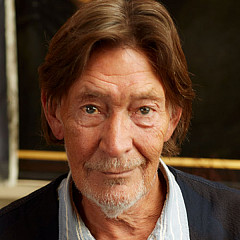
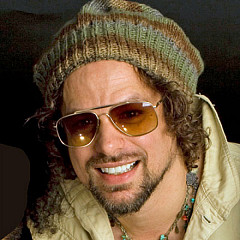
Luke Bell looks like a movie star cowboy. Better still, he sings like a singing cowboy (albeit, one with a slight Elvis vibe at times), and writes unusual songs, including one called "Bullfighter" that would make Ernest Hemingway proud. And while he may include a trucking song in his set, his take on that time-tested country song subject carries with it a decidedly environmentalist viewpoint.
The man is not just another pretty face: having worked on ranches, he actually lived the country life. Now is his time to share what he's experienced with the world.
Luke Bell: I remember the first Elvis song I learned, "That's Alright Mama." I remember really enjoying his vocal take on that.
Songfacts: I especially hear Elvis in the song "Sometimes." Tell me a little bit about the song "Bullfighter," which seems like an odd subject for a country song.
Songfacts: Have you ever been to the bullfights?
Bell: No.
Songfacts: So it's not like something where you made some observations and then got some ideas from that.
Bell: No. Bullfighting was just a metaphor.
Songfacts: Do you have any favorite Merle Haggard songs?
Bell: Yeah, that whole live Okie from Muskogee album - I love that. I found that when I was 18. I found it along with an old record player at a house I was living at when I was working on a ranch. That was probably my first, "Wow, country music is amazing!" moment.
Songfacts: Were you not totally sold on country music at that time?
Bell: I grew up around it my whole life. I grew up like every other kid in my generation wearing baggy pants and skateboard shoes. So I sort of grew into country music.
Songfacts: What have you learned from Merle Haggard as a songwriter?
Bell: For me, Merle Haggard understood the simplicity and direct approach, which I appreciate. Also, great imagery and Merle caters to all kinds of Americans.
Songfacts: It's sometimes hard to be simple, right? It's tempting to use big words and try and sound smarter than we really are.
Bell: But when you try and sound smart, how do you reach everyone?
Songfacts: Merle didn't have to come off as some overly literate person, but if you were literate, you could see the depth of his writing.
Bell: I'd have to say some of my favorite Haggard songs are the Jimmie Rodgers songs. I enjoy that direct country lineage that follows Ernest Tubb, to Roy Acuff, to Jimmie Rodgers and then back to when it was really a melting pot, with blues and jazz. And if you listen to a Jimmie Rodgers record, every element of American music is in there.
Songfacts: It's a lot more sophisticated than some people give it credit for.
 Bell: Absolutely. But at the same time, it was so simple. If you listen to somebody like Jimmie Rodgers, the melodies are straightforward and direct, and is perfectly designed and sort of in the American tradition.
Songfacts: When you look at the songs you've written, can you think of a couple that you're especially proud of?
Bell: That "Sometimes" song. I enjoy the way that song feels. The way it makes other people feel. It's fun. Sometimes you have songs that prove themselves over time and you continue to really enjoy. And then, I've got some newer songs that aren't out yet.
Songfacts: Tell me about these new songs.
Bell: I've written this one called "Blue Freightliner." It's about trucks, Freightliner. It touches upon the transportation industry and all the energy we expend moving goods, instead of growing things locally. The whole song is a narrative about a guy who's on the road watching trucks go by and going, "Man, I'm tired. Are the trucks tired?"
Songfacts: Where did you get the inspiration for it?
Bell: We were on the road, watching the trucks go by. So many people are on the road, traveling so much, especially in a time when we're talking about climate change. Serious issues. I want to touch on things that make people think. What does that mean? Blue Freightliner, do you whine when you roll?
Songfacts: It does kind of sound like it also draws on country traditions, the trucking song.
Bell: I think that's a part of our culture that we don't want to lose. We don't want to lose the images. Also, it's not a song that's about being anti-truckers. It's not about cutting anybody out of the picture.
Songfacts: We talked about Merle Haggard, but who are some of the other artists that had an impact on you when you started writing your own songs?
Bell: Blaze Foley was a big one. I feel like a lot of the people from my generation fell in love with that Heartworn Highways DVD that had Townes Van Zandt and Steve Earle was on there. Rodney Crowell, a lot of those. And then early on, I was really interested in Hayes Carll, Ryan Bingham and the Austin scene and Jerry Jeff Walker. I love Jerry Jeff Walker.
June 16, 2016
More Song Writing