A Room Of Our Own

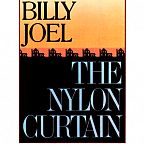
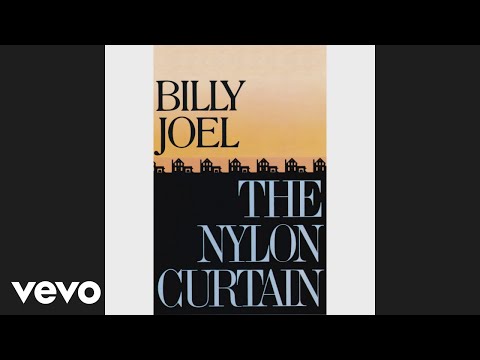
Album: The Nylon Curtain (1982)
Play Video

Songfacts®:

  • On this bluesy piano track, Joel details the differences between men and women that can become grating in close quarters. He suggests they each get a room of their own to keep from getting on each other's nerves.

    "It's one of those contrast songs," he told Sirius XM in 2016. "You got this and I got that, but we all end up in the same, different room. A room of our own. It's very much influenced by John Lennon and that bitter thing he used to have."
  • Lennon's influence runs deep on the The Nylon Curtain. Joel was devastated by the former Beatle's 1980 murder and found himself imitating Lennon's style in an attempt to keep a piece of the former Beatle alive. "I think I was channeling John Lennon. I didn't want him to be gone," he told Sirius XM.

    "I still wanted to hear John Lennon's songs, I wanted to hear his voice. Even [producer] Phil Ramone pointed out to me while I was making The Nylon Curtain album, 'You're singing a lot like John Lennon.' And I said, 'I can't help it. I wrote the songs thinking about John Lennon.'"
  • In the recording studio, Joel's drummer Liberty DeVitto made a mistake that ended up working in the song's favor. Joel recalled in Phil Ramone's 2007 book, Making Records: The Scenes Behind The Music: "In the part where I sing, 'Yes, we all need a room of our own' before I go into the final vamp, my drummer got confused and started to play the beat backwards. He was still playing in time, but he suddenly turned the time signature inside out. There was a look of horror on Liberty's face, but we could see Phil in the control room waving his arms, telling us, 'Keep going! It sounds great!'"
  • After re-introducing his earlier work on the live album Songs In The Attic in 1981, Joel wanted to go in a different direction with his next album and create a "sonic masterpiece" that used the studio as an instrument.

    "The Nylon Curtain took a long, long time to record," he explained in a 2011 interview. "Rather than starting with just a basic song and adding to it, we kind of started with the songs from the outside and worked our way in. We didn't really know what we had until we were getting close to the final mix. There was so much recorded - different instruments, sound effects, orchestral things, percussion instruments, vocals, synthesizers - there's so much going on in this recording. It's very, very rich, almost like I was trying to go for a Sgt. Pepper kind of thing, where I was experimenting playing the studio as an instrument. It was a labor of love, but it was exhausting."

Comments

Be the first to comment...

Editor's Picks

Donnie Iris (Ah! Leah!, The Rapper)

Donnie Iris (Ah! Leah!, The Rapper)Songwriter Interviews

Before "Rap" was a form of music, it was something guys did to pick up girls in nightclubs. Donnie talks about "The Rapper" and reveals the identity of Leah.

Bass Player Scott Edwards

Bass Player Scott EdwardsSong Writing

Scott was Stevie Wonder's bass player before becoming a top session player. Hits he played on include "I Will Survive," "Being With You" and "Sara Smile."

Chris Fehn of Slipknot

Chris Fehn of SlipknotSongwriter Interviews

A drummer for one of the most successful metal bands of the last decade, Chris talks about what it's like writing and performing with Slipknot. Metal-neck is a factor.

Carol Kaye

Carol KayeSongwriter Interviews

A top session musician, Carol played on hundreds of hits by The Beach Boys, The Monkees, Frank Sinatra and many others.

James Bond Theme Songs

James Bond Theme SongsMusic Quiz

How well do you know the 007 theme songs?

Annie Haslam of Renaissance

Annie Haslam of RenaissanceSongwriter Interviews

The 5-octave voice of the classical rock band Renaissance, Annie is big on creative expression. In this talk, she covers Roy Wood, the history of the band, and where all the money went in the '70s.