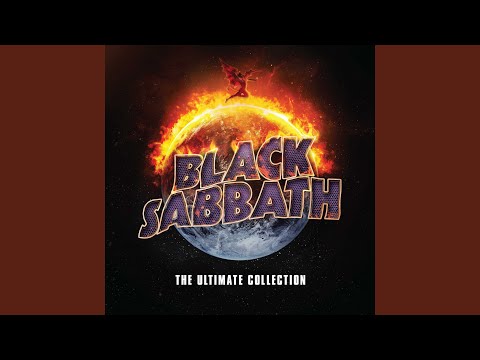
Symptom Of The Universe

Album: Sabotage (1975)
Play Video

Songfacts®:

  • "Symptom Of The Universe" is a Black Sabbath deep cut released on their 1975 album Sabotage. Their bass player, Geezer Butler, was their lyricist during this time. He explained the song meaning to Songfacts: "That was about love. Love is the symptom of the universe. That's what gets us all through it."
  • This may be a love song, but it also rocks, at least in the first section. At the 4:24 mark it transitions into a folksy jam. Sabbath were progenitors of heavy metal, which is exemplified in those first four minutes, but they were more musically varied than many people remember, mixing lots of styles into their songs. The last part of this song sounds like something the Grateful Dead would record; Sabbath had the chops to pull this off, going from ear-splitting rock to mellow improv without missing a beat.
  • Lead singer Ozzy Osbourne left the band in 1979 and went on to a brilliant solo career. "Symptom Of The Universe" was a popular live song while he was still a member, and when the band toured in 1994 with Tony Martin on lead vocals, it returned to their setlist. Ozzy got back together with the band in 2011, and when they toured in 2013 the song was included.
  • Ozzy Osbourne makes a cameo in 1995's The Jerky Boys: The Movie, playing the manager of Helmet, a real band. In one scene, Helmet plays "Symptom Of The Universe" at a club.
  • Sabotage is the sixth Black Sabbath album. Their first five album were released in a frantic four-year span from 1970-1973, and are hailed as classics. By the time they recorded Sabotage, they were burned out and dealing with unpleasant business issues. "When we were doin' Sabotage, it seemed like, whatever we were doing, we had to go to court," Geezer Butler told DISCoveries. "It was horrible. That's why we ended up calling the album Sabotage."
  • The 49-second instrumental intro is listed as a separate song on the album called "Don't Start Too Late."
  • In a conversation with Metal Hammer, Tony Iommi reflected how "Symptom Of The Universe" came to life. While he couldn't quite remember the exact moment the main riff was born - "It was so long ago," he admitted - he assumed it likely emerged during a rehearsal session.

    What Iommi did recall clearly was his approach to riff-writing and how it evolved over time. "I was in competition with myself," he said. "I would always try to come up with more and more inventive ideas - different tunings, changing the amps, just fiddling about with the guitars, really. I didn't really listen to other people, just in case I started playing someone else's riff by mistake."
  • Metallica's Kirk Hammett has long praised "Symptom Of The Universe," pointing to its defining riff as a game-changer for heavy music. Speaking to Consequence , he described it as a touchstone for both the New Wave of British Heavy Metal and thrash metal: "Just that song in terms of the attitude, the choice of notes, how it was played, and the fact that it was the main part of the song and the hooks of it. Once you hear that riff, you'll always hear it again and again. It's just an amazing riff. That riff in itself shifted heavy metal - and I have to give that album and that particular song a lot of credence."

Comments

Be the first to comment...

Editor's Picks

Gary Louris of The Jayhawks

Gary Louris of The JayhawksSongwriter Interviews

The Jayhawks' song "Big Star" has special meaning to Gary, who explains how longevity and inspiration have trumped adulation.

Vince Clarke

Vince ClarkeSongwriter Interviews

An original member of Depeche Mode, Vince went on to form Erasure and Yaz.

Bill Medley of The Righteous Brothers

Bill Medley of The Righteous BrothersSongwriter Interviews

Medley looks back on "Unchained Melody" and "You've Lost That Lovin' Feelin'" - his huge hits from the '60s that were later revived in movies.

Van Dyke Parks

Van Dyke ParksSongwriter Interviews

U2, Carly Simon, Joanna Newsom, Brian Wilson and Fiona Apple have all gone to Van Dyke Parks to make their songs exceptional.

He Hit Me (And It Felt Like A Kiss): A History Of Abuse Pop

He Hit Me (And It Felt Like A Kiss): A History Of Abuse PopSong Writing

Songs that seem to glorify violence against women are often misinterpreted - but not always.

The 10 Bands Most Like Spinal Tap

The 10 Bands Most Like Spinal TapSong Writing

Based on criteria like girlfriend tension, stage mishaps and drummer turnover, these are the 10 bands most like Spinal Tap.