Rambling, Gambling Willie

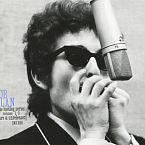
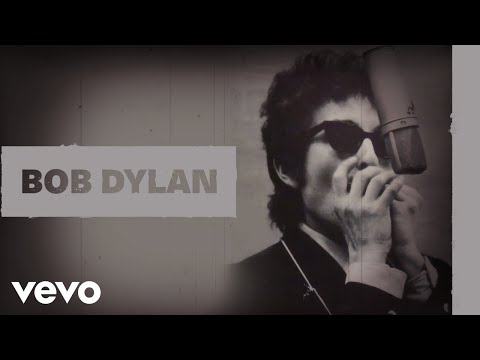
Album: The Bootleg Series Volumes 1-3 (Rare & Unreleased) 1961-1991 (1991)
Play Video

Songfacts®:

  • "Rambling, Gambling Willie" is about a fictional gambler named Will O'Conley who had 27 children, no wives, and a "heart of gold" (he took good care of every one of those kids). The song comes across as the kind of tall tale that was commonly heard in early America, where a character's exploits (such as Paul Bunyan) were exaggerated to absurd and hilarious effect. Willie tears through the song, seemingly indestructible, winning every game and every wife, until the very end when he's shot in the head by a man whose money he won.
  • The Willie O'Conley character was inspired by Willie Brennan as Brennan is presented in "Brennan On The Moor," an Irish ballad from sometime in the early to middle 1800s. Brennan was a real person, a highway robber who was executed by hanging in the early 1800s (the exact year is debated).

    Dylan heard the "Brennan On The Moor" performed by the Clancy Brothers.
  • "Rambling, Gambling Willie" was released in 1991, but it's actually one of Dylan's earliest original songs. He wrote it in 1961 and recorded the first demo (for Duchess Music Corporation) in January 1962.

    He recorded the song again on April 24, 1962, for Columbia Records and his second album, The Freewheelin' Bob Dylan. This second version enjoyed the production work of John Hammond, who's in the Rock and Roll Hall of Fame and helped launch such stars as Pete Seeger, Bruce Springsteen, Aretha Franklin, Leonard Cohen, and, of course, Bob Dylan.

    Dylan laid down four takes of the song, with the fourth being the one kept for the album. The song did make it onto the first pressing, but was then switched out for "Bob Dylan's Dream," which is what wound up on the final published product.
  • So all you roving' gamblers, wherever you might be
    The moral of the story is very plain to see
    Make your money while you can, before you have to stop
    For when you pull that dead man's hand, your gambling days are up


    The term "dead man's hand" has been in play since at least the late 19th century. Today the term is usually associated with the Old West folk hero (a real person) named Wild Bill Hickok. On August 2, 1876, an otherwise forgotten man named Jack McCall shot Hickok in the back of the head during a poker game. Legend has it that Hickok was holding aces and eights, just as Willie was when he got shot down ("When Willie's cards fell on the floor they were aces backed with eights").

Comments

Be the first to comment...

Editor's Picks

Howard Jones

Howard JonesSongwriter Interviews

Howard explains his positive songwriting method and how uplifting songs can carry a deeper message.
Kip Winger

Kip WingerSongwriter Interviews

The Winger frontman reveals the Led Zeppelin song he cribbed for "Seventeen," and explains how his passion for orchestra music informs his songwriting.
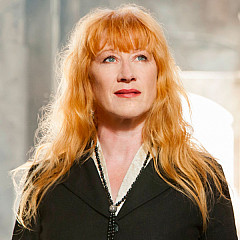
Loreena McKennitt

Loreena McKennittSongwriter Interviews

The Celtic music maker Loreena McKennitt on finding musical inspiration, the "New Age" label, and working on the movie Tinker Bell.
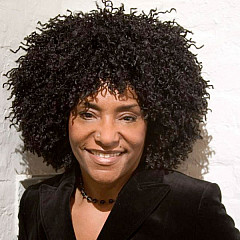
La La Brooks of The Crystals

La La Brooks of The CrystalsSong Writing

The lead singer on "Da Doo Ron Ron" and "Then He Kissed Me," La La explains how and why Phil Spector replaced The Crystals with Darlene Love on "He's A Rebel."
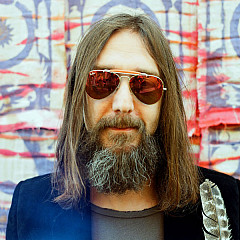
Chris Robinson of The Black Crowes

Chris Robinson of The Black CrowesSongwriter Interviews

"Great songwriters don't necessarily have hit songs," says Chris. He's written a bunch, but his fans are more interested in the intricate jams.
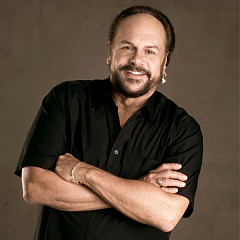
Harry Wayne Casey of KC and The Sunshine Band

Harry Wayne Casey of KC and The Sunshine BandSongwriter Interviews

Harry Wayne Casey tells the stories behind KC and The Sunshine Band hits like "Get Down Tonight," "That's The Way (I Like It)," and "Give It Up."