
Sally Gal

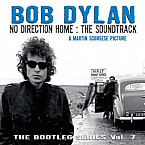
Album: No Direction Home: The Soundtrack (The Bootleg Series Vol. 7) (2005)
Play Video

Songfacts®:

  • This is an early Bob Dylan song, and it shows.

    For an artist who would become legendary for his poetic and mysterious lyrics, the words to this one are amusingly generic. It's just Dylan singing over and over that he's "going to get you Sally gal" while throwing in some declarations of being a "ramblin' man."

    I'm just one o' them ramblin' men
    Ramblin' since I don't know when
    Here I come and I'm a-gone again
    Sally says I got no end


    The ramblin' man trope was ever-present in old American blues and folk. It extended straight into the '60s and '70s rock that grew out of those traditions. The high-water mark might have been in 1973 when The Allman Brothers Band did "Ramblin' Man," though Bob Seger would likely disagree and bring "Ramblin', Gamblin' Man" to the fray.

    None of this is to say that "Sally Gal" is a bad song (or a good one), but it is a song that shows Dylan's youth - he was one month shy of 21 at the time. This is the period when the small-town kid from a traditional Jewish family was trying to fashion himself as one of the wizened old folkie road-dogs he'd grew up admiring and romanticizing.
  • Dylan recorded "Sally Gal" on April 24, 1962, at Columbia Recording Studios for his second studio album, The Freewheelin' Bob Dylan, but the song didn't make the final cut and was shelved for decades. It went unreleased until 2005, when the first of the three recorded takes was included on No Direction Home: The Soundtrack (The Bootleg Series Vol. 7).
  • The song seems to draw heavily from Woody Guthrie's "Sally, Don't You Grieve" (1957). Guthrie, the great Dust Bowl Troubadour, was Dylan's hero. In the early '60s Greenwich Village scene, Dylan was known for his incredible breadth of knowledge of Guthrie's music in a time when records weren't always easy to come by. This was long before the internet, when you had to put in time and effort to find music that was off the beaten path. Dylan was known to play "Sally, You Don't You Grieve" at hootenannies and clubs around the Village.

    Bob Dylan was always a character created by Robert Allen Zimmerman. As Zimmerman has said over the years, he's only Bob Dylan when he has to be. Still, in these earlier times, all accounts are that he was trying to embody that archetype both on and off the stage.

    Whatever the case, Dylan himself didn't seem to think too highly of "Sally Gal." He didn't release it for nearly 50 years, and at that point he was such a legend that all of his songs had historical value regardless of whether or not they were particularly impressive.


    This is the only Dylan song that opens up with him playing a long harmonica solo, which goes on for 21 seconds, is a sizable portion of the song's 1:35 length.

Comments

Be the first to comment...

Editor's Picks

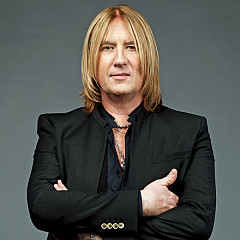
Joe Elliott of Def Leppard

Joe Elliott of Def LeppardSongwriter Interviews

The Def Leppard frontman talks about their "lamentable" hit he never thought of as a single, and why he's juiced by his Mott The Hoople cover band.
Amy Grant

Amy GrantSongwriter Interviews

The top Contemporary Christian artist of all time on song inspirations and what she learned from Johnny Carson.
Johnette Napolitano of Concrete Blonde

Johnette Napolitano of Concrete BlondeSongwriter Interviews

The singer/bassist for Concrete Blonde talks about how her songs come from clairvoyance, and takes us through the making of their hit "Joey."

Don Felder

Don FelderSongwriter Interviews

Don breaks down "Hotel California" and other songs he wrote as a member of the Eagles. Now we know where the "warm smell of colitas" came from.

Joe Jackson

Joe JacksonSongwriter Interviews

Joe talks about the challenges of of making a Duke Ellington tribute album, and tells the stories behind some of his hits.

Supertramp founder Roger Hodgson

Supertramp founder Roger HodgsonSongwriter Interviews

Roger tells the stories behind some of his biggest hits, including "Give a Little Bit," "Take the Long Way Home" and "The Logical Song."