The Comin' Round Is Going Through

Album: Dig In Deep (2016)
Play Video

Songfacts®:

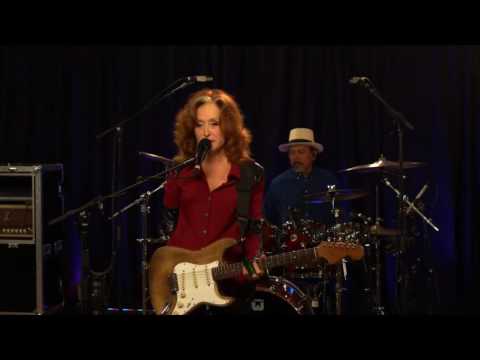
  • This four-on-the-floor stomper was penned by Bonnie Raitt with her regular guitarist George Marinelli. "There are certain grooves I like to play that I wanted to add to the live show," she explained to American Songwriter, "so I was clear about what I wanted to work on."
  • The only political cut on Dig In Deep, Raitt addresses here an incompetent politician blind to the struggle of the average American. "I wanted to write a song about how pissed off I was, about money being in politics and how much lying and puffing up and no accounting for the truth goes on in our political process, " she explained to TeamRock.

    "I feel like with that song," Raitt continued, "the things I'm singing about exactly mirror how it feels to play it. I mean, the few songs I've written that are kind of rockers like that, they're just so satisfying to play."

    "The Comin' Round Is Going Through is not a polemic," she added, "so much as frustration that we don't have the answers. That song is just about the political process in general. Both Democrats and Republicans have been at fault for the way that things are working – the change needs to happen on a fundamental level. So I'm just expressing my frustration. It's healthy to get it out. I don't have any solutions, but I'm definitely glad to have a rock'n'roll song I can play to express my ire. I'm hoping that other people will feel the same way when they hear it."
  • There has been speculation that the feckless politician Raitt is addressing is Donald Trump, but she told Billboard magazine the song was penned before he began his campaigning for the Republican nomination.

    Raitt added: "For years I've been enraged by the Citizens United [2010 Supreme Court ruling] and big ­money's wholesale hijacking of democracy. I've been pissed off about the outrageous economic inequality that increasingly marks this modern era. So I channeled my free-floating anger into a four-on-the floor turn-up-the-guitars rocker. I look forward to singing it every night on my tour. It's a way to vent my rage and get off musically, all at the same time."
  • Bonnie Raitt explained the background to the song during an interview on CBC Radio 2's The Strombo Show. "I've mined a lot of different aspects of love, and one of the things that that is always new and unfortunately also upsetting is the state of the world," she said. "This album [has] the second overtly political song that I've written. I wrote one years ago called 'Hell to Pay,' but this one, I wanted to play this particular musical groove while I was getting my feelings of outrage about the one percent having too much control of the political process."

    "I knew [this song] would have that particular guitar thrashing, Stones-y kind of feel so that I could play it live," Raitt continued. "In that sense, I deliberately framed it so that it could be anybody's political spectrum - whether they're progressive or Tea Party, they're still mad that the system is broken."

Comments

Be the first to comment...

Editor's Picks

Edwin McCain

Edwin McCainSongwriter Interviews

"I'll Be" was what Edwin called his "Hail Mary" song. He says it proves "intention of the songwriter is 180 degrees from potential interpretation by an audience."

Church Lyrics

Church LyricsMusic Quiz

Here is the church, here is the steeple - see if you can identify these lyrics that reference church.

Julian Lennon

Julian LennonSongwriter Interviews

Julian tells the stories behind his hits "Valotte" and "Too Late for Goodbyes," and fills us in on his many non-musical pursuits. Also: what MTV meant to his career.

Jay, Peaches, Spinderella and other Darrining Victims

Jay, Peaches, Spinderella and other Darrining VictimsSong Writing

Just like Darrin was replaced on Bewitched, groups have swapped out original members, hoping we wouldn't notice.

Who Did It First?

Who Did It First?Music Quiz

Do you know who recorded the original versions of these ten hit songs?

Judas Priest

Judas PriestSongwriter Interviews

Rob Halford, Richie Faulkner and Glenn Tipton talk twin guitar harmonies and explain how they create songs in Judas Priest.