Accidental Racist

Album: Wheelhouse (2013)
Charted: 77
Play Video

Songfacts®:

  • Brad Paisley teamed up with Lee Thomas Miller to pen this song that addresses the detrimental mark that slavery put on American history. LL Cool J jumps on board with some rhymes about racial harmony. "Brad's not afraid to express himself," the rapper told Parade magazine. "What other Country artist, or any artist right now, talks about slavery?"
  • Setting up the back story for the song during a playback of Wheelhouse, Paisley said, "I live in Tennessee. I'm very proud to live there. I don't know how many of you have noticed, but we've had some racial tensions in the last few 150 years. I'm not content to let the media or the talkers or Hollywood deal with this anymore. It's music's turn to state our cases and maybe ask the questions. I don't know if we answer anything in this song. But we might ask the question for the first time, and maybe that's the first step."
  • Paisley said the song needed to be collaborative as he had no authority in terms of an African American perspective. "I can only speak as a white Southerner," he explained of LL's contribution. "One of the greatest moments of my songwriting life was taking him for a ride around town after touring the Ryman. I'm playing the song, and he's banging on the dashboard and saying, 'This is important. I'm in.' Then he wrote his entire part himself. And I told him, 'You can say whatever you want. You want to tell me I'm crazy? Tell me I'm crazy. There's nothing off limits for you. Whatever you want to say in this song, you say it.' And he did."
  • The song was poorly received in Hip-Hop circles, but LL has no regrets on trying to do something positive. "Music is about, and art is about, connecting different people, and building bridges and breaking the rules," he told CNN. "If it's not compelling, and it's not complex and it's not interesting, then what are we doing it for? So I think that's the right move."
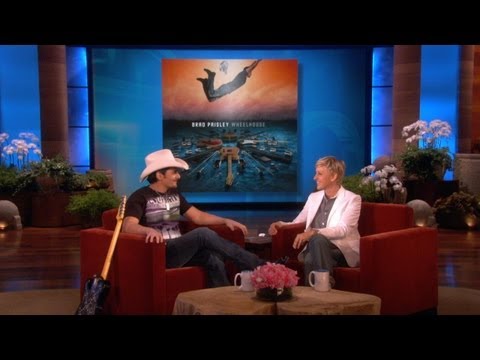
  • Paisley told Ellen DeGeneres on her talkshow: "One of my favorite lines in the song is he says 'I think the relationship between the Mason-Dixon needs some fixin'.' Leave it to a rapper to put it so simply and so beautifully."
  • Paisley explained in Entertainment Weekly: "I think that we're going through an adolescence in America when it comes to race. You know, it's like were almost grown up. I just think art has a responsibility to lead the way, and I don't know the answers, but I feel like asking the question is the first step and we are asking the question in a big way. How do I show my Southern pride? What is offensive to you? And his summation is really, 'Let's let bygones be bygones.'"

Comments

Be the first to comment...

Editor's Picks

Loudon Wainwright III

Loudon Wainwright IIISongwriter Interviews

"Dead Skunk" became a stinker for Loudon when he felt pressure to make another hit - his latest songs deal with mortality, his son Rufus, and picking up poop.

Into The Great Wide Open: Made-up Musicians

Into The Great Wide Open: Made-up MusiciansSong Writing

Eddie (played by Johnny Depp in the video) found fame fleeting, but Chuck Berry's made-up musician fared better.
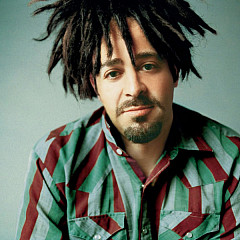
Adam Duritz of Counting Crows

Adam Duritz of Counting CrowsSongwriter Interviews

"Mr. Jones" took on new meaning when the song about a misguided view of fame made Adam famous.
Lace the Music: How LSD Changed Popular Music

Lace the Music: How LSD Changed Popular MusicSong Writing

Starting in Virginia City, Nevada and rippling out to the Haight-Ashbury, LSD reshaped popular music.
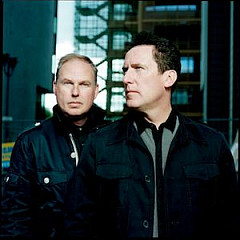
Andy McClusky of OMD

Andy McClusky of OMDSongwriter Interviews

Known in America for the hit "If You Leave," OMD is a huge influence on modern electronic music.
Goodbye, Hello: Ten Farewell Tour Fake-Outs

Goodbye, Hello: Ten Farewell Tour Fake-OutsSong Writing

The 10 biggest "retirement tours" that didn't take.