Dehumanized

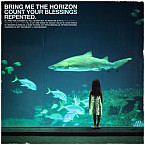
Album: Count Your Blessings | Repented (2026)
Play Video

Songfacts®:

  • "Dehumanized" is Bring Me The Horizon's sole completely new song on Count Your Blessings | Repented, arriving nearly 20 years after the original 2006 album. Musically, it reconnects with the band's frantic deathcore era while benefiting from the sharper production and dynamics they've developed since then. Lyrically, though, it's rooted firmly in the present, using the imagery of slaughterhouses and factory farming to examine how societies teach people to stop seeing one another as human.
  • The title encapsulates the song's central idea. To be "dehumanized" is both to have your humanity denied by others and to gradually absorb that message yourself. Oli Sykes suggests that propaganda, war and institutional violence don't just create victims; they reshape everyone caught within them until people are reduced to labels, statistics or, in his words, "the scum of the earth."
  • The song's defining metaphor is an abattoir (slaughterhouse). Sykes screams:

    Some of us are butchers, some of us are lambs,
    Send me to the abattoir, let's find out which I am


    Rather than dividing the world neatly into villains and innocents, the lyric questions what role any of us might play inside systems that normalize suffering. It's an unsettling image, made all the more effective because slaughterhouses are designed to turn living beings into products with efficiency, a triumph of logistics, if not public relations.

    A longtime vegan and supporter of PETA, Sykes said those lines form "the crux" of the song.
  • The slaughterhouse is the central metaphor for the music video as well, which Sykes co-directed with Chicago filmmaker Eric Richter. The graphic clip depicts human beings suspended from hooks, strapped to processing tables and treated like livestock inside an industrial facility.

    Explaining the concept on Instagram, Sykes wrote, "the abattoir is a metaphor for being put in a place where my very livelihood is facing execution. When empathy becomes an act of anarchy, then you discover whether your values are real."
  • Sykes cited Agustina Bazterrica's dystopian novel Tender Is the Flesh as a direct inspiration. The book imagines a future in which animal meat has disappeared, prompting society to legalize the farming and consumption of human beings. By removing the familiar distinction between livestock and people, it asks readers how much of modern violence depends on deciding that someone else doesn't fully count.
  • Although the factory-farm imagery naturally reflects Sykes' long-held views on animal welfare, the song was also sparked by a more specific experience. The BMTH frontman said he had been warned that peacefully displaying a Palestinian flag onstage in recognition of the humanitarian catastrophe in Gaza could carry "career-ending consequences." The band nevertheless waved Palestinian flags during their 2025 headline performance of "Throne" at Reading Festival.

    "Dehumanized" grew out of that moment. "It made me realize how we are silently conditioned to suppress our humanity," Sykes said. "We think we are free, conscious beings, when in truth we are driven by forces we barely understand."

Comments

Be the first to comment...

Editor's Picks

Gene Simmons of Kiss

Gene Simmons of KissSongwriter Interviews

The Kiss rocker covers a lot of ground in this interview, including why there are no Kiss collaborations, and why the Rock Hall has "become a sham."

Vince Clarke

Vince ClarkeSongwriter Interviews

An original member of Depeche Mode, Vince went on to form Erasure and Yaz.

Incongruent Opening Acts

Incongruent Opening ActsSong Writing

Here's what happens when an opening act is really out of place with the headliner, like when Beastie Boys opened for Madonna.

Subversive Songs Used To Sell

Subversive Songs Used To SellSong Writing

Songs about drugs, revolution and greed that have been used in commercials for sneakers, jeans, fast food, cruises and cars.

Jim Adkins of Jimmy Eat World

Jim Adkins of Jimmy Eat WorldSongwriter Interviews

Jim talks about the impact of "The Middle" and uses a tree metaphor to describe his songwriting philosophy.

Bill Medley of The Righteous Brothers

Bill Medley of The Righteous BrothersSongwriter Interviews

Medley looks back on "Unchained Melody" and "You've Lost That Lovin' Feelin'" - his huge hits from the '60s that were later revived in movies.