Chris Cornell recorded this heavily orchestrated ballad for a film about the Armenian genocide, also called The Promise. The Soundgarden frontman's involvement stemmed from his close friendship with the movie's producer, Eric Esrailian.
Having married into a Greek family, Cornell has heard various stories about similar treatment suffered by the Greeks at the hands of the Turkish-ruled Ottoman Empire. "The film and plot are your band mates and the song has to be true to the story and the characters in it," he explained. "'The Promise', to me, is mainly about paying homage to those we lost in the Armenian Genocide, but it's also about shining a light on more recent atrocities.
"The same methods used in the Armenian genocide were used to carry out crimes against humanity in Bosnia, Darfur, Rwanda and right now in Syria on multiple fronts, contributing to a massive global refugee crisis," Cornell continued. "Unfortunately, the words 'never again' seem like just words when we recall these mass executions of the twentieth century, as well as renewed racism and prejudice around the world."
"Even in the US, the warning signs - isolating groups based on race and religion - are evident," he added. "We really need to tell these stories and keep telling them in as many different ways as we can. As humans, we have a tremendous capacity to trudge ahead in our lives and not look at the difficult and challenging moments… but I think it's important. Educating ourselves on the past is the best way to understand the present and avoid future atrocities by understanding and intervening. We must educate and stand as one to combat this fear and violence, and as citizens of the world, work to protect each other's human rights."
Cornell explained to Rolling Stone why he chose an orchestral instrumentation for the title track. "I wasn't trying to record a song that sounded like it was from 1915, but I didn't want there to be obvious modern references because obviously at the time there was no such thing as the Beatles or Metallica or everything that is my reference for musical ideas," he said. "So the orchestra works just because that did exist and it can be a little bit out of time, so I was swimming in those waters of ambiguity."
Cornell donated all proceeds to the International Rescue Committee, a charity that responds to humanitarian crises by helping to restore health, education and economic well-being, among other things, to people stricken by conflict.
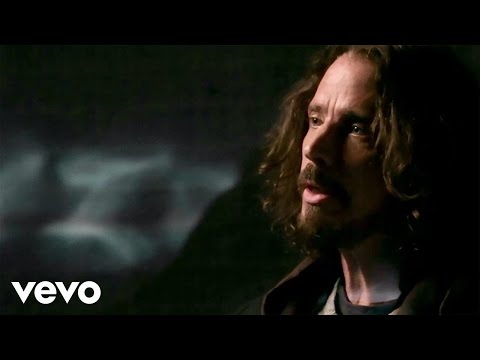
The video, directed by Meiert Avis (Audioslave, U2) and Stefan Smith (Madonna, Sting), shows footage of real refugees. According to Avis, Cornell was involved in the process and insisted on making the video "less depressing and more optimistic."
The video ended up being the last one Cornell made before his death. According to Avis, Cornell was in good spirits when he worked on it. "I hope it creates something with purpose because Chris had purpose and to lose your purpose is a terrible thing,"
Avis told Rolling Stone.
Chris Cornell was found dead in his hotel room on May 18, 2017. "The Promise" was the singer's last release prior to his passing.
The song's music clip was released on World Refugee Day 2017. Eric Esrailian said: "Chris filmed his performance in Brooklyn, New York shortly before his passing, he wanted his video to be released on World Refugee Day, and he was passionate about helping people through this project. True to Chris's charitable spirit, he made a commitment to donate all of his proceeds from The Promise to support refugees and children, and to further the conversation about the refugee crisis the world continues to endure."