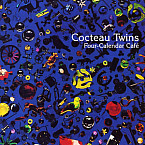

Evangeline

Album: Four-Calendar Café (1994)
Charted: 34
Play Video

Songfacts®:

  • "Evangeline" is about identity and the borders between our private and social personas and our real and imagined selves. Where does one end and the other begin? Can they truly be separated? Do they inform each other or are they, by nature, in conflict? The theme is universal, but the story in "Evangeline" is specifically that of Cocteau Twins frontwoman Elizabeth Fraser. The Twins credited their songs to the band as a whole, but Fraser was primarily responsible for lyrics.

    "Evangeline" is a deeply personal song for Fraser, but Twins songs always were, as she used music to express her deepest feelings and to work through her own mind. Where "Evangeline" differs from earlier songs is that Fraser's words can be clearly heard. In the past, she used her voice as an instrument, stretching and obscuring syllables to create an ethereal soundscape that helped define the dream-pop genre.

    By the time of their seventh and penultimate studio album, Four-Calendar Café, the cult-favorite Twins were trying to get more traction with a broader audience - in other words, they wanted to make more money. This might seem like a no-brainer for a band that Robin Guthrie largely started as a way to escape the limited career prospects of his hometown of Grangemouth, Scotland, but the band had always experienced friction between their quest for success and artistic integrity.

    The change was difficult for Fraser. She'd previously obscured her words for artistic purposes, but she also did so because she was so shy and inwardly tormented that she wanted to cloak her meaning. She had something to say, but she didn't want to come right out and say it. Her evasiveness was on full display in a 1993 interview with Chris Roberts of Melody Maker. When he asked about the "Evangeline" lines, "There is no going back/I can't stop feeling now." Fraser responded:

    "Ooh, you can hear it?! Mmm, I'm a pretty extreme person. And that's an extreme thing to say. I mean, I don't actually have to bare my soul and then edit it within an interview. If that's what I mean. But, in a way, I feel like I've set myself up. I thought it might spoil it for people if they could understand what I was saying."

    The quote above is about as close as we can expect to get to a clear revelation from Fraser, who managed to retain a sense of mystery through her fame, exercising a Dylanesque talent for keeping fans and critics guessing, transforming herself into an icon of the unknowable while growing up on stage for all the world to see. In "Evangeline," Fraser is working through the mystery-play that is her life, one she both wrote and starred in.

    I had to fantasize
    Just to survive
    I was a famous artist
    Everybody took me seriously

    Even those who did
    Never understood me
    I had to fantasize
    Just to survive
  • "Evangeline" represents the Twins on their way out, though at the time it seemed like a new beginning. They were finding a way to make their artistic vision accessible to a bigger audience and were making some money, but behind the scenes everything was falling apart. Fraser and Guthrie's romantic relationship was painfully disintegrating. Guthrie's drugging had achieved full-blown addiction status, and Fraser's emotional and psychological issues were becoming more intrusive. They had just one more album in them, Milk & Kisses in 1996. Even as the song was rolled out as a preview of Twins-to-come, "Evangline" was always destined to be a marker of the Twins' end and of what could have been.

    In a 2000 MOJO interview with Barney Hoskyns, Twins bassist/guitarist Simon Raymonde put it this way: "In the early days she had that kind of warble, but inside she had a certain kind of aggression that only popped up occasionally. So for years people wondered why Liz never said anything, and then when she did they wished that she'd kept quiet!"
  • The second line in the song, "Know who you are at every age," is also the title of the first track on Four-Calendar Café.
  • German filmmaker Nico Beyer directed the video for the song. He's highly accomplished in the worlds of advertising and music videos. Some of his other work includes videos for The Verve, Pet Shop Boys, Suzanne Vega, They Might Be Giants and Tony! Toni! Toné!.
  • The Twins released "Evangeline" as their first of two singles off Four-Calendar Café, the second being "Bluebeard." The B-side was "Mud And Dark," with "Summer-blink" also included on the vinyl version.

Comments: 1

  • Kees Van Lieshout. from Boxtel, The Netherlands.My favorite track of the Calender album. While searching for lyrics usuable for a painting on canvas, for my livingroom, this song came to mind. Aware of the troubles between Elisabeth and Guthrie i always thought that she sang "i can't stop feeling down". To me it made sense. Now, i am a little disapointed for knowing.And yes Elisabeth was right; don't explain, be mystical and let the listner use his/her imagination. And complements for the video. Made me fall in love with Elisabeth for the first time. Never before saw her that way.
see more comments

Editor's Picks

Deconstructing Doors Songs With The Author Of The Doors Examined

Deconstructing Doors Songs With The Author Of The Doors ExaminedSong Writing

Doors expert Jim Cherry, author of The Doors Examined, talks about some of their defining songs and exposes some Jim Morrison myths.

Does Jimmy Page Worship The Devil? A Look at Satanism in Rock

Does Jimmy Page Worship The Devil? A Look at Satanism in RockSong Writing

We ring the Hell's Bells to see what songs and rockers are sincere in their Satanism, and how much of it is an act.

Brandi Carlile

Brandi CarlileSongwriter Interviews

As a 5-year-old, Brandi was writing lyrics to instrumental versions lullabies. She still puts her heart into her songs, including the one Elton John sings on.

Bass Player Scott Edwards

Bass Player Scott EdwardsSong Writing

Scott was Stevie Wonder's bass player before becoming a top session player. Hits he played on include "I Will Survive," "Being With You" and "Sara Smile."

Ian Anderson: "The delight in making music is that you don't have a formula"

Ian Anderson: "The delight in making music is that you don't have a formula"Songwriter Interviews

Ian talks about his 3 or 4 blatant attempts to write a pop song, and also the ones he most connected with, including "Locomotive Breath."

Taylor Dayne

Taylor DayneSongwriter Interviews

Taylor talks about "The Machine" - the hits, the videos and Clive Davis.