Susie Q

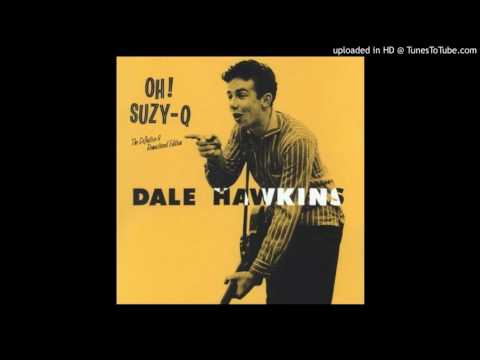
Album: Oh Suzy-Q: The Best of Dale Hawkins (1956)
Charted: 27
Play Video

Songfacts®:

  • This piece of blues-drenched rock 'n' roll with its cowbell-infused rhythm was one of the most influential and original records of its era. It took rockabilly pioneer Dale Hawkins and his bandmates three months to perfect the song on the stages of North Louisiana's notorious Bossier City strip before they paid a local radio station $25 to let them record it in the station's studio during early morning downtime. Hawkins told Mojo journalist Michael Hurtt in 2007: "We just had to have something different." He added: "Radio Station KWKH was the only place in town that had a good mono tape machine, so we cut it there with Bob Sullivan, an engineer who was from our part of the country and understood. We only had an hour because we had to do it in between the time that they would switch radio towers."
  • The swampy six-string guitar lick was courtesy of 15-year-old James Burton, who was inducted into the Rock and Roll Hall of Fame in 2001 as a sideman. Other guitarists who worked at one time or another with Hawkins included Carl Adams, Roy Buchanan and Scotty Moore.
  • The song charted at #27 in America, but that doesn't reflect its influence. "Susie Q" sold well over the years and became a favorite of The Rolling Stones, who recorded it on their 1964 12 x 5 album. Creedence Clearwater Revival also launched their career with their version of this southern rock 'n' roll classic.
  • Along with Dale Hawkins, Eleanor Broadwater and Stan Lewis are credited as writers on this song, even thought they had nothing to do with writing it. Broadwater's husband was a popular Nashville disc jockey named Gene Nobles, who played the song when it was released (assigning the credit to his wife cloaked his business interest in the song). Stan Lewis owned a record store and had industry connections. In the 1950s, it wasn't unusual to share writing credits with people who could help promote a song. In this case, those credits became quite valuable when Creedence Clearwater Revival turned the song into a big hit.

Comments: 2

  • Buddy from ChicagoIt first appeared on the Billboard Top 100 Sides chart for the week ending June 5, 1957 and peaked at the 29th position for the weeks ending June 29 and July 6, 1957.
  • Barry from Sauquoit, NyOn August 6, 1957, Dale Hawkins performed "Susie-Q" on the Dick Clark ABC-TV weekday-afternoon program 'American Bandstand'...
    At the time the song was at #7* on Billboard's Most Played by R&B Jockeys chart...
    In June it peaked at #27 on Billboard's Best Seller in Stores chart and #29 on the Top 100 chart...
    On the same 'Bandstand' show Don Rondo performed "White Silver Sands", it was at #10 at the time, while Elvis' "Teddy Bear" was in it's sixth of seven weeks at #1...
    *According to Billboard "Susie-Q" was tied at #7 with two other records, "Long Lonely Nights" by Clyde McPhatter and "Whispering Bells" by the Del-Vikings.
see more comments

Editor's Picks

Max Cavalera of Soulfly (ex-Sepultura)

Max Cavalera of Soulfly (ex-Sepultura)Songwriter Interviews

The Brazilian rocker sees pictures in his riffs. When he came up with one of his gnarliest songs, there was a riot going on.

History Of Rock

History Of RockSong Writing

An interview with Dr. John Covach, music professor at the University of Rochester whose free online courses have become wildly popular.

Martyn Ware of Heaven 17

Martyn Ware of Heaven 17Songwriter Interviews

Martyn talks about producing Tina Turner, some Heaven 17 hits, and his work with the British Electric Foundation.

Michael W. Smith

Michael W. SmithSongwriter Interviews

Smith breaks down some of his worship tracks as well as his mainstream hits, including "I Will Be Here For You" and "A Place In This World."

British Invasion

British InvasionFact or Fiction

Go beyond The Beatles to see what you know about the British Invasion.

Jethro Tull

Jethro TullFact or Fiction

Stage urinals, flute devices, and the real Aqualung in this Fact or Fiction.